The Unseen Force: How Storytelling Shapes Your Product's Destiny
Golden Hook & Introduction
SECTION
Nova: You know, it’s a strange paradox of innovation. We can pour our hearts and souls into building something truly groundbreaking, something that solves a real problem with elegant precision, only for it to… just sit there. Unseen. Unbought. Like a silent masterpiece in a dark gallery.
Atlas: Oh man, that's a brutal image, but I've definitely seen it play out. You see products with incredible tech, brilliant engineering, and you just wonder, 'Why isn't this flying off the shelves?' It feels like there's a missing piece, something intangible.
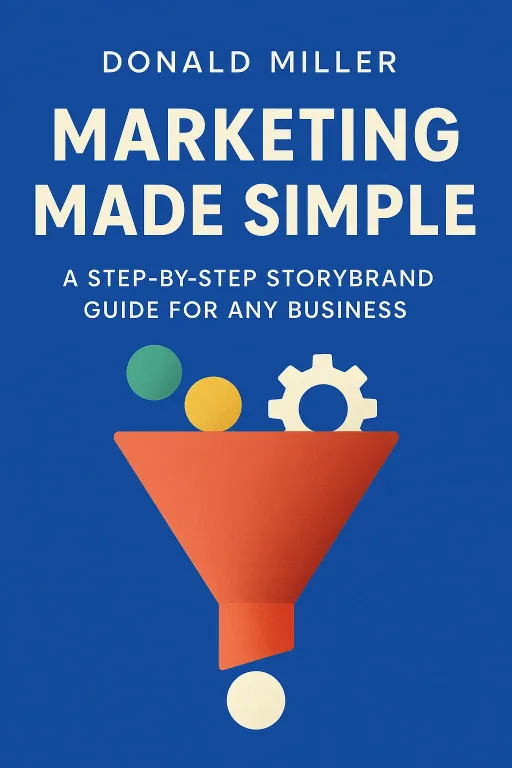
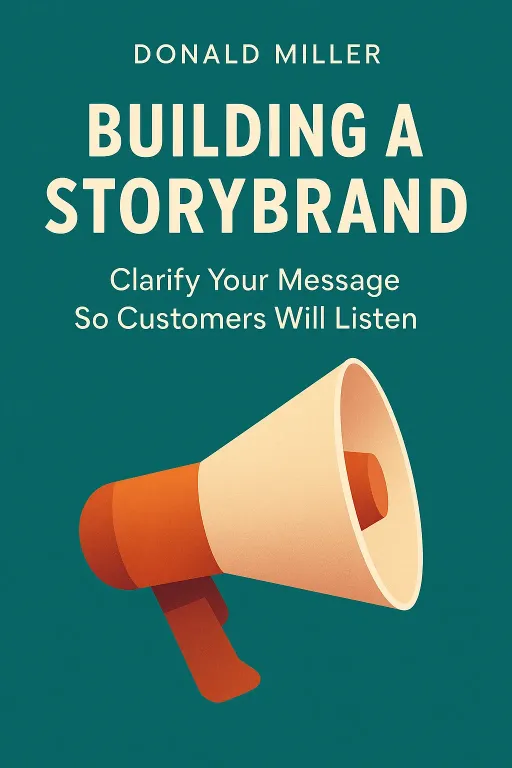
Nova: Exactly! And that intangible force, that unseen hand guiding a product's destiny, is storytelling. We’re not just talking about ad slogans here; we're talking about the very narrative framework people use to understand, connect with, and ultimately choose what they buy. Today, we're diving deep into 'The Unseen Force: How Storytelling Shapes Your Product's Destiny,' drawing powerful insights from two seminal works: Donald Miller's 'Building a StoryBrand' and Chip and Dan Heath's 'Made to Stick.'
Atlas: Oh, I'm familiar with 'StoryBrand' – Miller’s got this incredible background, right? He started as a highly successful memoirist, telling his stories, and then pivoted to helping businesses find. It's such a fascinating trajectory, almost like he applied the art of personal narrative to corporate strategy.
Nova: He absolutely did. And the Heath brothers, Chip and Dan, they’re renowned academics who’ve made a career out of unpacking why some ideas thrive and others die. They translate complex psychological principles into practical, accessible wisdom. Together, these books offer a masterclass in making your product not just innovative, but also irresistible.
Atlas: That makes me wonder, for innovators and strategists out there, is this about selling out, or is it about truly connecting? Because I think a lot of people building genuinely new things worry that storytelling means simplifying their complex vision too much.
Nova: It’s the latter, Atlas, and that's precisely where StoryBrand comes in. It’s not about simplification for simplification's sake, but clarification. It’s about ensuring your brilliant innovation doesn't get lost in translation.
Crafting the Hero's Journey: The StoryBrand Framework
SECTION
Nova: Think about it this way: every single human being is the hero of their own life story. They have desires, they face problems, and they're looking for solutions. Donald Miller’s genius with 'Building a StoryBrand' is in showing how businesses often make the fatal mistake of positioning as the hero.
Atlas: Ah, so it's not about how great product is, but how great can make the customer feel?
Nova: Precisely. The StoryBrand framework has seven parts, but the core idea is simple: your customer is the hero, not your brand. Your brand is the guide who helps them overcome their challenges and achieve success. It clarifies your message so customers immediately understand your value.
Atlas: Okay, so give me an example. Because I can see how this works for something straightforward, like a pain reliever. But what about a complex B2B software solution, or a disruptive clean energy technology? How do you make customer the hero?
Nova: Let’s take a classic example, not of a product failure, but a product that brilliantly embraced this. Think about Apple during the iPod era. They didn't just market "a portable music player with 5GB of storage." They marketed "1,000 songs in your pocket." They understood the hero – the music lover burdened by CDs and clunky players – and offered them freedom, convenience, a life soundtrack. The product wasn't the hero; the person walking around with their entire music library was. Apple was just the guide providing the magical device.
Atlas: That’s a great way to put it. It wasn't about the specs; it was about the experience, the of having all your music. So, for someone developing, say, a new AI-driven analytics platform that's insanely complex, how do they apply that? Their customer isn't just looking for "freedom from data," necessarily.
Nova: That's where you dig deeper into the customer's problem. An AI platform might solve the external problem of "too much data, not enough insight." But the internal problem could be "I feel overwhelmed and ineffective," or "I'm worried my competitors are making better decisions than I am." The platform isn't just a tool; it's the guide that helps them become a more confident, strategic leader. It helps them achieve clarity and foresight, which directly speaks to the strategist's need for impact and differentiation.
Atlas: I see. So it's about translating the technical solution into an emotional or psychological win for the customer. It's not just about what the product, but what the product. That really resonates with the idea of crafting experiences, not just products.
Nova: Exactly. And the "Tiny Step" from our content today really drives this home: identify your product's core message, then rewrite it from your customer's perspective, focusing on problem and. It's a fundamental shift in perspective that transforms how you communicate.
Atlas: I guess that makes sense. It’s like, if you want to build a loyal community, you can't just talk people; you have to invite them into a shared narrative where they're the star.
Making Stories Stick: The SUCCESs Principles
SECTION
Nova: And that naturally leads us to the second key idea we need to talk about, which often acts as a powerful amplifier for any StoryBrand message: making those stories. Chip and Dan Heath, in 'Made to Stick,' explored why some ideas, some narratives, just lodge themselves in our brains and refuse to leave, while others evaporate instantly.
Atlas: Oh, I'm curious about this. Because you can have the best story in the world, but if nobody remembers it, what good is it? So how do you make a story unforgettable, especially when you're trying to convey something truly innovative?
Nova: They identified six principles, which they conveniently acronymed as SUCCESs: Simplicity, Unexpectedness, Concreteness, Credibility, Emotions, and Stories. Let's take Simplicity and Concreteness first. Many innovative products fail here because they try to explain in complex jargon.
Atlas: That sounds like a trap for innovators. We love our jargon! We want to show off the complexity of our solutions.
Nova: But that’s the problem. Simple doesn't mean dumbed down; it means finding the core, irreducible essence of your idea. Think about the classic "velcro" example. Instead of explaining the complex mechanics of hooks and loops, the inventor simply said, "It's like burrs and dog fur." Instantly understandable, instantly concrete. That's a sticky explanation.
Atlas: Right, like... for that AI platform, instead of "our machine learning algorithms leverage Bayesian inference for predictive analytics," you might say, "We help you see around corners before anyone else." It's about the benefit, concretely.
Nova: Precisely. Then there's Unexpectedness. Our brains are wired to pay attention to things that break a pattern. If your product story is just another "we're the best, we're innovative" narrative, it won't stick. You need to create a "gap" in people's knowledge, then fill it.
Atlas: So, for a truly innovative product, you might highlight a surprising fact about the current market, or a counter-intuitive insight about the problem, before you introduce your solution?
Nova: Exactly. And Credibility often comes from surprising sources. It's not just experts; it can be anti-authorities, or vivid details that make a story feel real. Emotions are crucial – people don't act on logic alone. And finally, Stories themselves are inherently sticky. They are how we process information, how we learn.
Atlas: I've been thinking about this in terms of building a resilient team. If you're leading an innovative company, you need your team to buy into the vision, too. How do you make that internal narrative sticky? Because if they don't remember the mission, they can't execute it.
Nova: That’s a brilliant connection. Internally, leaders often make the mistake of presenting dry mission statements. But if you tell the of why the company was founded, the customer problem you're solving, the specific person whose life you're impacting – those stories create emotional resonance and build credibility. They make the mission tangible and memorable. It’s how you foster that deep connection, that collective success you're always striving for.
Atlas: That's powerful. It’s not just about external customers, but about everyone who touches the product. You're building a shared narrative.
Nova: Yes, you're building a shared narrative that becomes the bedrock of your culture and your community. When you combine the StoryBrand approach of positioning your customer as the hero with the Heath brothers' principles for making that message stick, you create an almost unstoppable force. Your product doesn't just innovate; it resonates. It doesn't just solve a problem; it becomes a part of people's lives.
Synthesis & Takeaways
SECTION
Nova: So, what we've really uncovered today is that storytelling isn't an afterthought; it's the strategic core of product development and market success. It's the difference between a product that exists and a product that thrives.
Atlas: That’s actually really inspiring, because it means that even the most complex, innovative product can find its audience if its story is clear and compelling. It’s not about dumbing down; it’s about elevating understanding.
Nova: Absolutely. And the tiny step we recommend for everyone listening is incredibly powerful: identify your product's core message. Then, rewrite it from your customer's perspective, focusing on problem and how.
Atlas: That's a great practical step. And honestly, for anyone in an innovative space, this clarity in storytelling is a form of nurturing your vision. It protects your energy and ensures your message isn't lost. It connects directly to that idea of 'your well-being fuels your vision.' A clear story reduces friction, reduces misunderstanding, and allows your true impact to shine.
Nova: Precisely. It’s about consciously shaping your product's narrative to move beyond just features, creating an emotional connection that drives adoption, loyalty, and ultimately, a resilient community around your innovation. It’s the art and science of ensuring your product's destiny is one of impact and connection.
Atlas: Wow, that’s such a hopeful way to look at it. It's about empowering the hero, both your customer and, in a way, yourself as the visionary guide.
Nova: Indeed. This is Aibrary. Congratulations on your growth!