The 'Strategic Storyteller': Weaving Narratives for Influence and Impact.
Golden Hook & Introduction
SECTION
Nova: Atlas, quick game: I'll say a core leadership skill, and you tell me what's often missing. Ready?
Atlas: Oh, I like that. Hit me.
Nova: Strategic planning.
Atlas: Hmm. The 'why.' Or maybe, the 'who cares.'
Nova: Exactly! What about data analysis?
Atlas: The 'so what.' Or more importantly, the 'what next.'
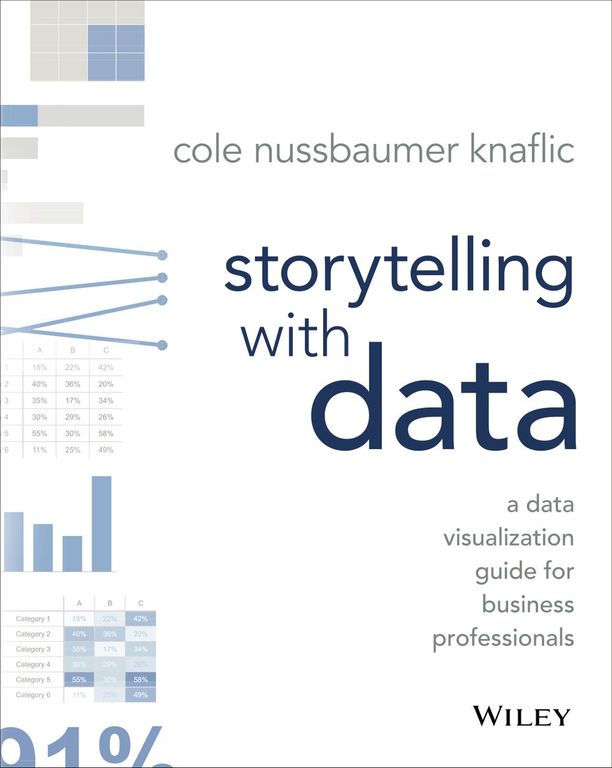
Nova: You're nailing it. And that 'why,' 'who cares,' 'so what,' and 'what next' – that's the beating heart of compelling storytelling. Today, we're diving into how to wield that power with 'The Strategic Storyteller: Weaving Narratives for Influence and Impact.' We’re looking at insights from two brilliant minds: Cole Nussbaumer Knaflic’s 'Storytelling with Data' and Donald Miller’s 'Building a StoryBrand.'
Atlas: Ah, Miller. His book, 'Building a StoryBrand,' really exploded onto the scene, didn't it? It’s widely acclaimed for simplifying marketing, but what's fascinating is how universally applicable his framework became. It's not just for small businesses or startups; it's being used by Fortune 500 companies to clarify their internal messaging, which is a testament to its practical brilliance.
Nova: Absolutely. And Knaflic's work, 'Storytelling with Data,' is equally impactful. She actually spent years at Google, working with analytics and then training people on how to communicate those insights. So she's coming from a place of deep, practical experience, seeing firsthand how often brilliant data gets lost in translation. Her insights are born from the trenches of corporate communication.
Atlas: That makes perfect sense. Because if you’re a leader, a strategic architect, you see the big picture, you connect the dots. But oftentimes, the raw data, the intricate plans, they just don't land with the team or the stakeholders. It's like speaking a different language.
Nova: Precisely. And that brings us to our first core idea: the art of persuasive communication, specifically, how to make your data not just informative, but truly influential.
The Power of Persuasive Storytelling (Data & Narrative Blend)
SECTION
Nova: So, think about it: A leader presents a slide deck. Bar charts, pie graphs, growth projections. All accurate, all meticulously researched. But a week later, the team is still struggling to internalize the message, to understand the urgency, or to grasp the opportunity. Why?
Atlas: Because numbers, on their own, are cold. They're abstract. I imagine a lot of our listeners, especially those building for the future, are constantly wrestling with this. How do you get someone to the importance of a Q3 growth metric, or the critical need for a new AI innovation, when it’s just a line on a spreadsheet?
Nova: Exactly. And that's where Knaflic's 'Storytelling with Data' comes in. Her core insight is that data visualization isn't about making pretty charts; it's about making charts that tell a story. She argues that the human brain is wired for narrative, not for spreadsheets. We remember stories, we connect with them emotionally, and we act on them.
Atlas: So you're saying it's not enough to just show the numbers, you have to frame them in a way that creates a journey, a conflict, a resolution? Like, instead of saying 'Our sales are down 15%,' you say 'We're seeing a 15% dip, and if we continue this trajectory, we risk losing market share to Competitor X, impacting our ability to invest in the very innovations that will secure our future'?
Nova: You've got it! She gives this incredible example of a team trying to convince leadership to invest in a new product. They had all the data: market research, competitive analysis, projected ROI. But the presentation was just a deluge of charts. It was overwhelming, and the leadership team was disengaged.
Atlas: I’ve been there. You can feel the eyes glazing over.
Nova: Right. So, Knaflic worked with them to reframe it. Instead of starting with the data, they started with a story about a customer. A customer struggling with a problem, a problem their new product could solve. They described the customer's frustration, their daily pain points, and then, almost like a hero arriving, they introduced the data that showed the massive market opportunity for this solution.
Atlas: So they humanized the problem first. They gave it a face. And then the data wasn't just data; it was evidence supporting the hero’s journey, or in this case, the customer’s journey to a better solution.
Nova: Precisely. The data became the undeniable proof point for a story that had already captured attention and evoked empathy. The outcome? The leadership team not only approved the investment but became champions for the product, because they the impact, not just the numbers. It speaks directly to that drive for lasting impact.
Atlas: That's powerful. It’s like, for someone focused on generational wealth, you can show them all the compounding interest charts in the world, but it hits differently when you tell a story about a family who secured their future, or even one who lost everything because they didn't understand the power of long-term investment. The numbers become a character in the story.
Nova: Exactly. It's about transforming complex information into something visceral and relatable. It's about seeing the big picture, as you often do, but then also painting that picture for others, so they can see it too.
Clarifying Your Message (The StoryBrand Framework)
SECTION
Nova: Now, if Knaflic teaches us how to make data sing, Donald Miller, with 'Building a StoryBrand,' gives us the sheet music for message. His book, which became a huge phenomenon, offers a simple, seven-part framework to clarify your message so that people don't just listen, they and.
Atlas: For anyone navigating C-suite leadership or trying to push AI innovation, the sheer volume of information and competing priorities can make it impossible for their message to cut through. So, what's Miller's secret sauce? How does he make it so accessible?
Nova: He simplifies it to a universal narrative structure: the hero's journey. But here's the kicker, and this is where many businesses and leaders get it wrong: are not the hero of the story. Your, or in a leadership context, your or, is the hero.
Atlas: Wait, hold on. So, if I'm trying to launch a new strategy for the company, I shouldn't present myself as the visionary leading the charge? That feels counterintuitive for a leader.
Nova: It does, doesn't it? But that's the brilliance. Miller says you, as the leader, are the. You're Obi-Wan Kenobi, not Luke Skywalker. Your audience—your team, your C-suite—they are Luke. They have a problem, they need a solution, and you, the guide, offer them a plan and call them to action.
Atlas: That’s a great way to put it. So, the seven parts: A character has a problem. They meet a guide who understands their problem and gives them a plan. Then the guide calls them to action, which helps them avoid failure and ends in success. Is that it?
Nova: You've got the essence! A character with a problem meets a guide, who gives them a plan and calls them to action, resulting in success and avoiding failure. It’s a framework that makes your message crystal clear because it aligns with a story structure we've all internalized since childhood. The human brain craves that pattern.
Atlas: I can see how that would be incredibly effective for someone trying to secure generational wealth. Instead of saying, 'Here's my detailed financial plan,' you say, 'Are you worried about the future of your family's legacy? I can show you a proven path to secure it.' You immediately put them in the hero's seat, acknowledging their concerns, and then position yourself as the trusted guide.
Nova: Exactly. And the beauty of Miller's framework is its simplicity. It forces you to strip away all the jargon, all the self-aggrandizing language, and focus purely on the audience's needs and aspirations. It's about empathy in communication. It's about building a bridge, not just shouting from your side of the river.
Atlas: This also resonates with the idea of a nurturing provider. You're not just dictating; you're providing a clear path, nurturing their growth, and ensuring stability for their future, whether it's their career, their family, or their wealth. It’s about making them feel understood.
Nova: And that understanding is the foundation of influence. When people feel heard, when they see themselves as the protagonist in the story you're telling, they're far more likely to engage, to believe, and to act.
Synthesis & Takeaways
SECTION
Nova: So, whether we're talking about making data compelling with Knaflic or clarifying our entire message with Miller, the core insight is profound: strategic influence and leadership aren't about brute force or overwhelming information. They're about the subtle, powerful art of storytelling.
Atlas: It's about connecting dots, not just presenting them. It’s about recognizing that our intuition, honed by experience, often tells us that people respond to stories, not just facts. And these books give us the tools to actually craft those stories deliberately.
Nova: For anyone who needs to communicate a complex idea this week, consider this: How can you simplify its core message into a compelling story? Who is your hero? What is their problem? And how do you, as the guide, offer them a clear plan to success?
Atlas: That's actually really inspiring. It means even the most complicated executive transitions, the most intricate AI innovations, or the most sensitive discussions about generational wealth can be transformed into something relatable, something that inspires action and creates lasting impact. It’s not just about what you say, but how you make people feel when you say it.
Nova: And that, Atlas, is the difference between simply informing and truly influencing.
Atlas: Absolutely. It's about building for the future, not just managing the present.
Nova: This is Aibrary. Congratulations on your growth!