How to Build Unshakeable Brands: Beyond Marketing Hype
Golden Hook & Introduction
SECTION
Nova: Alright, Atlas, before we even crack open today's insights, I've got a challenge for you. Give me your five-word review of "branding." Go!
Atlas: Oh man, five words? Okay... "Promise, perception, purpose, people, power."
Nova: "Promise, perception, purpose, people, power." That's actually incredibly insightful! And honestly, it gets right to the heart of what we're dissecting today: how to build brands that aren't just loud, but truly unshakeable. Because in a market that's more crowded than ever, many brands are just... shouting into the void.
Atlas: Absolutely. It feels like everyone's trying to stand out, but so few actually manage to resonate beyond the latest marketing trend. It's almost like they're missing a fundamental piece of the puzzle.
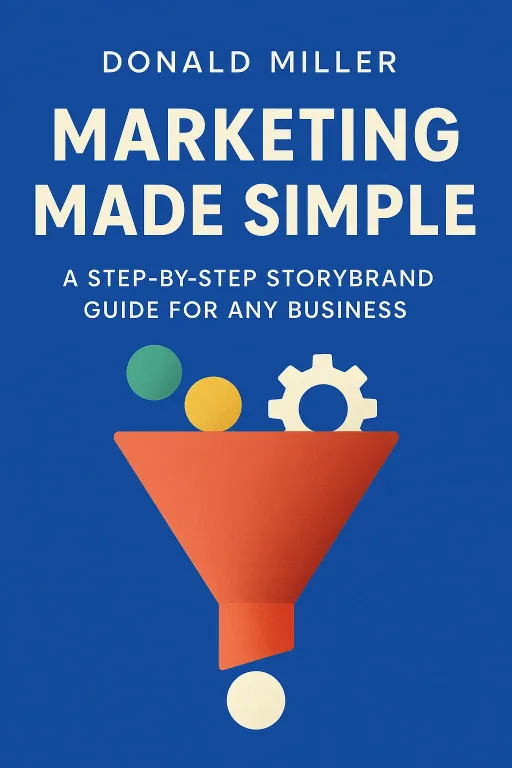
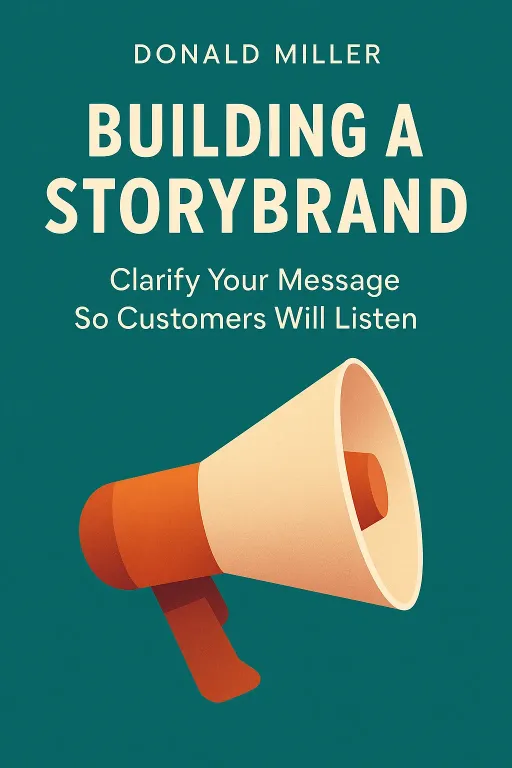
Nova: Exactly! And that's where two brilliant minds come in, offering not just tactics, but foundational shifts in thinking. We're talking about Donald Miller's and Simon Sinek's. Miller, with his deep roots as a seasoned storyteller, gives us a narrative framework that's almost deceptively simple, yet profoundly effective. Sinek, on the other hand, transitioned from the world of advertising to uncover this universal pattern of successful leaders, creating a philosophy that's become a cornerstone for authentic communication. Both of their works are widely celebrated, yet their core ideas can sometimes be oversimplified, which is why we’re diving deeper today.
Atlas: So we're talking about cutting through the noise, not with more noise, but with clarity? That sounds like music to the ears of any strategist trying to differentiate themselves.
Nova: Precisely. And the first step in that clarity, according to Donald Miller, is a radical shift in perspective.
The StoryBrand Framework: Guiding Your Customer's Hero Journey
SECTION
Nova: So, Miller argues that customers aren't looking for a hero; they're looking for a guide. This is such a simple idea, but it’s a game-changer. Most brands default to making themselves the hero of the story—"Look at our amazing product! We're so innovative!"
Atlas: But isn't every brand trying to be the hero? How do you even begin to shift that mindset, especially for established companies that have always put their product or their own achievements front and center? It feels counter-intuitive to what a lot of traditional marketing has taught us.
Nova: It absolutely does, and that's precisely why it's so powerful. Think of it like this: if you're planning a grand adventure, say, climbing Mount Everest, are you looking for a guide who boasts about past climbs, or one who focuses on journey, safety, and successful summit? You want the latter. Miller’s framework casts your customer as Luke Skywalker, and your brand as Yoda. Your customer has a problem, they're seeking a solution, and your brand steps in as the wise, empathetic guide with a plan to help them succeed.
Nova: I recall a fascinating example of a small software company. Initially, their website was all about their cutting-edge algorithms and their brilliant engineers. They were the heroes, showcasing their innovation. Their message was: "We built the most advanced data analytics platform!" It was impressive, but potential clients just weren't converting. The cause was clear: their messaging was product-centric, not customer-centric. They were talking about themselves, not the customer's struggle.
Atlas: So, they were essentially saying, "Look at us, we're amazing," instead of "We can help you be amazing."
Nova: Exactly! So, they applied the StoryBrand framework. They identified their customer's core problem: "Our clients are overwhelmed by data and can't make sense of it to drive business decisions." Their process then shifted: they re-framed their entire communication to position their customers as the heroes struggling with data chaos. Their new message became: "We provide the clarity you need to transform your data into actionable insights, so you can make confident decisions and achieve your business goals." The outcome was remarkable: engagement skyrocketed, sales increased, and their clients felt seen and understood. They weren't just buying software; they were buying a solution to their problem, guided by a brand that understood their journey.
Atlas: That's a huge difference. For strategists looking to differentiate, this isn't just about a catchy slogan, it's about fundamentally understanding your customer's internal narrative and their aspirations. How does this help us stand out when everyone else is also trying to be "customer-centric"?
Nova: Ah, that's the nuance! True differentiation comes from extreme clarity and empathy, not just being "customer-centric" but being "customer-hero-centric." It's about articulating their pain, offering a clear path, and showing them what success looks like. Most brands still fail to do this with genuine precision. They talk about benefits, but they don't articulate the journey. The StoryBrand framework gives you a precise map for that journey.
The Power of Why: Authenticity from Purpose
SECTION
Nova: Speaking of clarity and empathy, that actually leads us perfectly to another giant in the branding world, Simon Sinek, and his incredibly powerful concept of "Start with Why."
Atlas: Ah, Sinek. The Golden Circle guy. I've heard the phrase, but sometimes it feels almost philosophical. How does 'why' translate into tangible business results, especially for innovators who are constantly creating new 'whats' and pushing boundaries? It seems like it could be a fluffy concept if not applied correctly.
Nova: It’s a brilliant question, and you're right, it can feel abstract. But Sinek’s core argument is that people don't buy what you do; they buy why you do it. He illustrates this with his Golden Circle: Why, How, and What. Most companies communicate from the outside-in: "Here's what we do, here's how we do it, want to buy it?" Sinek champions communicating from the inside-out: "Here's what we believe, here's how we bring that to life, and here are the products we offer that align with that belief."
Nova: Let’s consider a contrasting case study. Imagine two companies, both selling high-quality, beautifully designed smartwatches. Company A focuses its marketing on processor speed, battery life, and sleek aesthetics—all the 'what' and 'how.' They might say, "Our watch has a 7-day battery and a retina display."
Atlas: And Company B? They're talking about something else entirely, I'm guessing.
Nova: Exactly. Company B talks about empowering individuals to live healthier, more connected lives, to unlock their full potential. Their campaigns feature people achieving personal milestones, connecting with loved ones, or discovering new hobbies, all facilitated by their watch. The watch itself is almost secondary to the underlying belief. The cause in both cases is similar products, but the communication strategies are vastly different. Company A goes outside-in, Company B goes inside-out. The outcome? Company B doesn't just sell smartwatches; they cultivate a fiercely loyal community. Their customers don't just like the product; they identify with the 'why.' They're willing to pay a premium because they're buying into a shared belief system, not just a gadget. That's the power of authenticity.
Atlas: So, for someone driven by making confident contributions and impact, finding that 'why' isn't just good for marketing; it’s foundational for internal alignment and strategic decision-making too, right? It sounds like it provides a compass for the entire organization, not just the marketing department.
Nova: Absolutely. It's the North Star. When your 'why' is clear, every decision, every new product, every piece of communication aligns with it. It attracts not just customers, but also talent who share that purpose. It builds a brand that's not just unshakeable externally, but also coherent and resilient internally.
Synthesis & Takeaways
SECTION
Nova: So, if Miller gives us the map for the customer's journey, Sinek gives us the compass for our brand's true north. Put them together, and you have an incredibly potent combination. My take, after diving into both, is that a clear, customer-centric narrative powered by an authentic 'why' is the most powerful tool for strategic branding and differentiation in today's world. It cuts through the noise and creates genuine resonance.
Atlas: That's a beautiful synthesis. It really brings home the idea that this isn't just about fluff, but about deep, strategic clarity. So, bringing it all together, what's one concrete action our listeners, especially those who want to differentiate and make an impact, can take right now to start building their unshakeable brand? The "Tiny Step," as you call it.
Nova: The tiny step is this: Articulate your customer's core problem and how your brand uniquely solves it in one compelling sentence. Not ten sentences, not a paragraph—one. This forces you to distill your essence, to be ruthlessly clear about your value proposition from the customer's perspective. It's the ultimate litmus test for whether you truly understand your hero's journey and your brand's 'why'.
Atlas: That's a powerful exercise, cutting through all the noise to that single, impactful statement. It makes me wonder, what's stopping most brands from doing this simple exercise? Why is it so hard to get to that one compelling sentence?
Nova: I think it's a combination of fear of simplicity, a lack of deep, empathetic understanding of their customer's true struggle, and sometimes, just plain old internal misalignment. It’s easier to list features than to articulate a profound solution to a human problem. But the brands that do it, those are the ones that don't just survive; they thrive.
Nova: This is Aibrary. Congratulations on your growth!