

Strategic Precision in Leadership
Golden Hook & Introduction
SECTION
Nova: Atlas, quick-fire question: "Strategic precision in leadership." What's the first thing that pops into your head? Be brutally honest.
Atlas: Oh man, Nova, that sounds like a phrase you hear in a boardroom just before someone asks for a 200-page report due yesterday. Honestly? It sounds like the holy grail for anyone who feels like they’re constantly juggling flaming chainsaws while trying to hit a moving target. My first thought is: "How do I get some of that, and can it come with a caffeine IV?"
Nova: Haha, a caffeine IV is definitely a common request in the leadership world. But you’ve actually hit on something profound there. That feeling of constant firefighting, of just reacting to the latest crisis, is exactly what we're going to tackle today. We're diving into the minds of two titans who, in very different ways, offer blueprints for not just putting out fires, but building a fireproof fortress.
Atlas: I'm listening. Because, honestly, for every pragmatic learner out there, time is scarce, and the demand for impact is high. We need frameworks that actually work, not just sound good on paper.
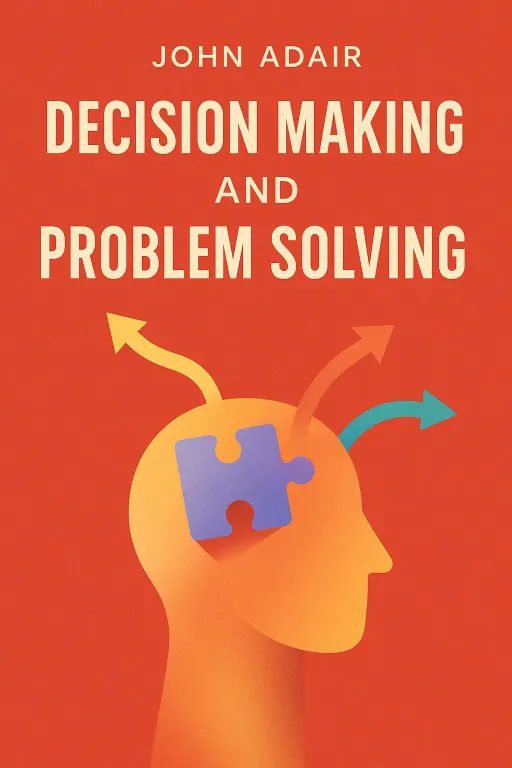
Nova: Absolutely. And that’s why we’re looking at the brilliant, structured approach of John Adair in his seminal work, "Decision Making and Problem Solving," and then complementing that with the long-view, cognitive habits championed by Brian Tracy in "Get Smart!"
Atlas: Adair and Tracy. One for the immediate, one for the long game. This sounds like the ultimate leadership double-header.
Nova: It truly is. John Adair, a British leadership pioneer, is often credited with developing the Action Centred Leadership model, a practical framework born from his military and academic experience. His "Decision Making" book is a cornerstone text, widely regarded for cutting through ambiguity and providing a systematic path forward, especially under pressure. He's all about clarity and action when the stakes are highest.
Atlas: So, when everything's chaotic, Adair gives you a compass?
Nova: Precisely. And then you have Brian Tracy, a global phenomenon in personal development and productivity. His work, including "Get Smart!", focuses on developing superior thinking skills to achieve better results. It's part of his extensive catalog, often lauded for its direct, actionable advice on improving mental performance and foresight. So, Adair helps you navigate the storm, and Tracy teaches you how to predict the weather patterns long before they turn into hurricanes.
The Art of Rapid Tactical Decision-Making (Adair's Model)
SECTION
Nova: So, let's start with John Adair. Imagine this: You're the CEO of a major tech platform. It’s 2 AM, two days before your biggest product launch of the year. Your head of security calls, voice trembling. They've just discovered a critical, zero-day security vulnerability in the core system, a vulnerability that could expose millions of user data records if exploited. Panic is setting in across the team. The launch is imminent, the press is expecting it, and your company's reputation hangs by a thread.
Atlas: Oh man, that's the kind of scenario that makes my palms sweat just thinking about it. Most people would just freeze, or worse, make a rash decision based on pure fear.
Nova: Exactly. And that’s where Adair's 5-step model for rapid clarity in professional crises becomes your lifeline. It’s designed to bring order to that exact chaos.
Atlas: Okay, so when panic hits, how do you even five steps? What does Adair say?
Nova: He breaks it down into a logical flow. The first step is. Sounds simple, right? But in a crisis, clarity is the first casualty. What is the problem? Is it just the vulnerability, or is it also the impending launch, the potential PR disaster, the legal ramifications? You need to precisely articulate the core challenge and the desired outcome. For our CEO, it's not just "fix the bug," it's "fix the bug without compromising user trust or causing irreversible damage."
Atlas: That makes sense. You can’t solve something if you don’t even know what "it" is.
Nova: Right. Next, you. Once the task is clear, you brainstorm solutions, evaluate options, and formulate a course of action. Do you delay the launch? Do you push a patch immediately? Do you notify users? Each option has pros and cons. Adair emphasizes involving your team here, leveraging collective intelligence. Our CEO would be pulling in security, engineering, legal, and comms.
Atlas: So you're not just making a snap judgment alone in a dark room. You're actually, deliberately, bringing in diverse perspectives even when the clock is ticking. That’s crucial.
Nova: Absolutely. The third step is. This is about clear, concise communication to your team. Everyone needs to know their role, the plan, and the urgency. No ambiguity. For our CEO, this means a focused briefing to the incident response team, assigning specific tasks, setting timelines, and ensuring everyone understands the gravity and their part in the solution.
Atlas: That sounds like basic project management, but in a pressure cooker. What happens if someone isn't clear on their role?
Nova: Catastrophe. Which leads us to step four:. This is where you monitor progress, make adjustments as needed, and keep things on track. A crisis is rarely static. New information emerges, obstacles appear. The CEO isn't just giving orders; they're actively managing the execution, removing roadblocks, and ensuring the team has what they need. Maybe the patch takes longer than expected, or a new potential exploit is discovered. The plan needs to be agile.
Atlas: Okay, so you define, you plan, you brief, you control... and then, what, you're done?
Nova: Not quite. The final, often overlooked, but incredibly vital step is. Once the immediate crisis is averted – let’s say our CEO managed to push a critical patch, secure the system, and delay the launch by a day with a transparent communication strategy – you sit down and analyze what happened. What went well? What went wrong? What lessons can be learned? How can you prevent this specific vulnerability or similar ones in the future? This step is where the tactical decision-making feeds into long-term learning.
Atlas: That's actually really inspiring. It's not just about surviving the crisis, but emerging stronger and smarter. So, it’s not just for emergencies, then? Could I use this for a tough decision about, say, a new marketing strategy?
Nova: You absolutely could. While Adair is often highlighted for crisis management, his model applies to complex problem requiring structured decision-making. It’s a way to ensure you're systematically addressing all facets of a challenge, whether it’s a security breach or a strategic pivot. It builds a muscle for clarity under pressure.
Cultivating Long-Term Strategic Foresight (Tracy's Habits)
SECTION
Nova: Now, Atlas, once our tech CEO has successfully navigated that security breach, they're probably thinking, "How do I make sure this never happens again?" That's where Brian Tracy steps in. While Adair puts out fires, Tracy teaches us how to build a fireproof building. He focuses on cultivating long-view cognitive habits that prevent those crises from arising in the first place.
Atlas: Okay, "Get Smart!" sounds obvious. But for someone juggling a million things, how do you build these habits? For the focused achiever who has limited time, where do you start?
Nova: That’s the key, isn't it? Tracy's brilliance is in making sophisticated thinking accessible and habitual. One of his core messages is about. Instead of waiting for problems to appear, you actively think forward. What are the potential challenges three months from now, six months, a year? What trends are emerging?
Atlas: So, like, scenario planning, but for your daily mental routine?
Nova: Exactly. Imagine a global retail chain. They're constantly dealing with supply chain disruptions, changing consumer tastes, geopolitical shifts. A reactive leader would just scramble when a shipping container gets stuck. A leader applying Tracy's habits would have already spent time thinking: "What if our primary shipping route is blocked? What if a key supplier goes out of business? What if consumer demand for product X suddenly plummets?"
Atlas: So they're building contingency plans the contingency is needed. That's true strategic foresight.
Nova: Precisely. Another crucial habit Tracy champions is. It's not enough to just consume information; you have to actively seek diverse perspectives, question assumptions, and challenge the status quo. For our retail chain, this means not just looking at sales data, but studying global economics, emerging technologies, even social psychology to understand consumer behavior.
Atlas: That’s a big one. It's easy to get stuck in your own echo chamber. But actively seeking out conflicting information... that takes discipline. And time! How do you fit that into an already packed schedule?
Nova: That’s where the "pragmatic learner" aspect comes in. Tracy emphasizes that strategic thinking isn't about grand, sweeping gestures, but consistent, small actions. It could be dedicating 15 minutes each morning to reading industry reports, or scheduling a weekly "think time" with no interruptions. It's about training your brain to look beyond the immediate.
Atlas: So it's not just about "getting smart," it's about "practicing smart." What about the truly unpredictable? Can these habits really predict something like a global pandemic?
Nova: That’s a fantastic question, and it highlights a critical nuance. Tracy’s habits don't give you a crystal ball. They give you and. While you might not predict the exact nature of a pandemic, a leader with these habits would have cultivated a mindset that prioritizes flexible supply chains, remote work capabilities, and diversified revenue streams they were constantly asking "what if?" and "how can we be more robust?" They would be quicker to pivot, not because they saw specific crisis coming, but because they built a strategic capacity for major disruption.
Atlas: So it's about building a mental framework that makes you antifragile, rather than just resilient. You don't just bounce back; you get stronger from the disruption because you've been thinking about potential stresses.
Nova: Exactly. It’s about building a robust cognitive infrastructure that allows you to not just respond to change, but to proactively shape your future.
Synthesis & Takeaways
SECTION
Nova: So, we have Adair, the master of tactical decision-making for those moments when the house is on fire, and Tracy, the architect of strategic foresight, helping you ensure the house never catches fire in the first place.
Atlas: It's like having a world-class firefighter and a genius building inspector on your team. You need both. It's not either/or, it's a powerful combination.
Nova: That’s the strategic precision right there. Adair gives you the steps to achieve rapid clarity and execution when chaos erupts. He’s about disciplined action in the face of urgency. Tracy, on the other hand, encourages the cognitive habits that allow you to anticipate, innovate, and essentially outsmart future challenges. He’s about cultivating wisdom and foresight.
Atlas: So, for all our listeners who are focused achievers, driven by impact, and always looking for those actionable takeaways – how do they integrate these? What’s the first step to becoming strategically precise?
Nova: It’s about building both muscles. Start by recognizing which mode you’re in. Is this a genuine crisis requiring Adair’s structured, immediate response? Or are you in a moment of calm, where you can apply Tracy’s habits to think proactively and strategically about the future? The key is to consciously shift between these two mindsets.
Atlas: That’s a great point. It's easy to let crisis management become your default, always reacting. But true strategic precision is knowing when to step back and think, and when to step forward and act decisively.
Nova: Absolutely. So, our challenge for you this week, dear listener, is this: Identify one decision you need to make this week, big or small. For that decision, consciously ask yourself: Is this a 'firefighting' moment needing Adair's clarity, or a 'fire prevention' moment needing Tracy's foresight? And then, apply the appropriate framework.
Atlas: That’s a simple, actionable step that anyone can take, even with a scarce schedule. It’s about making your time count.
Nova: Indeed. We'd love to hear how you apply these insights in your own leadership journey. Share your experiences and what you learned by engaging with our community online.
Atlas: Because mastering both the immediate and the long-term is what truly defines a leader with strategic precision.
Nova: This is Aibrary. Congratulations on your growth!









