

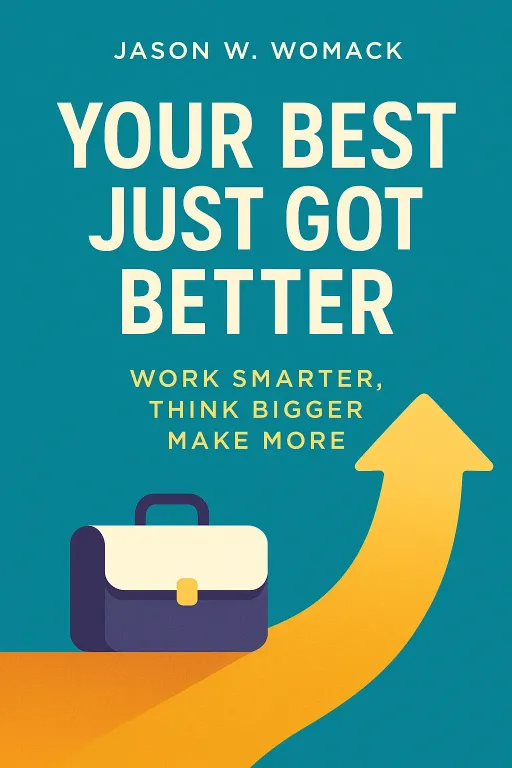
Amplify Your Professional Acuity & Performance
Golden Hook & Introduction
SECTION
Nova: If you think working harder is the ultimate key to professional excellence, you might actually be missing the entire point. We’re about to tell you why your biggest asset isn't just your sheer hustle, but the finely tuned operating system of your brain.
Atlas: Oh, I like that. The operating system of your brain. Because I think a lot of us, myself included, often default to just… pushing harder. Longer hours, more tasks. It feels like the only path to progress, doesn't it?
Nova: It absolutely does. And it’s a trap many high-achievers fall into. But what if there was a more intelligent, more sustainable way to not just manage, but truly excel and lead? That’s what we’re diving into today, drawing insights from two titans of professional development.
Atlas: Two titans? Who are we talking about? Because for our listeners who are constantly driven by progress and seeking impactful knowledge, the "how" of achieving that kind of next-level performance is everything.
Nova: Exactly. We’re looking at and. Womack, an executive coach who's worked with countless professionals, offers intensely practical, actionable steps you can implement. His work is renowned for its no-fluff approach to optimizing daily habits.
Atlas: So, Womack is the master of the "doing."
Nova: Precisely. And then we have Brian Tracy, a name synonymous with self-help and business success for decades. His book, "Get Smart!", comes from his extensive career influencing millions globally, focusing on leveraging your mental faculties to their fullest.
Atlas: So, Tracy is the master of the "thinking."
Nova: You've got it. Together, these two authors offer a powerful, synergistic approach to professional acuity. It’s about harmonizing disciplined habits with incisive thinking. Today, we'll explore how intentional habits and optimized workflows, as championed by Womack, can transform your daily output. Then, we’ll discuss Tracy’s powerful insights on sharpening your mental faculties to truly lead and innovate.
Atlas: That sounds like a complete package. I’m curious, where do we start? With the habits, or with the thinking?
The Foundation: Intentional Habits & Workflow Mastery (Jason Womack)
SECTION
Nova: Let's start with the foundation, the daily rhythm, because without that, even the sharpest mind can get bogged down. Womack’s core philosophy is that professional excellence isn't just about effort, but about and optimizing your workflow. One of his most impactful tiny steps, something he calls "Organize Tomorrow Today," is spending just 10 minutes each evening planning your top three priorities for the next day.
Atlas: Ten minutes? That sounds almost too simple. What’s the real magic behind just 10 minutes of planning? Because I imagine a lot of our listeners already have a to-do list a mile long. How does this prevent us from just moving busywork around?
Nova: That’s the critical distinction. It’s not just about listing three tasks. It's about identifying your that are explicitly aligned with your strategic goals. The magic is multifold. Psychologically, it reduces decision fatigue the next morning. Your brain wakes up knowing exactly what to focus on. It’s like a chef doing all their mise en place the night before; they walk into the kitchen ready to create, not to scramble.
Atlas: That makes sense. It’s about priming, then, not just task management. It’s like setting your GPS for the right destination before you even start driving.
Nova: Exactly! And the benefit extends beyond just one day. This consistent, deliberate action builds momentum. It’s Womack’s way of saying that small, intentional steps truly build big momentum. You’re not just reacting to your inbox; you're proactively shaping your day towards your most important objectives.
Atlas: I can see how that would be powerful. But what about when curveballs hit? Life happens, right? Unexpected meetings, urgent client requests, a new project landing on your desk. How do these habits sustain performance when things go sideways, and your perfectly planned day goes out the window?
Nova: That's a brilliant question, and Womack addresses it with his framework for continuous improvement. The "Organize Tomorrow Today" isn't a rigid, unyielding schedule. It's a consistent. When curveballs hit, you adapt, you re-prioritize using the same strategic lens, and then you to the practice the next evening. It builds resilience because you have a system to fall back on, not just a one-off plan. It's about consistently returning to structure and refining it, rather than abandoning it.
Atlas: So it's not about perfection, but about consistent, strategic engagement. That's a much more sustainable approach.
The Edge: Sharpening Your Mental Faculties (Brian Tracy)
SECTION
Nova: Absolutely. And while Womack gives us the blueprint for the, Brian Tracy, with his decades of expertise in human potential, takes us inside the control room: our minds. His book, "Get Smart!", is all about leveraging your mental faculties to their fullest.
Atlas: Leveraging mental faculties... that sounds high-level, almost academic. For someone driven by progress and seeking impactful knowledge, what's one immediate, tangible way Tracy suggests we actually "get smart"? Something we can apply today.
Nova: A great practical technique from Tracy is for clearer thinking and enhanced problem-solving. When faced with a significant challenge, he advises you to write down the problem clearly and then force yourself to generate at least 20 possible solutions, without judgment, no matter how outlandish they seem at first.
Atlas: Twenty solutions? Wow, that really pushes past the obvious first few ideas. It’s like forcing your brain to break its own patterns, to dig deeper. How does that connect to faster learning or continuous intellectual development?
Nova: It’s a direct training for your brain. When you force yourself past the first five or ten solutions, you're engaging higher-order thinking. You're building new neural pathways, fostering creativity, and improving your ability to connect disparate ideas. This process makes you a faster, more agile learner because you're constantly exercising your cognitive "muscles." Tracy views this continuous intellectual development as the cornerstone of true professional success and influence.
Atlas: So it’s not just about solving problem, but training the brain to be a better problem-solver overall. That's a profound insight. But how do we avoid getting stuck in analysis paralysis? Sometimes, "sharper thinking" can feel like overthinking, especially in fast-paced environments.
Nova: That’s a critical distinction. Tracy isn't advocating for endless contemplation. The goal of "getting smart" is to produce. It’s a dynamic cycle: think clearly, act decisively based on that thought, learn from the outcome, and then refine your thinking. It's about clarity, not just contemplation. The 20 solutions exercise is a tool to break through mental blocks, not to prolong them.
Atlas: That makes perfect sense. It brings us back to that blend of habits and thinking. One without the other feels incomplete, doesn't it? A brilliant mind without structured action can spin its wheels, and disciplined action without sharp thinking can be misdirected.
Synthesis & Takeaways
SECTION
Nova: Absolutely. What Womack and Tracy show us is that true professional acuity isn't a singular skill, but a powerful synergy. It's the disciplined execution of intentional, strategic habits combined with the acute precision of a well-trained, continuously developing mind.
Atlas: So it's not about working harder or just thinking harder, but orchestrating both. For our listeners who are navigating demanding fields, constantly seeking strategic growth and trying to lead and innovate, what's the one 'healing moment' or core realization from these insights that you hope they walk away with today?
Nova: It’s acknowledging that achieving professional excellence isn't about working harder, but smarter and with greater mental clarity. This understanding is truly freeing. It liberates you from the exhausting cycle of constant busyness, allowing you to focus your energy on what truly matters: making a meaningful impact, driving innovation, and leading with genuine purpose. Imagine the clarity, the peace, and the sustained influence that comes from that.
Atlas: That's such a powerful reframe. It’s about being effective, not just busy. It's about purpose-driven performance. And that, I think, is the ultimate mastery.
Nova: Precisely. And the tiny step to begin that mastery? Just 10 minutes tonight. Take those 10 minutes, plan your top three strategic priorities for tomorrow, and align them with your biggest goals. Start there.
Atlas: A powerful journey begins with a single, intentional step. That's something everyone can do right now. What a great way to sharpen your edge.
Nova: Indeed. And that’s our deep dive into amplifying your professional acuity and performance.
Atlas: This is Aibrary. Congratulations on your growth!









