

The Bio-Psychology of High Performance
Golden Hook & Introduction
SECTION
Nova: We often celebrate grit, the relentless push. We lionize the founders who sleep under their desks and the innovators who burn the midnight oil. But what if that very mindset, for visionaries and builders, is a ticking time bomb for burnout, not sustainable impact?
Atlas: Whoa, that's a bold statement, Nova. I imagine a lot of our listeners, who are constantly innovating, building ventures, and pushing for meaningful change, are feeling that pressure right now. It's almost ingrained in the culture of progress. What are we unpacking today that challenges this fundamental belief?
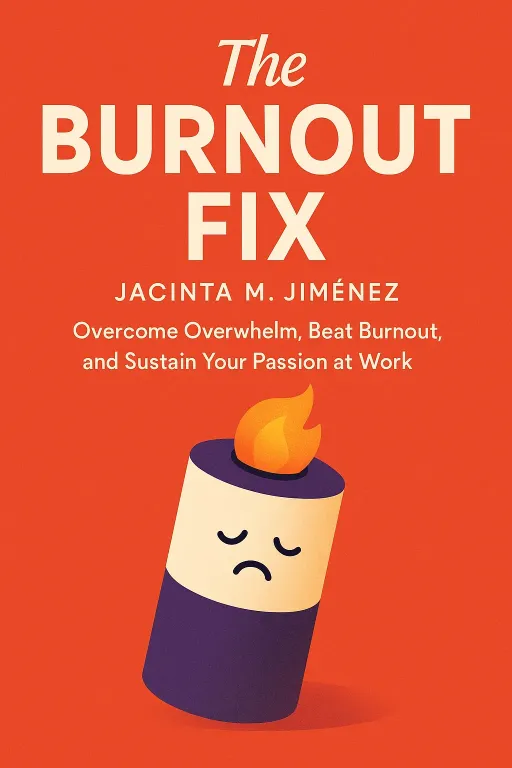
Nova: Today, we're diving into the bio-psychology of high performance, looking at how to achieve peak output not by just pushing harder, but by intelligently managing our internal systems for both long-term sustainability and immediate clarity. We're drawing insights from two phenomenal books: by Jacinta M. Jiménez, and by Sandy Abrams.
Atlas: That's crucial context. So, these aren't just theoretical insights from an ivory tower. Jiménez, for instance, is a psychologist and executive coach, so she's seen the real-world toll of burnout up close, often in high-pressure corporate environments. And Abrams, I understand, has a deep entrepreneurial background herself, which makes her advice on decision-making under pressure incredibly authentic.
Nova: Absolutely. They both bring a powerful blend of scientific understanding and practical experience. And that brings us directly to our first big idea: the radical redefinition of resilience.
Redefining Resilience: From Trait to Skill for Sustainable High Performance
SECTION
Nova: Jacinta Jiménez, in, argues that resilience isn't some innate trait you either have or you don't. It's a skill. It’s a muscle you can train, develop, and strengthen. For too long, the narrative has been, "Oh, they're just naturally resilient," or "I'm not resilient enough." This framing is incredibly damaging because it implies a fixed capacity, rather than a dynamic one.
Atlas: That’s fascinating, because I think a lot of our listeners, especially those focused on tech innovation and driving societal impact, pride themselves on their 'grit.' There’s almost a badge of honor in saying, "I powered through," or "I just kept pushing." Are you saying that very mentality, this idea of 'innate grit,' is actually counterproductive for someone trying to create lasting value?
Nova: Precisely. That 'powering through' often leads to what Jiménez calls "unsustainable performance." It's like constantly redlining your engine without ever servicing it. You might get bursts of speed, but you're inevitably heading for a breakdown. True resilience, as a skill, is about recognizing your limits, understanding your energy patterns, and proactively building recovery and self-management strategies.
Atlas: So, it’s less about having an endless, indestructible tank, and more about knowing how to effectively refuel, optimize the engine, and even recognize when a pit stop is absolutely necessary. For those pushing for societal impact, where the stakes are inherently long-term, that sounds like a fundamental game-changer for sustained effectiveness, not just short-term wins.
Nova: It absolutely is. Think of it like this: an athlete training for a marathon doesn't just run until they collapse every day. They incorporate rest, nutrition, cross-training, and mental preparation. They build their capacity over time, systematically. Jiménez's framework is similar for our cognitive and emotional performance. It’s about building capacity through intentional practice, not just reacting to stress with more stress.
Atlas: Can you give us an example? I’m imagining a visionary leader, someone trying to refine their business acumen, who believes they're resilient because they're working 80-hour weeks. How does Jiménez's perspective reframe that scenario?
Nova: Let’s take the case of a tech startup founder, let's call her Maya. Maya was celebrated for her "resilience." She’d pull all-nighters, answer emails at 3 AM, and rarely took a weekend off. She genuinely believed this was the only way to succeed, the epitome of grit. But what started happening was subtle at first: her decision-making became erratic, she snapped at her team more often, and her strategic foresight, once her superpower, started to dull. She was, but not truly at her best. Her team started mirroring her stress, leading to a toxic culture.
Atlas: Wow. So, she thought she was resilient, but she was actually eroding her capacity over time. That’s a stark contrast to what we often celebrate.
Nova: Exactly. Now, imagine another founder, David. David was equally ambitious, equally driven by progress and the desire for meaningful change. But David approached it differently. He intentionally scheduled "deep work" blocks, but also non-negotiable recovery time – whether it was exercise, meditation, or simply disconnecting. He saw these not as breaks work, but as integral his work, as part of his resilience skill-building. When a crisis hit, David, while stressed, had the mental bandwidth and emotional regulation to assess the situation calmly, involve his team effectively, and pivot strategically, preventing a much larger catastrophe.
Atlas: That’s a powerful distinction. It’s the difference between merely surviving and truly thriving, especially when the goal is to create lasting value. I can definitely see how that shift in mindset, from 'enduring' to 'building capacity,' would be crucial for navigating the demanding journey of entrepreneurship. So, what are some of these skills beyond just 'toughing it out'? I'm thinking about those moments when you that immediate clarity, when you don't have time for a full recharge.
The 60-Second Reset: Leveraging Breath for High-Stakes Decision Making
SECTION
Nova: And speaking of managing that engine and needing an immediate pit stop, that brings us beautifully to our second big insight, from Sandy Abrams’s. Abrams focuses on the incredible power of 60-second breathing exercises to reset your nervous system.
Atlas: Sixty seconds? That sounds almost too simple for the kind of high-stakes pressure our listeners are under. Like, 'just breathe' when you're about to launch a multi-million dollar product or make a critical strategic pivot? It feels almost dismissive of the intensity.
Nova: It’s understandable to feel that way, but it’s rooted in deep physiology. When we’re under pressure, our sympathetic nervous system, our fight-or-flight response, kicks in. Our heart rate increases, our breath becomes shallow, and our cognitive functions, especially those related to complex decision-making and strategic thinking, actually diminish. We become reactive, not proactive.
Atlas: So, it's not about magically solving the problem, but literally changing your internal state to the problem more effectively. That makes me wonder, how does that apply to a moment of intense pressure? Say, a critical negotiation for a new tech venture, or a sudden, unexpected market shift that demands an immediate response?
Nova: Exactly. Abrams explains that focused, deep breathing, even for a minute, stimulates the vagus nerve. This is a superhighway for your parasympathetic nervous system, which is your "rest and digest" mode. It literally tells your brain, "Okay, we're not in immediate danger, you can calm down now." This physiological reset brings your heart rate down, relaxes your muscles, and, crucially, allows the prefrontal cortex – the part of your brain responsible for executive functions, logic, and long-term planning – to come back online.
Atlas: That’s profound. It’s about creating that tiny bit of space in the chaos, a micro-pause, to regain cognitive control. I imagine this is particularly vital for someone who needs to maintain strategic foresight in a rapidly changing market, or make a decision that could impact societal progress.
Nova: Consider an entrepreneur, Sarah, who's in a tense meeting with investors. The conversation takes an unexpected turn, and she feels her heart racing, her thoughts scattering. Her initial impulse is to respond defensively or impulsively, which could jeopardize the deal. Instead, she subtly takes a 60-second "breathing break"—perhaps excusing herself for a quick drink of water, or just taking a few deep, intentional breaths in her chair while others are talking. She uses that minute to consciously slow her breath, engaging her diaphragm.
Atlas: What happens then? Does the problem disappear?
Nova: Not at all. The problem is still there. But Sarah’s internal state shifts dramatically. Her nervous system calms, and suddenly, the emotional fog lifts. Instead of reacting with fear or anger, she can access her strategic thinking. She might realize a different angle to present her argument, or identify a key piece of information she’d overlooked, or even choose to gracefully table the discussion for a more productive time. The 60 seconds didn't change the external situation, but it changed her capacity to respond to it effectively, leading to a much clearer and ultimately better decision for her venture.
Atlas: That’s actually really powerful. It shows that even a small, intentional action can have a massive ripple effect on high-stakes outcomes. It’s about being deliberate in moments of intense pressure, which is a hallmark of truly effective leadership in any field, especially tech innovation.
Synthesis & Takeaways
SECTION
Nova: So, when we put Jiménez's idea of resilience as a skill together with Abrams's 60-second reset, we see a holistic picture emerge. Sustainable performance isn't about brute force; it's about intelligent self-management. It’s about proactively building your capacity for the long haul, and having immediate, science-backed tools for those critical moments when you need to perform at your sharpest.
Atlas: That’s a brilliant synthesis. It’s not either/or, but a complementary approach. You build the long-term capacity for resilience, like training for that marathon, and then you have these micro-tools, these emergency override buttons, for immediate clarity when things hit the fan. It's like building a robust system with both preventative maintenance and a quick-response mechanism.
Nova: Precisely. And this leads us to our tiny step for tomorrow, directly from the wisdom of these two brilliant minds: when you feel the pressure of a deadline or a critical decision looming, pause for 60 seconds of focused breathing before making your next strategic move.
Atlas: That’s a tangible, immediate action that anyone can take, regardless of their role or the scale of their ambition. For our listeners who are constantly pushing boundaries, dedicated to progress, and shaping the future through entrepreneurship or tech innovation, this isn't just about feeling better. It's about and making for that meaningful change they seek. It’s about embracing the journey with intention, not just surviving it.
Nova: Exactly. It’s about creating lasting value not just in your ventures, but in your own capacity to lead them. This isn't a luxury; it's a fundamental strategy for anyone aiming for true societal impact and sustainable high performance.
Nova: This is Aibrary. Congratulations on your growth!









