

The Architecture of the Mind: Deconstructing Compulsive Habits
Golden Hook & Introduction
SECTION
Orion: Keneda, as someone who thinks deeply about mindset and habits, have you ever felt like you're arguing with yourself? Like there are different, competing voices in your head, especially when you're trying to make a change?
Keneda: Absolutely, Orion. It's a constant negotiation, isn't it? It feels like one part of you, the long-term planner, is making a rational case for going to the gym or eating healthy, while another part, the short-term gratification seeker, is screaming for the couch and pizza. They operate on completely different logic systems.
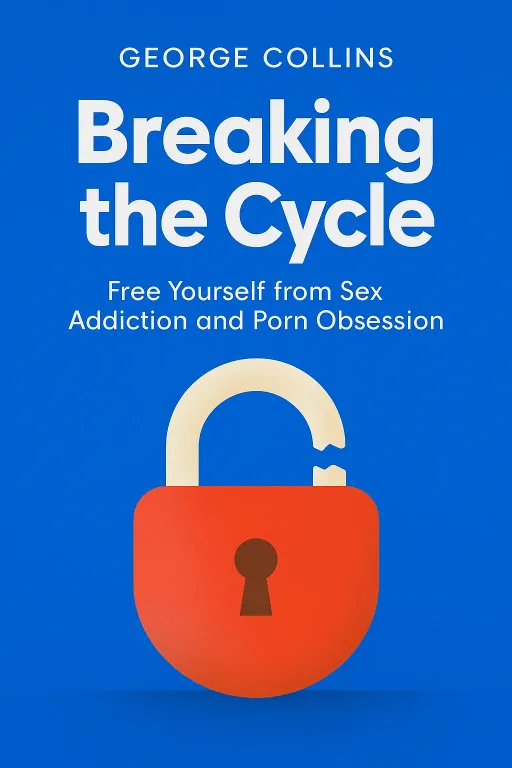
Orion: Exactly. And that's the fascinating territory we're diving into today, using George Collins' book, "Breaking the Cycle," as our map. It presents this powerful idea that to change our habits, we first have to understand the very architecture of our minds.
Keneda: I love that framing. Not just fighting the impulse, but understanding the system that produces it.
Orion: Precisely. So today we'll dive deep into this from three perspectives. First, we'll explore the structure of our inner world by mapping our 'subpersonalities.' Then, we'll become detectives and investigate the 'source code' of our compulsions by looking for our 'original wound.' And finally, we'll focus on the 'system override'—practical tools you can use to actively rewrite your mental habits.
Keneda: Map, investigate, and override. That sounds like a solid, analytical approach. I'm in.
Deep Dive into Core Topic 1: Mapping Your 'Subpersonalities'
SECTION
Orion: Great. So let's start with that first idea: mapping the inner world. The book uses a brilliant metaphor. It asks us to imagine our mind as a vast, dark amphitheater. Most of the time, we're just a single actor on stage, under a spotlight, thinking we're the only one there. But in the darkness, sitting in the stands, are all these other 'voices' or 'subpersonalities.'
Keneda: And these subpersonalities are the different drives we have? The inner critic, the adventurer, the addict…
Orion: Exactly. They are personality modes that emerge in response to certain triggers, often rooted in our past. The first step to breaking a cycle, the book argues, is to 'turn on the lights' in that amphitheater and see who's actually there. There's a powerful story about a man named Zane that illustrates this perfectly.
Keneda: Let's hear it.
Orion: Zane is struggling with a compulsion. He feels isolated and decides to try this exercise. He visualizes himself in a dark gymnasium, spotlight on him. He calls out to his 'addict-self,' the part of him that's driving his behavior. At first, this voice, which he names 'Looker,' just taunts him. It says, "Forget this, let's go to the gym and look at women. That's what we do." It tries to keep the lights off.
Keneda: It wants to stay in the shadows, to remain an unconscious driver.
Orion: Precisely. But Zane persists. He says, "No. I want to see you. I'm turning on the lights." He visualizes flipping a giant switch, and the whole gymnasium floods with light. And when he looks to see the source of this powerful, destructive voice... he sees a twelve-year-old boy.
Keneda: Wow. Not a monster, but a child.
Orion: A twelve-year-old boy who used to love watching the girls in his middle school gym class. In that moment, Zane's entire perspective shifts. He realizes this powerful compulsion isn't some dark, evil force. It's an old, outdated coping mechanism from his childhood that's still trying to run the show. He says to the boy, "You're not my friend. You're hurting me."
Keneda: That's a profound shift. It moves from an adversarial relationship with a part of himself to a diagnostic one. The goal isn't to kill the 'Looker,' but to understand its origin and tell that twelve-year-old boy, "Hey, that strategy doesn't work for us anymore. We're adults now." It's about updating the software, not smashing the hardware.
Orion: That's the perfect analogy. It's about updating the software. And by dialoguing with that younger self over weeks, Zane diminishes its power. He can see the impulse arise and recognize it for what it is—an echo from the past, not a command he has to obey in the present.
Keneda: It creates a space between stimulus and response. By identifying the voice, you're no longer fused with it. You become the observer of the thought, not the thought itself. That's a cornerstone of mindfulness and building better habits.
Deep Dive into Core Topic 2: Investigating Your 'Original Wound'
SECTION
Orion: And that idea of the twelve-year-old boy is a perfect bridge to our next point: investigating the source code. The book suggests that these powerful subpersonalities often spring from what it calls an 'original emotional wound.'
Keneda: An early life event that sets the programming.
Orion: Exactly. It's the unhealed hurt that our compulsive behavior is, in a strange way, trying to solve or soothe. The book encourages us to become detectives of our own past. There's a story about a man named Ryan, a professional baseball player, that really brings this home.
Keneda: Okay.
Orion: Ryan is successful on the outside, but his life is being derailed by sex addiction. In therapy, he starts his 'investigation.' He grew up in a home that, on the surface, seemed fine. But his father, a salesman, was always pretending they were wealthier and more important than they were. The car, the clothes, the stories—it was all a performance.
Keneda: A world of pretense, as the book calls it.
Orion: A world of pretense. There was no genuine intimacy, no realness. His parents were emotionally distant from each other and from him. Ryan realized his 'original wound' wasn't a single dramatic event, but the constant, low-grade poison of inauthenticity. He grew up feeling like nothing was real.
Keneda: And how did that connect to his adult behavior?
Orion: As an adult, his compulsive sexual behavior was a desperate, albeit dysfunctional, attempt to feel something real, something intense and immediate. It was a way to cut through the fog of phoniness he was raised in. But of course, it only created more isolation and shame.
Keneda: It's fascinating, and tragic, how the psyche works. It identifies a problem—a lack of genuine intimacy and authenticity—and then deploys a 'solution' that is the complete opposite of what's needed. It's a deeply flawed coping mechanism. It's like trying to put out a fire with gasoline because, for a split second, the flash of the ignition feels powerful.
Orion: That's a fantastic way to put it. And for Ryan, the healing only began when he could connect the dots. When he could look back with empathy—not blame—and understand that his adult addiction was being driven by the wounded child who just wanted something, anything, to feel real.
Keneda: It speaks to the importance of self-empathy in any kind of personal growth. You can't build new habits on a foundation of self-loathing. You have to understand the 'why' behind the behavior, and often that 'why' is a story of a younger self trying to survive with the only tools they had.
Deep Dive into Core Topic 3: The System Override
SECTION
Orion: So, if we've mapped the voices in the amphitheater and we've investigated the original wound that gives them power, that brings us to the third and most practical step: the system override. How do we actively intervene in the moment?
Keneda: The actionable part. The new code.
Orion: Right. The book offers several tools, but one of the simplest and most powerful is a concept called 'First Thought Wrong.' It comes from a comedian who, in recovery, realized that for an addict, the very first impulsive thought you have when triggered is almost always the wrong one. It's the old programming running.
Keneda: First thought: "I feel stressed." Addict thought: "A drink will fix this." Wrong.
Orion: Exactly. The technique is to build the habit of immediately identifying that first thought and labeling it: "Nope. First Thought Wrong." This creates a crucial pause. And in that pause, you ask a simple question: "What else?" What else can I do right now? There's a great, simple story about a client named Tony.
Keneda: Let's hear it.
Orion: Tony is at work, and a woman gives a presentation that triggers his sexually compulsive thoughts. His first thought is immediate: "I should go to a strip club at lunch." It's automatic. But he's been practicing this technique. He catches the thought and says to himself, "First Thought Wrong."
Keneda: He interrupts the script.
Orion: He interrupts the script. Then his addict mind offers a backup: "Okay, fine, no strip club. But let's go buy an X-rated DVD." Tony catches that one too. "Second Thought Wrong." He's in this internal battle, but he's created a space. And in that space, he asks, "What else? What else could I do that would actually feel good?" And the answer that comes up is... an ice cream sundae.
Keneda: From a strip club to a sundae. That's quite a pivot.
Orion: It is! But he does it. He goes and gets the sundae, enjoys it, and feels a sense of victory. He broke the chain. He didn't follow the old, destructive path. He chose a different, harmless, and frankly more enjoyable one.
Keneda: I love that. It's a cognitive circuit-breaker. The 'First Thought Wrong' is the stop signal, and the 'What Else?' is the command to the brain to find an alternate route. It's not just about resisting; it's about redirecting. For anyone interested in habits, that's a golden nugget. You're not just using willpower to say 'no'; you're using creative energy to find a better 'yes'.
Orion: A better 'yes.' That's it. And over time, that becomes the new automatic program. The brain learns that when that trigger happens, the path to reward isn't the old destructive habit, but the new, healthier one.
Synthesis & Takeaways
SECTION
Orion: So, to bring it all together, it's this three-stage process. First, you map the voices in your mind's amphitheater. Second, you investigate your history to find the original wound, the source code for those voices. And third, you use practical tools like 'First Thought Wrong' to override the old programming and write a new script.
Keneda: Map, investigate, override. It's an incredibly empowering framework because it moves you from being a victim of your own mind to becoming its architect. It gives you both the blueprint and the tools.
Orion: Well said. So, as a final thought for our listeners, I'll turn the 'What Else?' question to you, Keneda. Thinking about general self-improvement, what's a common 'First Thought' that many of us might have that's 'wrong' for our long-term goals, and what could be a powerful 'What Else?' to replace it with?
Keneda: That's a great question. I think a common one is the 'First Thought' of criticism when we make a mistake. The thought is, "I'm an idiot. I always mess this up." That's 'First Thought Wrong.' It's destructive and leads to a cycle of shame. The 'What Else?' could be curiosity. "What else can I learn from this? What's the data point here that will make me better next time?" Shifting from self-criticism to self-analysis. That one change can fundamentally alter your path to growth.
Orion: From criticism to curiosity. That's a perfect system override. Keneda, thank you. This has been a fascinating look at the architecture of our habits.
Keneda: The pleasure was all mine, Orion. A great conversation.









