

Personalized Podcast
Golden Hook & Introduction
SECTION
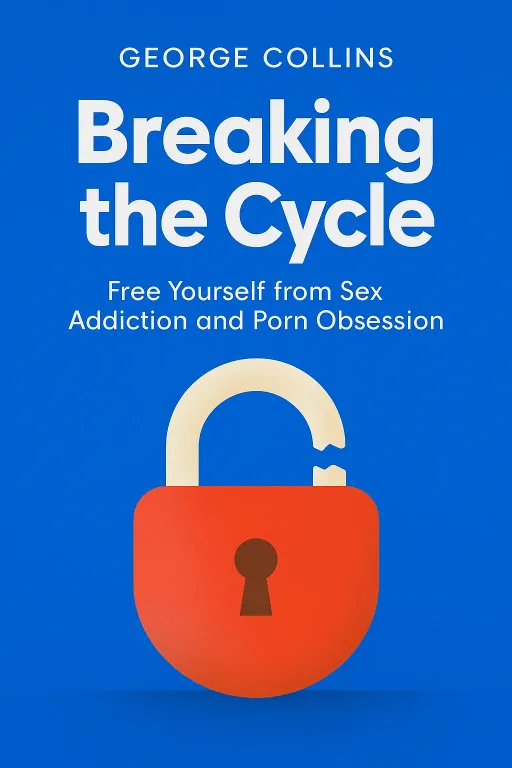
Dr. Celeste Vega: Think about the last time you reacted completely on autopilot. Maybe you reached for your phone without thinking, or found yourself driving home with absolutely no memory of the last five miles. Now, imagine if that same deep, automatic autopilot was driving a behavior that was slowly tearing your life apart. Welcome to the show. I am Dr. Celeste Vega, and today we are diving into a book that shines a clinical, compassionate, and incredibly practical light on one of the most misunderstood struggles of the modern era. We are talking about George Collins'. Today, we are going to break this down from two fascinating angles. First, we will map the internal architecture of the mind, exploring what Collins calls the amphitheater of the mind and the hidden voices that run our behavior. Then, we will look at real-time cognitive interruption tools, specifically how to disrupt automatic habit loops before they take over. Joining me is Rida Abdelwahid, a healthcare professional with an incredibly sharp, analytical mind. Rida, it is wonderful to have you here.
Rida Abdelwahid: It is great to be here, Celeste. You know, looking at this book from a clinical and systems-thinking perspective, what strikes me immediately is how Collins reframes compulsive behavior. He moves us entirely away from the old, unhelpful narrative of moral failure. Instead, he treats these compulsive patterns as deeply ingrained, automated cognitive loops. It is like a system running outdated software that was originally designed to protect the user but is now causing the entire operating system to crash.
Dr. Celeste Vega: That is such a perfect way to put it, Rida. Outdated software. And Collins really starts by asking us to look at the bugs in that software. In the very first chapter, he poses a chilling question to the reader: What would need to happen to make you decide you have a problem? Who would need to find out? He is forcing us to look at the potential for self-destruction before we hit absolute rock bottom.
Rida Abdelwahid: Right, because the human brain is incredibly adept at rationalization. We build these massive walls of denial to protect our habits. By asking who would need to find out, Collins bypasses the intellectual defenses and targets the real-world consequences. It is a diagnostic diagnostic tool, really, forcing the patient to confront the systemic risk of their behavior.
Deep Dive into Core Topic 1
SECTION
Dr. Celeste Vega: Exactly. And to understand how these systems get built in the first place, Collins introduces this brilliant metaphor: the amphitheater of the mind. He suggests that our minds are not just one single, unified voice. Instead, they are like a dark theater filled with different subpersonalities, or voices, that step into the spotlight depending on the situation. To illustrate this, he shares the story of a client named Zane. Zane was struggling with deep isolation and a compulsive urge to constantly look at and objectify women. In therapy, Collins had Zane visualize himself in a dark gymnasium, turning on the lights to see who was actually driving this urge. And when Zane turned on the lights in his mind, he did not find some monster. He found a scared, lonely twelve-year-old boy who had learned to watch girls in gym class as a way to cope with feeling completely invisible.
Rida Abdelwahid: That is a profound clinical insight. From a developmental psychology standpoint, what Zane experienced was the personification of a coping mechanism. When we experience emotional wounds in childhood, our brains create these subpersonalities, like Zane's Looker, to protect us from pain, loneliness, or shame. The problem is, we grow up, but those subpersonalities stay stuck at the age they were created. They keep running the same protective script, completely unaware that the adult host is now in a totally different environment.
Dr. Celeste Vega: Yes, and because they are running in the dark, we do not even realize they are separate from us. We think,, when in reality, it is the subpersonality screaming for the spotlight. Collins emphasizes that the first step to breaking the cycle is realizing you are not your mind. Your mind is an instrument, a tool. But as spiritual teacher Eckhart Tolle pointed out, about eighty to ninety percent of most people's thinking is not only repetitive and useless, but often dysfunctional and harmful. We get completely identified with the noise in our heads.
Rida Abdelwahid: It is a classic case of mistaking the map for the territory, or in this case, mistaking the background processes of the computer for the user. When Zane was able to look at the Looker and say, "You are not my friend, you are hurting me," he created a cognitive gap. He separated his essential self, his conscious awareness, from the automated program. That gap is where choice lives. Without that gap, there is no agency; there is only reaction.
Dr. Celeste Vega: And sometimes, to create that gap, you need a massive disruption of reality. Collins shares another story about a client named Marv, who was heavily addicted to visiting adult porn shops. Marv wanted to stop, but the pull of the fantasy was just too strong. So, Collins did something highly unconventional. He met Marv at his favorite porn shop. But instead of letting Marv slip into his usual quiet, anonymous fantasy world, Collins started talking loudly. He engaged the clerk in a boisterous conversation, pointing at the bondage magazines and loudly commenting on how unrealistic and unappealing the images actually were. He completely shattered the quiet, hypnotic spell of the shop. Several other customers actually walked out because the intrusion of real, loud reality was too much to bear.
Rida Abdelwahid: That is an incredible experiential intervention. What Collins did there was disrupt the environmental cues that trigger the addictive state. Addiction thrives on secrecy, isolation, and a highly curated internal fantasy. By bringing loud, objective, almost absurd reality into that space, he forced Marv's conscious brain to wake up. Marv looked around and suddenly saw the space for what it was: grungy, sad, and completely unappealing. The illusion collapsed. It is like turning the house lights on in a movie theater mid-film. Suddenly, the magic is gone, and you just see sticky floors and plastic seats.
Dr. Celeste Vega: Yes, Marv literally said, "Okay, I get it. I don't want to be here." The spell was broken. And that brings us to the core of Collins' philosophy: our real addiction is not actually to the physical act or the visual stimuli. Our real addiction is to our minds. We use fantasy as a vehicle to escape ourselves, to leave what is real because reality feels too painful or difficult to navigate.
Rida Abdelwahid: Absolutely. It is an avoidant coping strategy. If you look at the data on euphoric recall, which is when the brain selectively remembers only the pleasure of a past experience while completely deleting the negative consequences, it is clear how the mind tricks us. The mind projects a perfect, idealized future exploit or a glowing past memory to keep us from feeling the discomfort of the present moment. But as Collins notes, you can never have enough of what won't satisfy you. The fantasy promises connection, but it delivers absolute isolation.
Deep Dive into Core Topic 2
SECTION
Dr. Celeste Vega: It really does. And that brings us to our second core topic: how do we actually stop chasing these illusions when we are out in the wild, facing real-world triggers? Collins shares a deeply personal story about this, which he calls the Blonde in the Beemer. He was driving down Highway 101 in California, fast, as he liked to do, when he spotted a red BMW driven by what appeared to be a beautiful blonde woman. Immediately, his addict mind kicked into overdrive. He started tailing the car, his mind spinning this elaborate, highly sexualized fantasy about who she was, how wealthy she was, and how they were going to connect. He followed this car for forty miles, completely lost in the trance, even contemplating doing something incredibly dangerous and inappropriate while driving. Finally, he pulled up alongside the car to get a closer look. And when he looked over, he discovered the driver was actually an unattractive, middle-aged man with long blonde hair.
Rida Abdelwahid: It is a hilarious but incredibly powerful metaphor. His brain had taken a tiny, ambiguous sensory cue—long blonde hair in a fast car—and constructed a massive, compelling, forty-mile fantasy around it. He was not reacting to a real person; he was reacting to a projection of his own mind. And he endangered himself and others to chase a ghost.
Dr. Celeste Vega: Exactly. He was chasing a mirage. And he realized that this is exactly what we do when we are triggered. We see a cue, and our mind immediately writes a script that we feel compelled to follow. To combat this, Collins developed a technique he calls the Red Light Guy. It is based on the realization that we already have incredibly strong, automated safety programs in our brains. For example, when you are driving and you see a red light, you do not have to stop and intellectually debate whether you should press the brake. Your foot just does it. It is an automatic, life-saving reflex. Collins realized we can harness that same automatic capacity to stop our compulsive thoughts.
Rida Abdelwahid: That is a brilliant application of cognitive behavioral therapy and neuroplasticity. You are essentially hijacking an existing, highly efficient neural pathway and repurposing it. So, how does the technique actually work in practice?
Dr. Celeste Vega: It is a simple, three-step process. First, you must notice the exact moment you are triggered or starting to objectify someone. Second, you perform a physical action to anchor yourself—Collins suggests putting your hand on your heart. And third, you state a positive, conscious affirmation to redirect that energy. For Collins, his affirmation was, "I'd like to shift this energy to some positive thought or behavior." He practiced this consistently for two months. He describes being in a market, starting to stare compulsively at a woman's cleavage, and his internal Red Light Guy immediately activated. He put his hand on his chest, thought,, and shifted his focus. Over time, his addict's radar for objectifying women simply began to fade.
Rida Abdelwahid: What I love about this is the physical component. Putting your hand on your heart is not just symbolic; it actually stimulates the vagus nerve, which can lower your heart rate and bring your nervous system out of a fight-or-flight, high-arousal state. It grounds you in your physical body. And the affirmation, "her body is none of my business," is a powerful boundary-setting statement. It respects the other person's humanity while releasing the user from the burden of having to chase or possess them.
Dr. Celeste Vega: Yes, it completely shifts the dynamic from objectification to respect. Collins shares the story of a client named Evan who used this exact technique. Evan had a habit of going to a local burrito place for lunch, specifically to stare at and objectify women in summer clothes. This staring would trigger a chemical rush that inevitably led to him masturbating in the men's room at work. It was destroying his self-esteem, risking his job, and his wife was on the verge of leaving him. In counseling, Evan installed his own Red Light Guy. Whenever he felt the urge to stare, he would touch his chest and say to himself, "Real woman."
Rida Abdelwahid: "Real woman." That is incredibly simple but incredibly deep. It completely shatters the two-dimensional, centerfold fantasy that pornography trains the brain to see. It forces Evan to recognize that the person in front of him is a human being with a life, feelings, and struggles, not a prop in his internal movie. By changing his internal dialogue, Evan was able to step out of the fantasy world and actually become present for his wife. He saved his marriage because he started living in reality.
Dr. Celeste Vega: He really did. And this ties into another core technique Collins teaches, which he calls First Thought Wrong. This concept actually came from the comedian Mark Lundholm, who joked about the absolute absurdity of an addict's initial impulses. The premise is simple: if you are an addict, your first automatic thought in response to stress, anger, or loneliness is almost always going to be unhealthy, destructive, or completely irrational. Therefore, you must operate under the assumption that your first thought is wrong.
Rida Abdelwahid: It is a fantastic heuristic for risk management. In healthcare, we talk about diagnostic bias—how our first impression of a patient can sometimes lead us down the wrong path if we do not pause and challenge it. For a recovering addict, treating the first thought as a false alarm is life-saving. It prevents the automatic transition from trigger to action. If Tony, another client Collins mentions, gets triggered at work by a presenter and his first thought is to go to a strip club, and his second thought is to buy a porn DVD, he has to recognize both as First Thought Wrong. He pauses, rejects them, and asks, "What else?" He ends up rewarding himself with an ice cream sundae instead. It is a harmless, positive alternative that satisfies the brain's desire for a reward without destroying his progress.
Dr. Celeste Vega: Exactly. You have to keep asking "What else?" until you get to a thought that actually aligns with your values. Sometimes it takes three, four, or even seven thoughts to get there. But every time you say no to the first wrong thought, you are strengthening the prefrontal cortex. You are building the muscle of choice. Collins emphasizes that no matter how strong the pull is, you always have a choice. It is your birthright.
Synthesis & Takeaways
SECTION
Rida Abdelwahid: That is the ultimate message of hope in this book. We are not victims of our history or our biology unless we choose to be. By acting as detectives, investigating our personal history to find our original emotional wounds, and identifying our Internalized Negative Self-Objects, we can stop living in reaction to our past. We can update the software.
Dr. Celeste Vega: We really can. Collins' book is a beautiful reminder that true intimacy—connecting deeply with yourself and with a loved one—is infinitely more rewarding than the cheap, isolating thrill of objectification. When we step out of the dark amphitheater of our minds and into the light of conscious awareness, we finally get to answer the question: How good can you stand it? How much joy, peace, and real connection are you willing to let into your life?
Rida Abdelwahid: It is a challenge to step beyond our old, comfortable stories of shame and limitation. For anyone listening today, the actionable takeaway is simple: the next time you feel that automatic, compulsive pull, whatever it may be, pause. Put your hand on your heart. Ask yourself, Break the automatic loop, and choose a different path.
Dr. Celeste Vega: Beautifully said, Rida. Thank you so much for bringing your analytical depth to this conversation today. And thank you to everyone listening. Remember, you are not your mind. You are the awareness behind it. Take care of yourselves, and we will see you next time.









