

Deciphering the Science of Early Development
Golden Hook & Introduction
SECTION
Nova: We spend years trying to teach children how to regulate their emotions, yet we completely ignore the biological operating system that was installed long before they learned to speak.
Atlas: That sounds like a heavy opening. Most of us assume that babies are just blank slates waiting for instruction. Are you suggesting there is a pre-loaded software package we are missing?
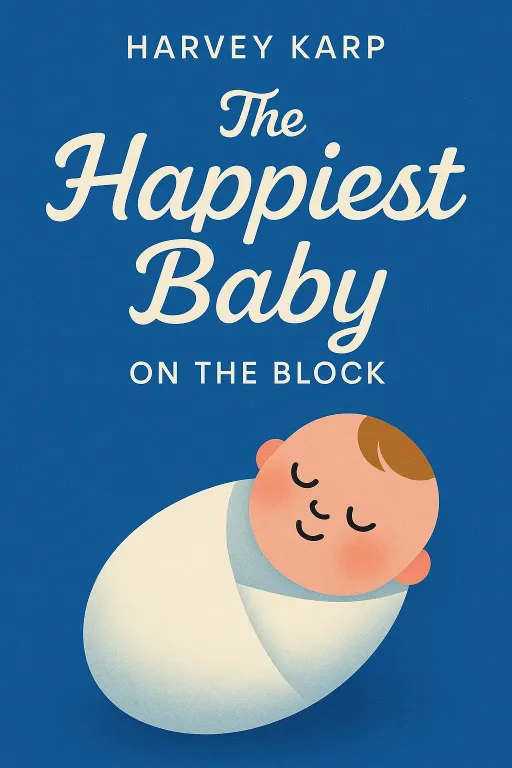
Nova: Exactly that. Today we are looking at two seminal works that fundamentally changed how we view early development. We are diving into The Happiest Baby on the Block by Dr. Harvey Karp and Brain Rules for Baby by molecular biologist John Medina.
Atlas: I know Karp. That is the one with the swaddling techniques, right? The guy who basically became a household name because he stopped the crying.
Nova: That is the one. Dr. Karp, who was a pediatrician in Los Angeles for decades, realized that we were treating infants as if they were developmentally ready for the world the moment they were born. His work suggests that humans are actually born three months too early. They are essentially fetuses in the fourth trimester. And then we have John Medina, who takes a completely different, yet complementary, approach. He is a molecular biologist who shifted his focus to how the brain actually develops. He translates complex neuroscience into what he calls rules for baby development.
Atlas: It feels like these two books create a bridge. One is about the immediate, visceral, physical state of the child—the crying, the sleeping, the soothing—and the other is about the long-term cognitive architecture.
Nova: You hit the nail on the head. Karp gives us the immediate survival tactics, the "how to stop the noise," while Medina gives us the "why this matters for the future adult." It is a powerful combination if you want to understand human development from the ground up.
Atlas: Let’s start with the physical. Help me understand this "fourth trimester" idea. It sounds like a bit of a stretch, biologically speaking.
The Science of the Fourth Trimester and the 5 S's
SECTION
Nova: Think about other mammals. A foal can walk within hours of birth. A human infant? They are helpless. They have no motor control, no ability to self-soothe, and they are completely overwhelmed by the sensory input of the world. Karp argues that the only reason we are born when we are is because our heads would not fit through the birth canal if we stayed in the womb any longer. We are essentially premature by design.
Atlas: I have definitely heard that, but let’s be honest, it feels like a convenient excuse for why babies are so difficult to manage. What does this actually mean for how we treat them?
Nova: It means they are not looking for a sophisticated environment; they are looking for a simulation of the womb. They need a sensory environment that mimics the rhythmic, tight, and constant pressure they experienced for nine months. This is where Karp’s framework, the 5 S's, comes into play. It is not a parenting hack; it is a neurological trigger.
Atlas: Break down the 5 S's for me. I’ve heard the term, but I suspect most people think it is just a list of things to do when a baby is cranky.
Nova: It is a system designed to trigger what Karp calls the "calming reflex." This is an innate, involuntary response that shuts down crying and activates the parasympathetic nervous system. The first S is Swaddling. It provides that tight, womb-like restriction. The second is Side or Stomach position. Being on the back is safer for sleep, but for calming, a side or stomach position helps stop the startle reflex. The third is Shushing—a rhythmic, loud sound that mimics the rushing of blood in the womb. The fourth is Swinging, which is the constant motion they felt when the mother walked around. And the fifth is Sucking, which releases natural calming chemicals in the brain.
Atlas: It sounds like a sensory overload, actually. If I were crying and someone wrapped me up, made loud noises, and started swinging me around, I would probably be even more agitated. Why does this work for them?
Nova: That is the crucial insight. For an adult, that level of sensory input is chaotic. But for a newborn, silence and stillness are the chaotic states. They have spent months in a noisy, moving, pressurized environment. When you provide the 5 S's, you are essentially telling their nervous system, "You are safe. You are back where you belong." You are speaking the language of their biology before they have a language for anything else.
Atlas: I can see how that would be a relief for parents, but I am thinking about the implications here. Are we just teaching them to be dependent on these external stimuli? Or are we actually helping them build a capacity for self-regulation later on?
Nova: That is a sophisticated question. The goal is not to keep them in a swaddle until they are five. The goal is to provide a "sensory bridge." By using these tools to calm the nervous system early on, you are preventing the cycle of prolonged, high-stress crying that can actually flood a developing brain with cortisol. You are keeping the system in a state of rest and digest rather than fight or flight.
Atlas: That brings up a fascinating point. If we are talking about cortisol and stress, we are moving from Karp’s physical soothing right into the territory of what Medina discusses in his work.
The Neurobiology of Security
SECTION
Nova: Exactly. This is the perfect transition to John Medina’s work. While Karp focuses on the physical reset, Medina focuses on the environmental conditions that allow the brain to flourish. Medina’s central argument is that the most critical factor for cognitive development is not flashcards, not classical music, and not early reading programs. It is emotional security.
Atlas: I feel like I hear that advice everywhere, but it often gets dismissed as "feel-good" parenting advice. Does Medina have the data to back that up? He is a molecular biologist, right?
Nova: He is, and that is why his perspective is so compelling. He looks at brain development through the lens of evolution. He argues that our brains are designed to learn best when we feel safe. When a child feels insecure, their brain shifts resources away from higher-level cognitive processing and puts them into survival mode. It is a physiological redirection of energy.
Atlas: So, you are saying that if a parent is stressed, or if the environment is chaotic, the child is literally losing the potential to develop higher-order thinking because they are too busy trying to survive the emotional environment?
Nova: That is the biological reality. Medina talks about the "serve and return" interaction. Think of it like a game of tennis. The baby serves—they babble, they point, they cry. The parent returns the serve—they smile back, they make eye contact, they respond. This back-and-forth interaction is what physically builds the neural architecture of the brain. When that interaction is absent, or when it is inconsistent, the brain literally does not develop the same level of connectivity.
Atlas: That makes me think about the modern, distracted parent. If we are constantly on our phones, or if we are emotionally unavailable because we are burnt out, are we effectively failing to "return the serve"?
Nova: Medina would argue that consistency matters more than perfection. The brain is remarkably resilient, but it is also highly sensitive to the consistency of the feedback loop. If the child learns that their "serve" will be ignored or met with unpredictable reactions, they stop serving. They start to conserve their energy. They go into a state of emotional withdrawal.
Atlas: It is wild to think that something as simple as putting down a phone or making eye contact is effectively a piece of neuro-engineering. We tend to think of brain development as something that happens in a classroom, but you are describing it as something that happens in the living room, in the mundane moments.
Nova: That is the core of it. Medina emphasizes that we have an obsession with "smart babies." We want them to learn languages, we want them to play instruments. But he points out that a child who feels safe and secure is a child who is free to be curious. Curiosity is the engine of learning. If you are worried about your environment, you are not curious. You are vigilant.
Atlas: I am thinking about the concept of resilience here. Some might argue that shielding a child from all stress, or providing this "perfectly responsive" environment, makes them fragile. Does Medina address that?
Nova: He does, and it is a nuanced point. He isn't suggesting we create a sterile, stress-free bubble. He is talking about the difference between toxic stress and manageable challenge. Toxic stress is the kind that comes from neglect or chronic instability—the kind that floods the system with cortisol and shuts down the prefrontal cortex. Manageable challenge is when a child faces a difficulty, but has a secure base to return to. That is where growth happens. The secure base gives them the confidence to explore, fail, and try again.
Atlas: That distinction is vital. It is not about removing all difficulty; it is about providing the emotional infrastructure to handle it. It sounds like both Karp and Medina are saying the same thing: Biology dictates the rules, and if we ignore them, we are fighting a losing battle.
Synthesis & Takeaways
SECTION
Nova: We have covered a lot of ground. Karp gives us the tools to manage the sensory input, and Medina gives us the framework to understand the emotional output. Both are ultimately about creating an environment where the nervous system can exist in a state of calm rather than a state of alarm.
Atlas: This brings me back to the idea of the "Tiny Step" for our listeners. We are talking about babies, but the biology of stress is universal. If the "calming reflex" works for a newborn, does it work for an adult who is dealing with their own version of a tantrum—say, a high-pressure work meeting or a chaotic commute?
Nova: I love that you brought this back to the adult experience. Think about the 5 S's. Swaddling? Maybe not a literal blanket, but think about the need for a contained, quiet space. Swinging? Think about rhythmic movement, like walking or pacing, to calm the mind. Shushing? Think about white noise or rhythmic music. Sucking? Think about the physiological impact of controlled breathing.
Atlas: So, for our listeners who are feeling overstimulated—which is basically everyone in the modern world—creating a "sensory reset" is not just a self-care cliché. It is a biological necessity.
Nova: Exactly. If you are feeling overwhelmed, you are in a state of high cortisol. You are not in a state to make good decisions, be creative, or connect with others. You are in survival mode. The Tiny Step for today is to create a 10-minute sensory reset. Dim the lights. Minimize the noise. Use rhythm—whether it is breathing or walking. Give your own nervous system the same "fourth trimester" treatment you would give an infant. Signal to your brain that you are safe.
Atlas: That is a powerful reframe. We often think of "calming down" as a mental task—"I just need to think more positively." But what you are saying is that we need to address the input first. We need to hack our own biology before we can expect our brains to function at a higher level.
Nova: That is the most efficient path. You cannot reason your way out of a physiological state. You have to change the environment first, and then the higher-level thinking follows.
Atlas: It is fascinating to see how the science of early development is actually a blueprint for human resilience at any age. We are all just trying to feel safe enough to explore the world.
Nova: Well said. Whether you are a parent trying to soothe a newborn or an adult trying to navigate a stressful career, the fundamental need for a secure base and a regulated nervous system remains the same.
Atlas: I am definitely going to try that 10-minute sensory reset. It is a much more practical approach than just telling myself to "calm down."
Nova: It is a game-changer. Once you experience that shift from alarm to calm, you will see why it is the foundation for everything else—whether it is brain development or just getting through a tough Tuesday.
Atlas: This has been a fantastic dive into the biology of our best selves. Thank you for walking me through it.
Nova: It has been a pleasure. Remember, growth is not about doing more; sometimes, it is about creating the right environment for what is already there to flourish. This is Aibrary. Congratulations on your growth!