The 'Eco-Conscious' Trap: Rethinking Our Place in Nature's Story
Golden Hook & Introduction
SECTION
Nova: Alright, Atlas, five words. Give me your five-word review of humanity's current relationship with nature.
Atlas: Oh, that's tough! Okay... 'Confused, detached, desperate, but... hopeful?'
Nova: Ooh, 'but hopeful' – I like that twist! My five words would be: 'We're in it, not above it.'
Atlas: That’s incredibly succinct, Nova, and it really hits the nail on the head, doesn’t it? That feeling of being both a part of it and utterly disconnected.
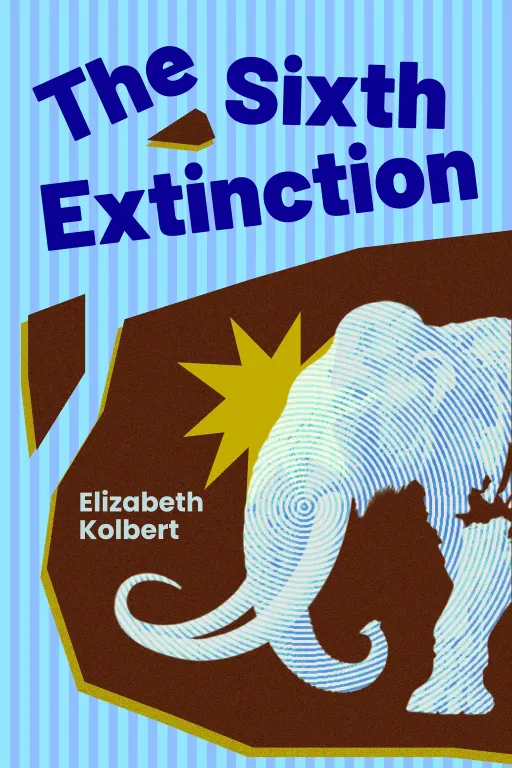
Nova: Absolutely. And that's actually a perfect segue into today's deep dive, because we're exploring the profound insights from Elizabeth Kolbert's Pulitzer Prize-winning book, 'The Sixth Extinction: An Unnatural History,' and Robin Wall Kimmerer's absolutely essential 'Braiding Sweetgrass: Indigenous Wisdom, Scientific Knowledge and the Teachings of Plants.'
Atlas: Two powerhouse books, both challenging our fundamental assumptions about the planet. Kolbert’s work, which won her that prestigious Pulitzer, really lays bare how human activity isn't just factor, but defining factor in our current ecological crisis, which is a chilling thought.
Nova: It truly is. And Kimmerer, a botanist and a member of the Citizen Potawatomi Nation, offers such a vital counterpoint, weaving together her scientific expertise with the deep, reciprocal wisdom of her indigenous heritage. These aren't just books; they're lenses through which we can finally see our true, interconnected role in nature's grand story, especially if we’re feeling overwhelmed by environmental crises.
The 'Blind Spot': Humanity as Separate from Nature
SECTION
Atlas: I imagine a lot of our listeners, especially those who are deep thinkers and really care about impact, probably feel that overwhelm you just mentioned. But it’s almost like we're approaching the problem from a fundamental misunderstanding.
Nova: Exactly, Atlas. It's what we call the 'blind spot.' This deeply ingrained cultural narrative that positions humanity as separate from nature, often even above it. We see nature as a backdrop, a resource, or something to be 'saved,' rather than something we are intrinsically a part of. And Kolbert, in 'The Sixth Extinction,' doesn't just talk about this; she makes us confront its devastating consequences head-on.
Atlas: So, how does Kolbert make us this separation, rather than just understand it intellectually? What’s the narrative she uses to illustrate this blind spot?
Nova: She does it by charting the previous five mass extinctions. She takes us on this incredible journey through Earth's deep history, describing how life has profoundly reshaped the planet and how these cataclysmic events wiped out vast swathes of species. We're talking about asteroid impacts, supervolcanoes, massive climate shifts – indifferent, cosmic forces that reshape everything. And then, she brings us to the present.
Atlas: And suddenly, the indifferent cosmic force... is us.
Nova: Precisely. She shows how the current extinction event is unique because it's driven almost entirely by human agency. Our industrialization, our technological advancements, our sheer numbers, and fundamentally, our perception of nature as something to be conquered or exploited, have become the primary drivers of species loss. It’s a chilling cause-and-effect chain.
Atlas: So, are you saying it's not just climate change, but a fundamental way we've always seen ourselves that's the problem? What's an example where this human-driven blind spot first started to show its teeth?
Nova: A really vivid example Kolbert explores is the megafauna extinction. Think mammoths, saber-toothed cats, giant ground sloths. As early humans migrated across continents, particularly into the Americas and Australia, these massive animals, which had thrived for millennia, began to disappear. The cause? Human hunting, habitat alteration, and the introduction of new pressures these species simply weren't equipped to handle.
Atlas: Wait, so even early humans, often romanticized as living in perfect harmony with nature, were causing extinctions?
Nova: That's the unsettling truth Kolbert uncovers. The process was rapid, the decline of these large animals profound, and the outcome was dramatic ecosystem changes. It illustrates that even at relatively early stages of human development, our perceived dominance and ability to manipulate our environment, driven by that underlying sense of separation, had profound and lasting impacts. It’s a pattern that only accelerated with technological progress.
Atlas: That makes me wonder, then, if this separation fosters a sense of helplessness for us today. If we've always been this way, how do we even begin to change? It sounds like an uphill battle against our own nature.
The 'Shift': Reclaiming Interconnectedness Through Science and Indigenous Wisdom
SECTION
Nova: That's a crucial question, Atlas, and it's where Robin Wall Kimmerer's 'Braiding Sweetgrass' offers not just hope, but a profound pathway forward. If Kolbert shows us the 'what' and 'how' of our destructive separation, Kimmerer offers a profound 'how-to' for reconnecting, for making 'the shift.'
Atlas: So if Kolbert's book is a wake-up call, Kimmerer's is like a guide to living? For someone who builds bridges between ideas, like many of our listeners, how does Kimmerer actually blend science and indigenous wisdom? Because sometimes those two fields feel fundamentally at odds.
Nova: They often do, don't they? But Kimmerer, as a distinguished botanist herself and an Indigenous woman, embodies that bridge. She argues that scientific knowledge, while powerful, is often incomplete without the ethical framework and deep understanding of relationship that indigenous wisdom provides. She sees nature not just as a collection of resources or biological mechanisms, but as a teacher, a community, and a generous provider.
Atlas: That’s a really different way of looking at it. What does that 'reciprocal relationship' actually look like in practice? How does gratitude translate into action for someone in a modern context?
Nova: She illustrates this beautifully through the story of the Three Sisters: corn, beans, and squash. This isn't just an agricultural technique; it's a profound ecological and cultural practice. Scientifically, we understand the symbiosis: corn provides a stalk for beans to climb, beans fix nitrogen in the soil for the corn and squash, and squash leaves shade the soil, retaining moisture and deterring pests. It's a perfect biological synergy.
Atlas: Right, like a natural, self-sustaining system. We can understand that from a scientific perspective.
Nova: Exactly. But for Kimmerer, the indigenous wisdom adds layers of meaning that elevate it beyond mere efficiency. It’s accompanied by practices of gratitude, ceremony, and respectful harvesting. You don't just take; you acknowledge the gift, you give back, and you understand your place within that cycle of generosity. It's about co-flourishing, not just consumption. The cause is a philosophy of respect, the process is mindful cultivation, and the outcome is both ecological health and cultural richness.
Atlas: That's a powerful contrast. The industrial agricultural model often feels like it's designed to extract maximum output with minimal input, viewing nature as a machine. Kimmerer’s approach frames it as a living relationship. I can see how that holistic view helps bridge diverse fields – it connects farming to ethics, to biology, to culture. It’s not just about what you grow, but how you grow it, and who you are in relation to it.
Nova: And that's the heart of the shift. Kolbert shows us the wreckage born from our perceived separation. Kimmerer illuminates a path where science, when coupled with gratitude and interconnectedness, can guide us back to a thriving, reciprocal relationship. It's about moving from being an agent of extinction to a partner in regeneration.
Synthesis & Takeaways
SECTION
Atlas: What really strikes me is how these two books, while seemingly different in tone – one urgent and stark, the other poetic and hopeful – are actually two sides of the same coin. They both demand a reckoning with our place in nature.
Nova: Absolutely. Understanding the destructive 'blind spot' that Kolbert exposes is crucial – we need to grasp the full scale of our impact. But equally vital is embracing the path to 'the shift' that Kimmerer offers: a path of reciprocal action, gratitude, and acknowledging nature as our profound teacher. True environmental action isn't about saving a separate 'nature'; it's about healing our relationship with a system we are intrinsically a part of.
Atlas: That’s such a powerful reframing. It shifts us from a narrative of guilt and crisis to one of inherent belonging and responsibility, fostering impact through interconnectedness. It reminds us that our well-being is inextricably linked to the well-being of the planet.
Nova: Precisely. It’s about cultivating a mindset where we see ourselves as members of the living world, not just visitors or managers. And that perspective, grounded in both scientific understanding and ancient wisdom, provides a far more robust and hopeful foundation for meaningful environmental action.
Atlas: So, for our listeners, how might acknowledging humanity as a part of, rather than apart from, nature change approach to environmental action?
Nova: We'd love to hear your thoughts.
Nova: This is Aibrary. Congratulations on your growth!