

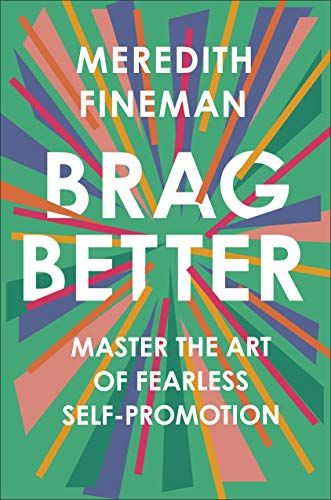
Brag Better
Introduction: The Burden of Being Quietly Competent
Introduction: The Burden of Being Quietly Competent
Nova: Welcome to the show. We’re diving into a topic that makes most high-achievers instantly cringe: bragging. But what if I told you that the problem isn't bragging, but how badly we’re doing it?
Nova: : That’s a bold opening, Nova. I think most of our listeners just spent the last decade trying to do the exact opposite—staying quiet, letting the work speak for itself. It feels safer, right?
Nova: It feels safer, but Meredith Fineman, author of the fantastic new book, "Brag Better: Master the Art of Fearless Self-Promotion," argues that staying silent is actually career sabotage. She built her entire philosophy around a group she calls 'The Qualified Quiet.'
Nova: : The Qualified Quiet. I love that term. It perfectly describes the engineers, the researchers, the brilliant support staff who are indispensable but invisible. So, what’s the core problem Fineman identifies with them?
Nova: The core problem is that in today's hyper-visible professional landscape, competence alone is no longer enough. If you don't advocate for your accomplishments, they effectively don't exist in the decision-making matrix. This book isn't about arrogance; it’s about necessary advocacy.
Nova: : So, we’re not talking about posting every minor win on LinkedIn. We’re talking about a strategic shift in how we communicate value. Why now? Why is this concept so urgent in the current professional climate?
Nova: Because the landscape has changed. Fineman notes that we’ve moved from an industrial model where output was easily measured, to a knowledge economy where impact is often subjective and needs to be narrated. We need to learn to narrate our own success stories authentically. That’s what we’re unpacking today: the difference between toxic boasting and strategic, better bragging.
Nova: : Fantastic. Let's get into the philosophy first. I need to know how Fineman redefines this dirty word: bragging.
Key Insight 1: Bragging is Stating Facts
Redefining Bragging: Facts Over Feelings
Nova: Let’s start with the foundational shift. Fineman insists that bragging, when done correctly, is not about ego or making others feel small. It is simply the act of stating facts about your accomplishments.
Nova: : Stating facts. That sounds so simple, but it feels revolutionary when you’re conditioned to downplay everything. What’s the psychological barrier that makes stating a fact feel like bragging?
Nova: It’s the anxiety of perception. We fear being labeled arrogant, or worse, unlikable. Fineman points out that research shows that when people state facts sincerely, they are often perceived as more competent, not less. The key word there is.
Nova: : Sincerity is crucial. I’ve seen people on social media who are masters of the humblebrag—"Ugh, I’m so exhausted from flying first class to accept this lifetime achievement award." That’s not sincere; that’s performance art.
Nova: Exactly. Fineman draws a sharp line between that and what she calls 'better bragging.' Traditional bragging often relies on exaggeration or comparison. Better bragging relies on verifiable data points. Think of it as presenting your case file, not delivering a monologue.
Nova: : Can you give us a concrete example of that contrast? How does a 'quiet' person phrase something versus a 'better bragger'?
Nova: A Qualified Quiet person might say, 'I helped out on that project, and it seemed to go okay.' A Better Bragger says, 'I implemented the new data pipeline, which reduced processing time by 35% for the Q3 report.' See the difference? One is vague reassurance; the other is quantifiable impact.
Nova: : That 35% reduction is powerful because it’s objective. It removes the listener’s need to judge your and forces them to acknowledge the.
Nova: Precisely. And Fineman emphasizes that this isn't just for job interviews. It’s for performance reviews, team meetings, and even casual networking. It’s about owning your contribution to the collective success.
Nova: : I’m thinking about the research that suggests women, in particular, are penalized more heavily for self-promotion than men. Does Fineman offer strategies to navigate that specific double standard?
Nova: She does. A major part of her strategy involves framing your accomplishments in terms of or. Instead of 'I single-handedly fixed the bug,' try 'My focused debugging effort ensured the client launch proceeded on schedule, saving the team two days of rework.' It keeps the focus outward.
Nova: : That reframing is brilliant. It satisfies the need to state the fact while mitigating the perceived selfishness. It shifts the narrative from 'look at me' to 'look at what we achieved because of this action.'
Nova: It’s about building influence through documented success. Fineman’s work is rooted in the idea that if you don't claim your successes, someone else will fill that vacuum with their own narrative, or worse, your success will simply fade into the background noise of the organization.
Nova: : So, the first step is internal: accepting that your facts are valid and worth sharing. What’s the next step in moving from acceptance to action?
Key Insight 2: Tactical Language Shifts
The Toolkit: Eliminating Qualifiers and Using Super Power Words
Nova: Once we accept that we brag better, the next hurdle is the. Fineman dedicates significant space to tactical language changes, focusing heavily on eliminating qualifiers and weaponizing specific vocabulary.
Nova: : Qualifiers are my kryptonite. I catch myself saying things like, 'This is just a small idea,' or 'I only managed to...' It’s like I’m apologizing for taking up space.
Nova: You are apologizing! Fineman calls these 'weasel words' or qualifiers. They instantly deflate the impact of the statement that follows. She suggests a ruthless audit of your vocabulary. Words like 'just,' 'only,' 'maybe,' 'sort of,' and 'I think' need to be purged from your self-advocacy script.
Nova: : So, if I’m presenting a proposal, instead of saying, 'I think this budget structure might work,' I should just say, 'This budget structure achieves X, Y, and Z goals'? No hedging?
Nova: Precisely. You replace the hedge with a concrete outcome. But it’s not just about subtraction; it’s about addition. Fineman champions the use of 'Super Power Words.' These are action verbs and nouns that carry inherent weight and authority.
Nova: : Give me a few examples of these Super Power Words. I need to start building my arsenal.
Nova: Think words like 'spearheaded,' 'architected,' 'transformed,' 'secured,' or 'pioneered.' These words imply leadership, complexity, and significant ownership, even if your role was part of a larger team. They signal high-level contribution.
Nova: : That’s a great distinction. 'Managed' is fine, but 'Architected' suggests you designed the blueprint. It elevates the perceived skill level.
Nova: It does. And she emphasizes preparation. Better bragging isn't spontaneous; it’s rehearsed. She advocates for creating a 'Brag File'—a running document where you log achievements immediately, complete with metrics, so when the moment arrives—a review, a meeting—you aren't scrambling to remember what you did six months ago.
Nova: : The Brag File is genius. It externalizes the memory, making the recall process less emotionally taxing. It turns self-promotion from a performance into a data retrieval task.
Nova: Exactly. It removes the 'on-the-spot' pressure. Furthermore, she suggests practicing these statements out loud. You need to get comfortable hearing the powerful language associated with your achievements so it sounds natural when you say it.
Nova: : I can see how that practice helps normalize the feeling. If I say 'I secured the funding' ten times in my office, saying it in front of my boss feels less like a foreign, arrogant declaration.
Nova: It becomes a statement of fact you’ve already internalized. Another key tactic she mentions is using the 'Nightmare Question' preparation. This is where you anticipate the toughest follow-up question about your achievement and prepare a concise, factual answer for it.
Nova: : That sounds like preparing for a debate, but for your own career. It builds confidence because you’ve already stress-tested your claim.
Nova: It’s proactive defense against skepticism. By eliminating the weak language and loading up on high-impact, factual statements, you transform self-advocacy from an uncomfortable plea into an undeniable presentation of value.
Key Insight 3: Advocacy as a Collective Good
The Ripple Effect: Why Better Bragging Helps Everyone
Nova: We’ve established that better bragging is factual and prepared. But let’s address the biggest lingering doubt: Why should I, the listener, care about this if I’m happy where I am? Fineman argues that better bragging isn't just a personal gain; it’s a professional responsibility.
Nova: : That’s a huge pivot. How does my promotion or my salary bump benefit the person sitting next to me?
Nova: When you clearly articulate your value, you set a new benchmark for what success looks like in your team or organization. If you, the quiet expert, successfully advocate for a raise based on quantifiable results, you create a clearer path for the next quiet expert to do the same.
Nova: : So, it’s about creating transparency in the opaque systems of promotion and compensation. You’re essentially mapping the terrain for others who are too hesitant to explore it themselves.
Nova: That’s the collective good. Fineman often speaks about visibility for women and underrepresented groups. When those voices are silent, the leadership narrative defaults to the loudest, most self-assured voices, which historically haven't been diverse.
Nova: : It’s about correcting the historical imbalance of who gets heard. If I, as a woman, secure a major client and then state the facts of that win clearly, I’m not just getting credit; I’m providing a template for my female colleagues.
Nova: Exactly. You are providing social proof that this type of advocacy is acceptable and rewarded in that specific environment. You are de-risking the act of self-promotion for the next person. It’s a form of mentorship through action.
Nova: : I’m thinking about the concept of 'credit theft.' Often, when we are too vague, our managers or peers inadvertently absorb our achievements into their own narratives. Better bragging is a form of protecting intellectual property.
Nova: Absolutely. Fineman stresses that you must be the primary source of your own professional story. If you don't tell it, someone else will write the summary, and they might leave out the crucial details—like the 35% efficiency gain.
Nova: : This also ties into confidence, doesn't it? The more you practice stating facts about your success, the more you internalize that success as real, rather than just a lucky fluke.
Nova: It’s a feedback loop. Practice leads to comfort, comfort leads to consistency, and consistency leads to undeniable professional growth. Fineman suggests starting small—maybe just practicing the language in a low-stakes setting, like a one-on-one with a trusted mentor, before bringing it to the boardroom.
Nova: : So, the takeaway here is that silence isn't humility; it’s often just missed opportunity, both for the individual and for the broader community that needs diverse leaders speaking up.
Conclusion: Your Next Step in Fearless Self-Advocacy
Conclusion: Your Next Step in Fearless Self-Advocacy
Nova: We’ve covered a lot of ground today, moving from the anxiety of the 'Qualified Quiet' to the practical steps of becoming a 'Better Bragger.' Alex, what’s the single most actionable takeaway you’re walking away with?
Nova: : I’m leaving with the Brag File. The idea that I need to stop relying on my memory during high-stakes moments and start logging quantifiable wins immediately. It turns bragging from an emotional performance into a documented report.
Nova: That’s powerful. My key takeaway is the vocabulary audit. I’m going to spend the next week actively hunting down every instance of 'just' and 'only' in my emails and spoken updates, and replacing them with a Super Power Word or a direct statement of impact.
Nova: : It’s about shifting the internal monologue first. If we truly believe our accomplishments are worth talking about—that they are facts, not favors—the external delivery becomes much easier.
Nova: Exactly. Fineman gives us permission to own our competence without the baggage of perceived arrogance. It’s not about being louder; it’s about being clearer, more factual, and more strategic in how we communicate our value to the world.
Nova: : So, for our listeners feeling that familiar twinge of discomfort right now, remember: Bragging better is advocating better. It’s a skill, not a personality trait, and it’s one that benefits your entire professional ecosystem.
Nova: It’s time to stop waiting to be discovered and start directing the spotlight. Thank you for joining us for this deep dive into Meredith Fineman's "Brag Better."
Nova: : This is Aibrary. Congratulations on your growth!