

Unlocking Community Power: From Local Engagement to Global Impact
Golden Hook & Introduction
SECTION
Nova: Atlas, I want you to imagine something wild for a second. What if the very act of trying to make our lives more convenient, more individual, actually made us poorer in the most fundamental way possible? Not financially, but in our human connections?
Atlas: Oh man, that's a deep cut right off the bat, Nova. I'd say that sounds suspiciously like the modern condition, doesn't it? We’re more connected digitally than ever, yet often feel more isolated. Like we traded genuine belonging for a thousand shallow taps on a screen.
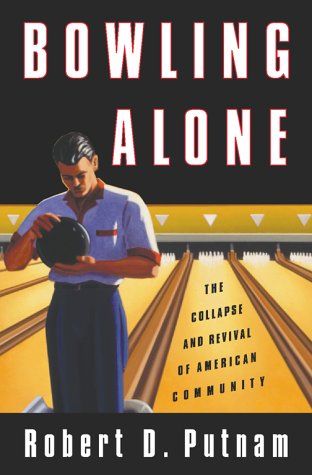
Nova: Exactly! It’s this profound paradox that lies at the heart of our discussion today. We're diving into the essential blueprint for building resilient communities, drawing insights from two incredibly impactful books. First, Robert D. Putnam's seminal work,.
Atlas: Ah, Putnam! I remember reading about that one. His work became a cultural touchstone, didn't it? He wasn’t just observing a trend; he was sounding an alarm.
Nova: He absolutely was. Putnam, a renowned political scientist, spent decades meticulously tracking the decline of social capital in America. His research wasn't just theoretical; it was based on an immense amount of data showing how everything from joining bowling leagues to attending PTA meetings was on the decline. The book, when it came out, received widespread acclaim and sparked a huge national conversation about civic engagement. It really made people look at their own neighborhoods and wonder, 'Where did everyone go?'
Atlas: That's fascinating. So it wasn't just a hunch, but a data-driven wake-up call. And it sounds like a conversation that’s only become more relevant, not less, given how much the world has changed since he wrote it.
Nova: Precisely. And then we'll pivot to by Charles Vogl, which offers a practical guidebook on how to actually build those enduring connections. These two books together paint a comprehensive picture: the problem, and the solution.
The Decline of Social Capital: 'Bowling Alone'
SECTION
Atlas: So, let's start with Putnam, then.. That title itself is so evocative. What was the core argument he was making that was so groundbreaking?
Nova: The core argument is brilliant in its simplicity and devastating in its implications: that America has experienced a dramatic decline in "social capital" over the past few decades. Now, social capital, in Putnam’s definition, isn't just about who you know; it's about the value derived from the connections between people, the networks of relationships, and the norms of reciprocity and trustworthiness that arise from them.
Atlas: So basically, the glue that holds society together? The sense of 'we' instead of just 'me'?
Nova: Exactly. He observed that Americans were literally "bowling alone" more often – joining fewer clubs, fewer volunteer organizations, attending fewer political meetings, even having fewer informal dinners with neighbors. The sheer volume of data he amassed was staggering. He looked at everything: voter turnout, union membership, participation in religious services, even informal social gathering trends. And the trend was overwhelmingly clear: a steady, generational decline in virtually every form of civic and social engagement.
Atlas: That's a bit chilling when you think about it. It’s not just about a lack of bake sales; it’s about the erosion of trust and shared purpose. I imagine a lot of our listeners, especially those working in community development or trying to build resilient systems, are constantly battling this sense of fragmentation. How did Putnam explain this was happening? What were the big drivers behind this "bowling alone" phenomenon?
Nova: He pointed to several factors, but some of the most compelling were the rise of television – which privatized leisure time – and later, the increasing demands of work and commuter culture. People simply had less time and fewer opportunities for face-to-face interaction. Think about it: if you're spending hours commuting, then unwinding in front of a screen, that's time spent at a local club meeting or chatting with your neighbors over the fence.
Atlas: Right, like we were trading community for convenience, or perhaps just for sheer exhaustion. It makes me wonder, how does this impact, say, a coffee community in a rural area? If people are less connected, less trusting, how does that affect their ability to work together on something like sustainable development or economic viability?
Nova: That's a critical point, Atlas. Putnam’s work shows us that when social capital declines, everything becomes harder. Collective action, which is essential for sustainable rural development, becomes a monumental task. If farmers don't trust their neighbors or the local co-op, they're less likely to share resources, collaborate on new initiatives, or advocate for common policies. This can directly undermine efforts to build economic viability, because it erodes the very foundation of cooperation and mutual support. It’s like trying to build a house without strong mortar between the bricks.
Atlas: That gives me chills, honestly. Because you can have the best intentions, the most brilliant plans for a circular economy or policy advocacy, but if the social fabric isn't there, if people are too busy bowling alone, then those plans might just fall flat. It's not just about individual effort; it’s about what the collective can achieve.
Nova: Exactly. And Putnam's work was a call to arms, urging us to recognize that these informal social connections are not just nice-to-haves; they are the bedrock of a healthy, functioning democracy and a resilient society. The impact isn't just felt in individual isolation, but in the decline of public discourse, civic participation, and ultimately, our collective ability to tackle big problems. It creates a vacuum where systemic change becomes incredibly difficult because there's no shared foundation to build upon.
Building Enduring Communities: 'The Art of Community'
SECTION
Atlas: So, if Putnam laid out the problem, the diagnosis of this social capital erosion, then how do we actually it? How do we rebuild that lost sense of community? That's where Charles Vogl's comes in, right?
Nova: Absolutely. Vogl’s book is like the instruction manual for repairing that social fabric. He doesn't just say 'go build community'; he breaks down the fundamental, almost ancient, elements that enduring communities have always used to create belonging. He observed groups from monastic orders to tattoo parlors, finding common threads.
Atlas: Tattoo parlors and monastic orders? That's quite a spectrum! What are some of these fundamental elements that bridge such diverse groups?
Nova: He identifies seven principles, but two really stand out. First,: Every powerful community has a narrative of its origins, a shared myth or history that binds its members. It's not just about what they do, but they started doing it. Think about the origin story of a successful local co-op – the struggle, the shared vision, the initial sacrifices. That story becomes part of the community's DNA.
Atlas: Oh, I like that. It’s not just rules, but a shared mythology. It gives people a sense of purpose beyond just showing up. It creates an emotional investment. So, for our listeners who are community builders, that means crafting and sharing that 'why' story, not just the 'what' or 'how.'
Nova: Precisely. It taps into something deeper than mere interest; it taps into identity. The second crucial principle is. Think about it: every strong community has its unique practices, its ceremonies, its ways of doing things that are meaningful to its members. These rituals, whether formal or informal, reinforce belonging and signify commitment.
Atlas: So, it's not just about a weekly meeting; it's about the specific way that meeting starts, or a particular tradition that only members understand. Like a secret handshake, but for belonging. That's a great way to put it. For someone trying to foster more local engagement, what might a 'ritual' look like in a practical sense? It's not always going to be a grand ceremony.
Nova: Exactly. It doesn't have to be grand. It could be something as simple as a communal meal before a town hall meeting, where everyone brings a dish. Or a specific way of celebrating milestones, like the first harvest of a new crop, or the successful completion of a collaborative project. It's about creating shared experiences that are repeated and become meaningful over time, reinforcing that collective identity. Vogl’s insights are incredibly practical for anyone trying to build sustainable rural development in coffee communities, for example. If you want economic viability, you need people to feel deeply connected, not just transactionally involved. These principles give you the tools.
Atlas: That's actually really inspiring. Because it’s not just about mapping existing connections, as our "Tiny Step" suggests, but about actively new ones and deepening old ones through intentional design. It’s about being a 'system thinker' and an 'ethical innovator' in how you approach human interaction. It's not just about fixing problems; it's about building resilient systems of people.
Nova: And that’s where the two books beautifully converge. Putnam identifies the void, the erosion of our social capital. Vogl then offers the blueprint for filling that void, for consciously weaving together the fabric of connection that makes resilient communities possible. It's about moving from passively observing decline to actively participating in creation. It’s about understanding that trust and reciprocity aren’t just abstract concepts; they are built through shared stories and shared experiences.
Synthesis & Takeaways
SECTION
Atlas: So, to bring this all together, what's the big takeaway for our listeners who are out there trying to make a difference, trying to empower local voices and influence systemic change?
Nova: The profound insight here, Atlas, is that you cannot achieve sustainable impact, whether it's in rural development or global advocacy, without first addressing the human element of connection. Putnam's work serves as a stark reminder of the cost of social fragmentation, showing that a decline in civic engagement doesn't just make us lonely; it makes us less effective as a society. Vogl then gives us the tools, demonstrating that the 'big picture' change our listeners seek starts with understanding and implementing the foundational 'art' of community building – through shared stories, values, and rituals.
Atlas: That gives me chills. It means that the strategic mind, the system thinker, has to also be a storyteller and a ritual-maker. It’s not just about the numbers or the policies; it’s about the heart and soul of human connection. It's about remembering that at the core of every resilient system are resilient people, bound together by something stronger than just individual interest.
Nova: Absolutely. It’s about building a collective identity and purpose, fostering a sense of belonging so strong that people inherently trust each other and are willing to work together for the greater good. So, for our listeners, trust your vision. Your insights are valuable. Share them boldly. And connect with one new community leader this week. Listen to their story. Understand their 'why.' Because that's where the fabric of connection truly begins to mend.
Atlas: That’s a powerful call to action. And it makes me think about the 'Mindset' growth recommendation for our listeners: trust your vision, share it boldly. This isn't just about theory; it's about active participation in the rebuilding of our social world.
Nova: Indeed. This is Aibrary. Congratulations on your growth!