The Strategic Edge: Unlocking Competitive Advantage in Sports
Golden Hook & Introduction
SECTION
Nova: Atlas, before we dive into the strategic depths today, I need your five-word review of competitive advantage in the world of sports. Just five words.
Atlas: Oh, man, five words? "Brutal, unpredictable, financially demanding, exhilarating." That’s five.
Nova: "Brutal, unpredictable, financially demanding, exhilarating." I love how you squeezed "financially demanding" in there. Mine would be: "Win, or innovate, or perish."
Atlas: Ooh, "Win, or innovate, or perish." That’s got some gravitas. It perfectly sets the stage for our conversation today, because we’re really grappling with how sports organizations don’t just survive, but fundamentally thrive, in an incredibly cutthroat landscape.
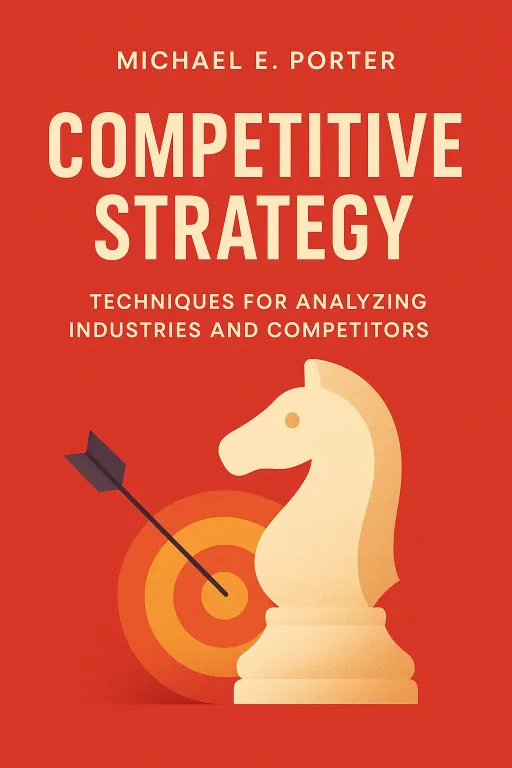
Nova: Exactly. We’re talking about strategy, and when you talk strategy, especially competitive strategy, you can't talk about Michael Porter. His book, "Competitive Advantage," published back in 1985, completely reshaped how businesses, including sports organizations, think about outmaneuvering rivals. Porter basically codified the playbook for sustained success.
Atlas: He really did. It’s like he gave everyone the secret decoder ring to what makes companies — or in our case, teams and leagues — truly special. But then, you also have "Blue Ocean Strategy" by W. Chan Kim and Renée Mauborgne, which came out much later, in 2005. That book felt like it was saying, "What if you don't even a decoder ring for the old playbook? What if you write a whole new one?"
Nova: Precisely. Porter established the rules of the game if you want to win on the existing playing field. Kim and Mauborgne came along and said, "What if we build a playing field?" The core of our podcast today is really an exploration of how sports franchises, from established giants to ambitious newcomers, can not only compete fiercely but can also fundamentally redefine the game through strategic innovation.
Atlas: That makes me wonder, though, how do these two ideas, which almost seem contradictory, actually work together in the high-stakes world of sports finance and management?
The Strategic Playbook: Porter's Competitive Advantage in Sports
SECTION
Nova: That’s a brilliant question, Atlas, and it’s where the real insight lies. Let’s start with Porter. He identified three generic strategies for achieving competitive advantage: cost leadership, differentiation, and focus. Cost leadership is about being the cheapest producer, differentiation is about offering something unique and valuable, and focus is about serving a narrow market segment extremely well.
Atlas: Okay, so, “cost leadership” in sports… are we talking about the Oakland A’s "Moneyball" approach, finding undervalued talent? Or a minor league team keeping ticket prices super low?
Nova: You're hitting on both, actually. The "Moneyball" approach is a fantastic example of cost leadership in talent acquisition and management. They found a way to win, or at least be competitive, with a significantly lower payroll by using analytics to identify undervalued players. Their strategic choice was to optimize costs where others were spending big.
Atlas: That makes sense. They weren’t trying to outspend the Yankees; they were trying to outsmart them on a budget.
Nova: Exactly. Now, for differentiation, think about a global football giant like Real Madrid or Manchester United. They aren't trying to be cheap. Their strategy is built on a premium brand, superstar players, a rich history, and a global fan base. They differentiate through unparalleled quality, prestige, and an almost transcendent fan experience, whether you're watching them live or buying their merchandise halfway across the world.
Atlas: So, for them, it's not just about winning games, it's about being a global entertainment phenomenon. Their value isn't just on the pitch; it's in the brand itself.
Nova: Absolutely. And then there's focus. This is where a team or league zeroes in on a specific niche. Think about a successful regional sports league or a particular type of sport that caters to a very passionate, but perhaps smaller, fan base. They might not have the global appeal of a Premier League, but they deeply serve their specific community or demographic. They understand their audience's unique needs and preferences better than anyone else.
Atlas: I can see how that would be powerful. Instead of trying to be everything to everyone, you become everything to. But wait, looking at this from a financial strategist's perspective, isn't it incredibly hard to maintain these advantages in sports? Player salaries skyrocket, fan expectations are constantly evolving, and new entertainment options pop up all the time. It feels like a constant arms race.
Nova: You're right, Atlas. It's a never-ending battle. The competitive landscape in sports is incredibly dynamic. What gives you an edge today might be standard practice tomorrow. Rivals quickly imitate success. That's why even within Porter's framework, organizations need to continuously innovate and adapt to sustain their advantage. It’s not a static choice; it's a living strategy. And that naturally leads us to the second key idea we need to talk about, which often acts as a counterpoint to what we just discussed, or perhaps a radical extension of it.
Beyond the Arena: Crafting Blue Oceans in Sports
SECTION
Atlas: So, if Porter's strategies are about winning in the existing "red ocean" – where the water is red with the blood of fierce competition – what happens when you decide you don't want to swim in that ocean anymore?
Nova: That's the perfect segue, Atlas. Kim and Mauborgne's "Blue Ocean Strategy" is precisely about escaping that bloody red ocean. It's about creating entirely new market space, making competition irrelevant. Instead of fighting over existing demand, you create new demand. You make the competition a non-factor because you're playing a different game altogether.
Atlas: That sounds a bit out there, like a utopian vision. How does that even work in sports, where competition is literally the entire point? Are we talking about making up new sports?
Nova: Well, sometimes that's part of it! But it’s more nuanced than that. Think about Cirque du Soleil. They didn't try to beat traditional circuses or Broadway shows. They created a "blue ocean" by combining elements of both, eliminating animal acts and star performers and adding sophisticated storytelling and artistic performance. They attracted an entirely new audience – adults and corporate clients – who wouldn't normally go to a traditional circus. They redefined what a "circus" could be.
Atlas: Wow, yeah, that's a great example. They didn't just differentiate within the circus industry; they transcended it. So, how does an sports franchise, say, a basketball team or a football club, identify or create a 'blue ocean' opportunity within its existing market? That's the deep question, isn't it? For our listeners in sports finance, this is where the rubber meets the road.
Nova: Absolutely, that's the million-dollar question. It requires moving beyond conventional boundaries. One key is to look at non-customers. Who isn't currently engaged with your sport or team, and why? What are their pain points or unmet needs? For an existing franchise, it might mean looking at fan experiences. For example, Major League Soccer in its early days. It wasn't trying to compete head-on with established European football leagues or American sports like the NFL. It focused on creating a new, family-friendly, community-oriented experience, often in smaller, soccer-specific stadiums, targeting a younger, more diverse demographic. They built a new fan base rather than trying to poach from existing ones.
Atlas: So you're saying they found their 'blue ocean' by creating a unique cultural experience around the sport itself, rather than just selling the game? That's a great way to put it. It’s not just about the product, it's about the entire ecosystem around it.
Nova: Precisely. Another approach is to use the "Four Actions Framework" from "Blue Ocean Strategy": Eliminate, Reduce, Raise, Create. What factors that the industry takes for granted can you? What factors should be well below the industry standard? What factors should be well above the industry standard? And what new factors should be that the industry has never offered?
Atlas: Can you give an example of that for a traditional sports team? Like how would a baseball team apply ERRC?
Nova: Imagine a struggling baseball team. They might expensive, underutilized stadium amenities that don't add value. They could reliance on superstar salaries by focusing on a robust farm system and team chemistry. They might the in-game interactive fan experience, perhaps with more direct player engagement or unique digital content during games. And crucially, they might entirely new revenue streams and fan engagement models, like becoming a year-round community hub with events beyond baseball, or launching a cutting-edge esports division that leverages their brand but targets a completely different audience.
Atlas: That’s actually really inspiring. It’s about thinking of the "sport" not just as the game on the field, but as a platform for a much broader range of value creation. For someone looking into sports finance, that means seeing opportunities far beyond traditional ticket sales and broadcast rights. It’s about identifying where new value can be, not just extracted.
Synthesis & Takeaways
SECTION
Nova: Exactly. The ultimate takeaway here is that competitive advantage isn't a static concept. It's a dynamic interplay between optimizing what you already do well, as Porter taught us, and boldly innovating to create entirely new possibilities, as Kim and Mauborgne advocate. The most successful sports organizations, whether they realize it or not, are likely doing both. They're relentlessly improving their core offerings while simultaneously scanning the horizon for those uncontested blue oceans.
Atlas: That gives me chills. This isn’t just about making money; it’s about shaping the future of sport itself. For anyone passionate about making an impact in sports, whether in finance, marketing, or operations, the biggest idea here is to constantly challenge the status quo. Don't just analyze the existing numbers; ask "what numbers exist if we totally rethought this?"
Nova: What truly matters is the courage to look beyond the obvious. It's the willingness to ask, "Why are we competing this way?" and then to imagine, "What if we didn't have to?" That's where true, lasting advantage is forged.
Atlas: That’s a powerful thought to leave our listeners with. We’d love to hear from you: what "blue ocean" opportunities do you see in the sports world today? How could an existing team or league redefine its game? Share your ideas, because your insights could be the next game-changer.
Nova: This is Aibrary. Congratulations on your growth!