The Catalyst's Compass: Driving Lasting Value
Golden Hook & Introduction
SECTION
Nova: Alright, Atlas, quick game. I'll give you a common business mantra, and you tell me the instant gut reaction of a company trying to innovate. Ready? "Stick to your core competencies."
Atlas: Oh, I like that. My gut reaction? "But what if my core competency is about to become obsolete?" Or, "My core competency is what got us into this mess!"
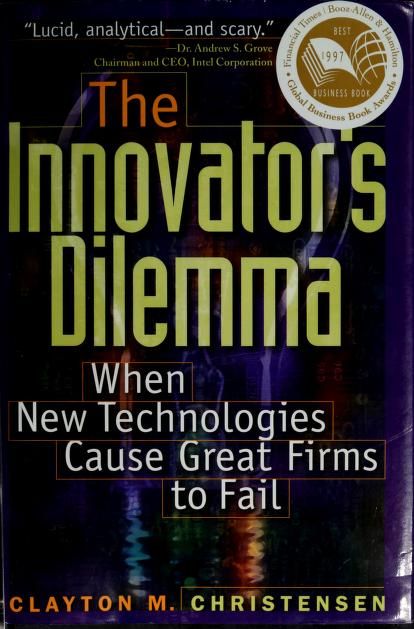
Nova: Exactly! It’s that internal conflict. And that’s actually a fantastic segue into our topic today, which is all about how companies, and even individuals, can create lasting value in a world that’s constantly shifting. We’re talking about the ideas from two seminal works: by Clayton M. Christensen, and by W. Chan Kim and Renée Mauborgne.
Atlas: Wow, two heavy hitters. And I know Christensen's work in particular has had a massive impact. I remember reading about how he actually coined the term "disruptive innovation" and really changed the way we think about market evolution. He came from a fascinating background too, a bit of an outlier for a business theorist – starting in chemical engineering and then getting his MBA. It gave him a really unique lens to view these systemic challenges in business.
Nova: Absolutely. And that unique perspective is what makes his insights so potent. One of the core ideas from Christensen's work is this concept of sustaining versus disruptive innovation. It’s a paradox, really.
Atlas: A paradox? That sounds intriguing. What's the core of it?
The Innovator's Dilemma: The Paradox of Success
SECTION
Nova: Well, imagine a highly successful company. They're listening to their best customers, investing in R&D, making their products better, faster, cheaper. They're doing everything right for their existing market. That's. It keeps them competitive, helps them win against rivals.
Atlas: Right, that’s what you’re supposed to do. Improve, optimize, stay ahead.
Nova: Exactly. But here's the dilemma: while they're perfecting their existing offerings, a new, often inferior, technology or business model emerges. This new thing isn't good enough for their high-end customers, so the established company dismisses it. It's too small a market, too low-margin, maybe even seems a bit clunky. That's.
Atlas: So, the big players ignore it because it doesn’t fit their current profit model or customer base. That sounds rough, but it makes sense from a business perspective. Why chase tiny, unprofitable markets?
Nova: Precisely. Take the personal computer. When it first came out, mainframes were king. PCs were weak, expensive for what they did, and couldn't handle enterprise tasks. IBM, a mainframe giant, initially scoffed. But the PC improved rapidly, eventually becoming powerful enough to displace mainframes for many applications.
Atlas: Oh, I see. So the disruptive innovation starts at the low end, or creates a new market entirely, and then moves up.
Nova: Exactly. Another classic example is steel mills. The integrated steel mills, massive operations, focused on producing high-quality steel for demanding customers. Then mini-mills came along, like Nucor. They started by making rebar, a low-quality product, from scrap metal. The traditional mills didn't care; rebar wasn't their market.
Atlas: So they were like, "Let them have the rebar, we're making the good stuff."
Nova: Right. But Nucor kept improving. They refined their process, moved into higher-grade steels, and eventually, their efficient, flexible model started eating into the traditional mills' core business. Many of those large, integrated steel companies ultimately failed because they couldn't adapt quickly enough. They were too invested in their existing technology, their existing customer base, and their existing metrics of success.
Atlas: That’s actually really inspiring. Wow, that’s kind of heartbreaking for the old guard, but it makes so much sense. It’s like the very things that make a company successful—focusing on profitability, listening to customers—are the same things that can blind it to the future. It’s a classic Catch-22.
Nova: It absolutely is. And the tiny step for our listeners here, especially those aiming for mastery and building sustainable ecosystems, is to identify one product or service in their industry that is ripe for disruption. Not necessarily by them, but just to think: how would a new entrant approach it differently? What would they do that the incumbents can't or won't?
Atlas: That makes me wonder, how do you even see these disruptions coming? Because if you’re doing everything right by your current customers, you might not even be looking for them.
Blue Ocean Strategy: Charting New Territories
SECTION
Nova: That's where comes in, offering a powerful counterpoint and a proactive approach. While Christensen explains disruption happens, Kim and Mauborgne provide a framework for to intentionally create new markets, making the competition irrelevant.
Atlas: Oh, I love that. Making competition irrelevant. That sounds like the ultimate strategic foresight. How do they propose we do that?
Nova: Their core idea is to stop competing in "red oceans"—bloody, crowded markets where companies fight fiercely for market share—and instead create "blue oceans"—untapped market spaces where there's little to no competition. It's about value innovation: creating new value for customers by simultaneously pursuing differentiation and low cost.
Atlas: So it's not just about being cheaper, or just being better. It's both? That sounds really challenging. What do you mean by 'value innovation'?
Nova: Think of it like this: most companies focus on beating the competition by either cutting costs increasing value. Value innovation says you can do both. They use something called the "Four Actions Framework": Eliminate, Reduce, Raise, Create.
Atlas: Okay, so you’re saying… you eliminate factors that the industry has long competed on, reduce factors well below the industry standard, raise factors well above the industry standard, and create factors the industry has never offered. Give me an example, because that sounds like a magic trick.
Nova: A classic example is Cirque du Soleil. The circus industry was a red ocean: declining audience, rising costs with star performers and exotic animals. What did Cirque do? They eliminated animals and star performers—huge cost savings. They reduced the number of acts and tent sizes. But then they raised the artistic quality and created a theatrical experience, with storyline, original music, and sophisticated lighting.
Atlas: Whoa. That’s actually really inspiring. They took elements from theatre and opera and blended them with the spectacle of a circus. So they didn't just make a better circus; they made something entirely new that appealed to adults, not just children.
Nova: Exactly! They weren't competing with Ringling Bros. They created a blue ocean, attracting a whole new audience willing to pay higher ticket prices for a unique entertainment experience. Another example is Southwest Airlines. They eliminated traditional services like meals, assigned seats, and complex hub-and-spoke systems. They reduced travel time with point-to-point routes and quick turnarounds. They raised the frequency of flights and created friendly service.
Atlas: I can see how that would be... They offered the speed of air travel with the flexibility and cost-effectiveness that was closer to driving for short distances. They didn't just compete with other airlines; they competed with cars. That's a profound philosophical meaning. It's about redefining the problem itself.
Nova: Precisely. It's about looking at what customers need and what non-customers aren't getting from the existing market. For our listeners, especially those who are architects of sustainable ecosystems and driven by impact, the deep question is: where are the 'blue oceans' in your current market landscape, and what core value could you offer that no one else is currently providing? It's about shifting your mindset from outcompeting to out-creating.
Atlas: That’s a great way to put it. It’s like, instead of sharpening your sword to fight in the same old battle, you’re building a new ship and sailing to an entirely new continent. It takes strategic foresight and a willingness to disrupt your own success, as we talked about with Christensen.
Nova: It’s the ultimate expression of embracing the journey and trusting your evolving vision, even if it means letting go of what's currently working.
Synthesis & Takeaways
SECTION
Nova: So, bringing these two powerful ideas together, we see a pathway to creating lasting value. Christensen shows us the pitfalls of ignoring disruptive forces, even when you're doing everything right. And Kim and Mauborgne give us the tools to proactively seek out and create new, uncontested market spaces.
Atlas: It’s a powerful combination. It’s not just about avoiding the innovator’s dilemma, but actively seeking out and charting a blue ocean. It's about understanding that the very definition of 'value' can shift, and being ready to not just adapt, but to define that new value yourself.
Nova: Absolutely. And for anyone listening who seeks mastery, who wants to build sustainable ecosystems, and who is driven by impact, these aren't just theories. They're a compass for navigating the future. They challenge us to look beyond immediate competition and ask: what new value can I bring into existence?
Atlas: That’s actually really inspiring. It means you don't have to be trapped by existing structures or markets. You can actually create your own. That gives me chills.
Nova: It's a reminder that true innovation often comes from the edges, from challenging assumptions, and from daring to imagine something entirely new.
Atlas: What a journey of thought. This is Aibrary. Congratulations on your growth!