Strategic Innovation: Beyond the Status Quo
Golden Hook & Introduction
SECTION
Nova: You know, Atlas, there’s this fascinating paradox: often, the very things that make a company successful can blind it to the future. It’s like a ship so perfectly designed for calm waters, it can’t see the tsunami on the horizon.
Atlas: Oh, I love that analogy, Nova. It makes me think of all those Blockbusters and Kodaks of the world, perfectly optimized for yesterday’s ocean. But wait, how do you even begin to spot a tsunami when you’re busy navigating the calm?
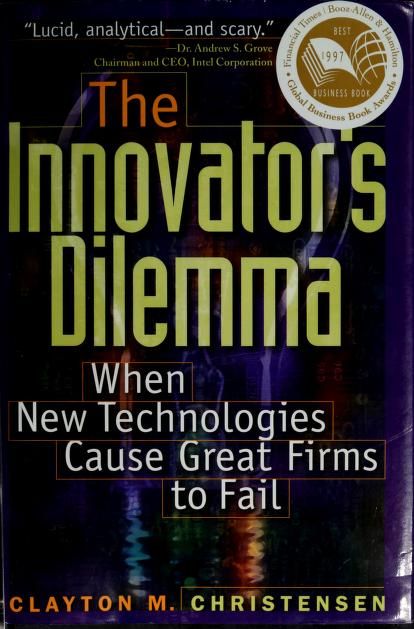
Nova: Exactly! And that’s precisely what we’re diving into today with a couple of seminal works on strategic innovation. We’re talking about "The Innovator's Dilemma" by Clayton M. Christensen, a Harvard Business School professor whose work fundamentally reshaped how we understand disruption. He was truly a visionary. And then, we’ll explore "Blue Ocean Strategy" by W. Chan Kim and Renée Mauborgne, which offers a powerful framework for creating entirely new market spaces.
Atlas: That sounds like a dream for anyone trying to build something lasting. I can already feel the strategic builder in me leaning in. So, we're talking about not just surviving disruption, but actively creating new opportunities?
Nova: Precisely. It’s about moving beyond just reacting to change, to actually anticipating and shaping the future.
Navigating Disruption and Creating New Markets
SECTION
Nova: Christensen's core argument in "The Innovator's Dilemma" is a real head-scratcher at first glance. He posits that well-managed, successful companies often fail precisely they listen to their customers, invest in proven technologies, and focus on improving their existing products.
Atlas: Wait, hold on. You're saying doing all the things we're taught are good business practices, like listening to customers and improving products, can actually lead to failure? That sounds a bit out there, Nova. It almost feels counter-intuitive.
Nova: It absolutely does, doesn't it? But here’s the kicker: these companies are victims of their own success when faced with. These are often initially inferior, simpler, and cheaper products that don't appeal to their current high-end customers. Think about the early personal computers compared to mainframes, or digital cameras versus film. They started small, low-margin, almost toy-like.
Atlas: I guess that makes sense in a historical context. Like, a mainframe company would look at a clunky PC and say, "Who needs that? Our corporate clients want power and reliability!" But then, the PC gets better, faster, cheaper, and suddenly, the mainframe market shrinks. So Nova, it’s not just about you innovate, but you perceive its initial value, especially if it doesn’t fit your current customer base.
Nova: Exactly. And that’s where the "Blue Ocean Strategy" comes in. Kim and Mauborgne argue that instead of fighting in crowded "red oceans" – existing markets where companies compete fiercely on price or features – you should create a new market space altogether, a "blue ocean" where there's no competition. It's about value innovation: simultaneously pursuing differentiation and low cost to open up new, uncontested market space.
Atlas: So basically you’re saying, if everyone’s selling faster, fancier cars, maybe you invent the car-sharing service instead? Or the electric scooter? It’s not just about making a better mouse trap, but inventing a completely new way to catch mice, or maybe even catching something else entirely.
Nova: That’s a perfect example, Atlas. Think of Cirque du Soleil. They didn't try to compete with traditional circuses by having more famous clowns or bigger elephants. They eliminated animals, reduced star performers, and instead blended theater, dance, and acrobatics to create a completely new entertainment experience that appealed to adults and corporate clients, not just kids. They created a blue ocean.
Atlas: That’s actually really inspiring. For anyone trying to define a new value proposition, that's gold. It's like, instead of trying to optimize the current fragmented solutions in my industry, I should be looking at how to make them irrelevant by creating something entirely different.
Visionary Approaches to Market Creation
SECTION
Nova: Now, this brings us to a deep question: how do you balance the need to optimize current offerings – the steady, predictable revenue streams – with the imperative to explore and invest in potentially disruptive, future-defining innovations? This is where many companies stumble. They get trapped by the "tyranny of the present."
Atlas: Oh, I’ve been there. Honestly, that sounds like my Monday mornings trying to balance immediate deadlines with long-term strategic projects. For our listeners who are managing high-pressure teams and trying to build foundations, that immediate pressure for optimization can feel almost impossible to ignore for something uncertain. It’s like, you you need to plant seeds for the future, but the weeds in your current garden are threatening to choke everything.
Nova: And that's precisely the dilemma. Christensen points out that disruptive innovations don't usually start in the main business unit. They often need to be nurtured in separate, smaller organizations with different incentive structures and customer bases. It's about giving them the freedom to fail, to serve smaller, emerging markets, and to not be judged by the metrics of the core business.
Atlas: So you're saying, don't try to fit the square peg of disruptive innovation into the round hole of your established corporate structure. Give it its own sandbox, its own rules. That makes me wonder, how does a strategic builder, who's always looking for sustainable growth, embrace that kind of risk? It sounds like a leap of faith, almost.
Nova: It absolutely is a leap of faith, but it's an informed one. The "Blue Ocean Strategy" complements this by giving you a framework to systematically identify those new value propositions. It’s not just random brainstorming. They talk about the "four actions framework": eliminate, reduce, raise, and create. You eliminate factors that the industry has long competed on, reduce factors below the industry standard, raise factors above it, and create entirely new factors the industry has never offered.
Atlas: That’s a great way to put it. So it’s like, instead of just iterating on what exists, you're deconstructing the entire value chain and asking, "What if we just stopped doing X entirely?" or "What if we invented Y out of thin air?" It gives you a structured way to challenge conventional wisdom, which I think is key for any visionary fundraiser trying to articulate a compelling future.
Nova: Precisely. It allows you to anticipate future needs rather than just reacting to current ones. True innovation often requires challenging those conventional assumptions and having the courage to explore uncharted territories. It's about seeing not just what, but what.
Synthesis & Takeaways
SECTION
Nova: Ultimately, both Christensen and Kim and Mauborgne are telling us that to thrive long-term, you can’t just be good at what you do today. You have to actively seek out ways to make today’s solutions obsolete, either by being disrupted or by doing the disrupting yourself. It’s a mindset shift from incremental improvement to radical foresight.
Atlas: That’s such a hopeful way to look at it, Nova. It’s not about fear of disruption, but excitement about creation. It really connects with the idea of defining value and building foundations. Instead of just optimizing what exists, it's about courageously exploring those uncharted territories.
Nova: And for our listeners, especially those driven by impact and seeking sustainable growth, the takeaway here is profound: embrace the iterative nature of defining product-market fit. It's not a single destination, but a continuous journey of challenging the status quo, even your own.
Atlas: So, step out of the red ocean, find your blue, and don't be afraid to let your own innovations disrupt your current success. That’s a powerful call to action for any strategic builder.
Nova: Absolutely. It's about having the clarity to see beyond the immediate, the vision to create what's next, and the courage to build it.
Atlas: What a journey! This is Aibrary. Congratulations on your growth!