Stop Chasing Trends, Start Shaping Markets: The Guide to Disruptive Innovation.
Golden Hook & Introduction
SECTION
Nova: What if I told you that being at what you do, serving your best customers perfectly, could actually be the biggest threat to your future?
Atlas: Whoa. Really? I mean, that sounds counterintuitive to everything we're taught about business success. Are you saying achieving peak performance is a bad thing?
Nova: Not inherently bad, Atlas, but it's a trap. A very well-intentioned, profitable trap. Today, we're diving into a mindset that helps us avoid it, drawing inspiration from the core ideas of "Stop Chasing Trends, Start Shaping Markets: The Guide to Disruptive Innovation."
Atlas: That title alone sparks my curiosity. It implies a different kind of ambition, doesn't it? Like, it's not just about winning the race, it's about building a whole new track.
Nova: Exactly. This isn't about incremental improvement. It's about redefining the game entirely. We're talking about insights that stem from the groundbreaking work of thinkers like Clayton Christensen, a Harvard Business School professor whose theories on disruptive innovation revolutionized how we understand industry evolution, and W. Chan Kim and Renée Mauborgne, who challenged traditional competitive strategy with their concept of 'blue oceans.' They're all about making competition irrelevant.
Atlas: Making competition irrelevant? That feels like the ultimate strategic goal for anyone looking to make a real impact. It sounds like a total paradigm shift.
The Innovator's Dilemma: Why Success Can Lead to Failure
SECTION
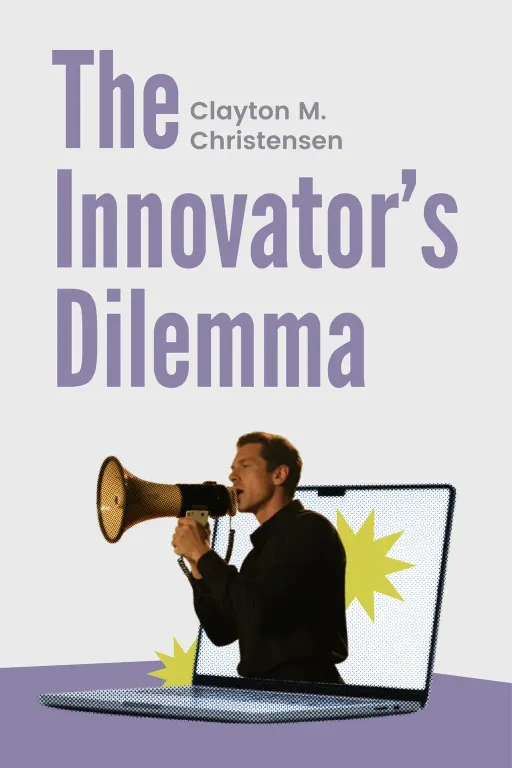
Nova: It absolutely is. And to understand how to achieve that, we first need to confront what Christensen famously called "The Innovator's Dilemma." It explains why even incredibly successful companies, with all the resources in the world, often fail when disruptive technologies emerge.
Atlas: Okay, so what is this dilemma? Is it just about being too slow to adopt new tech?
Nova: It's far more insidious than that. Christensen's core insight is that successful companies are to listen to their best, most profitable customers. They invest in "sustaining innovations" — making their existing products better, faster, cheaper. This makes perfect business sense, right?
Atlas: Absolutely. You serve your core market, you optimize, you grow. That's the playbook.
Nova: But then, a "disruptive innovation" comes along. It's usually simpler, cheaper, and initially performs than existing products. It appeals to a different, often neglected, segment of the market, or creates a new one entirely. Think early digital cameras compared to film.
Atlas: Ah, you're talking about Kodak, aren't you? That's a classic.
Nova: It's the perfect, tragic example. Kodak literally invented the digital camera in 1975. They had the technology. But their entire empire was built on film. Digital didn't meet the needs of their high-margin film customers, and it certainly didn't promise the same profitability. So, they shelved it.
Atlas: So, it's not about being blind to new tech, but being trapped by their own success and the demands of their existing business model. They were too good at selling film to pivot to something that would cannibalize it.
Nova: Precisely. They focused on what their best customers wanted, which was better film. They couldn't justify investing heavily in a nascent technology that threatened their cash cow. Meanwhile, those "worse" digital cameras got better and cheaper, slowly eating away at the edges of the market until suddenly, film was obsolete.
Atlas: That's fascinating. It sounds like the very things that make a company successful — customer focus, efficiency, profitability — become the shackles that prevent them from adapting. But how do you justify abandoning your most profitable customers for something unproven? That must feel like organizational suicide in the short term.
Nova: It's an enormous challenge. It requires a different leadership mindset, one that's willing to nurture unproven ventures outside the core business, even if they initially look like failures. It means accepting that your best customers today might not be your best customers tomorrow, and that new markets often start small and unprofitable.
Blue Ocean Strategy: Creating Uncontested Market Space
SECTION
Atlas: So, if the innovator's dilemma is about avoiding the red ocean of competition, how do you find or even create that blue ocean? This leads us perfectly into a way out of that dilemma – not just surviving disruption, but creating your own 'blue ocean.'
Nova: Exactly. This is where "Blue Ocean Strategy" by W. Chan Kim and Renée Mauborgne comes in. They argue that instead of fighting over existing demand in a "red ocean" – a bloody, highly competitive market – companies should create "blue oceans" of uncontested market space.
Atlas: Uncontested market space. That's the dream, right? No competition, just open water. But how do you even begin to conceive of such a thing?
Nova: It's about "value innovation." It's not about technology for technology's sake, but about creating new value for buyers and the company, simultaneously driving down costs and driving up value. Think about Cirque du Soleil.
Atlas: Cirque du Soleil? The performance art circus? How do they fit into this?
Nova: They're a classic blue ocean example. The traditional circus industry was a red ocean – declining audiences, rising costs for animal acts and star performers, pressure from other forms of entertainment. Cirque du Soleil didn't try to beat Ringling Bros. at their own game.
Atlas: They didn't have animals, did they? Or the classic three-ring format?
Nova: Precisely. They eliminated expensive animal acts and star performers. They reduced the emphasis on concession sales. But what did they and? They raised the artistic and storytelling elements, bringing in theatrical aspects, original music, and sophisticated themes. They created an entirely new experience that appealed to adults and corporate clients, not just children.
Atlas: That’s incredible! So, they essentially redefined what a "circus" could be, attracting a whole new audience that wasn't interested in traditional circuses. They weren't competing; they were creating.
Nova: Exactly. They made competition irrelevant by offering something fundamentally different. They didn't steal customers from traditional circuses; they cultivated a new demand. The core of their strategy is what Kim and Mauborgne call the "Four Actions Framework": Eliminate, Reduce, Raise, Create.
Atlas: Eliminate, Reduce, Raise, Create. That's a powerful framework. So, it's about asking different questions entirely, not just trying to beat the other guy on price or features. It sounds like this changes the fundamental approach to business strategy, moving it from a battleground to a creative studio.
Nova: It is. It shifts your focus from competitive benchmarking to value innovation. Instead of looking at what your rivals do, you look at what your non-customers need, what assumptions you can challenge, and how you can deliver value in entirely new ways.
From Chasing Trends to Shaping Markets: The Disruptor's Mindset
SECTION
Atlas: This is fascinating because it sounds like it requires a completely different way of thinking. Not just about strategy, but about your entire mindset.
Nova: Absolutely. Ultimately, it's about cultivating a disruptor's mindset – not just reacting to trends, but actively shaping markets. This is where the core message of "Stop Chasing Trends, Start Shaping Markets" really comes alive. It's about moving beyond simply making things better, to making them in a way that renders old rules obsolete.
Atlas: So, it's about being proactive, not reactive. Looking for those unmet needs, those areas where you can create value rather than just capture it.
Nova: And it requires a specific kind of courage. The book suggests a "tiny step" for anyone wanting to embark on this journey: identify one area in your current market where an unmet, non-customer need exists, and brainstorm how to serve it uniquely. It's about looking outside your existing customer base.
Atlas: That's brilliant. It sounds like this isn't just about business strategy, but almost a philosophy of creation – building something truly new rather than just refining the old. It connects to that drive for impact and lasting value.
Nova: It does. And for anyone who resonates with that, the growth recommendations are clear: trust your instincts, and release the need for absolute certainty. Disruptive innovation rarely looks like a sure thing in its early stages. It's often messy, unproven, and initially unappealing to the mainstream.
Atlas: That makes perfect sense. If you're waiting for absolute certainty, you're probably waiting for a red ocean. You're waiting for someone else to have already proven the concept.
Synthesis & Takeaways
SECTION
Nova: Exactly. So, what we've really explored today is that true innovation isn't about incremental improvement; it's about creating new rules. It's about understanding that success can blind you to emerging opportunities, and that the greatest victories often come from creating new playing fields rather than just fighting harder on old ones.
Atlas: It's about having the courage to look beyond the obvious, beyond what everyone else is doing, and truly carve out your own path. It's a powerful message for anyone who feels stuck in a competitive rut.
Nova: The reward isn't just market share; it's the creation of an entirely new future, a legacy of true value. It's about becoming a market shaper, not just a market follower.
Atlas: So, for our listeners, where's your red ocean? And what's one tiny step you can take to start painting it blue? What's that unmet, non-customer need you can uniquely serve? I think that's a brilliant challenge to leave everyone with.
Nova: Absolutely. Embrace that curiosity. This is Aibrary. Congratulations on your growth!