Beyond the Firewall: Embracing Decentralization for Unbreakable Data Protection.
Golden Hook & Introduction
SECTION
Nova: Most people think security is about building higher walls, right? Stronger firewalls, more layers of encryption, bigger digital fortresses.
Atlas: Absolutely. It’s instinctive. You want to protect what’s valuable, so you reinforce the perimeter. Like putting a bigger lock on a treasure chest.
Nova: Exactly! But what if the very walls we build, the very act of centralizing everything behind those walls, is creating our biggest vulnerabilities? What if the bigger the fortress, the more attractive and devastating the single point of failure becomes?
Atlas: Whoa. That’s a bit counterintuitive. You’re saying our efforts to secure data might actually be making it vulnerable in some ways? That sounds rough, but I can see how that would be… a bit of a strategic nightmare for anyone trying to build secure foundations.
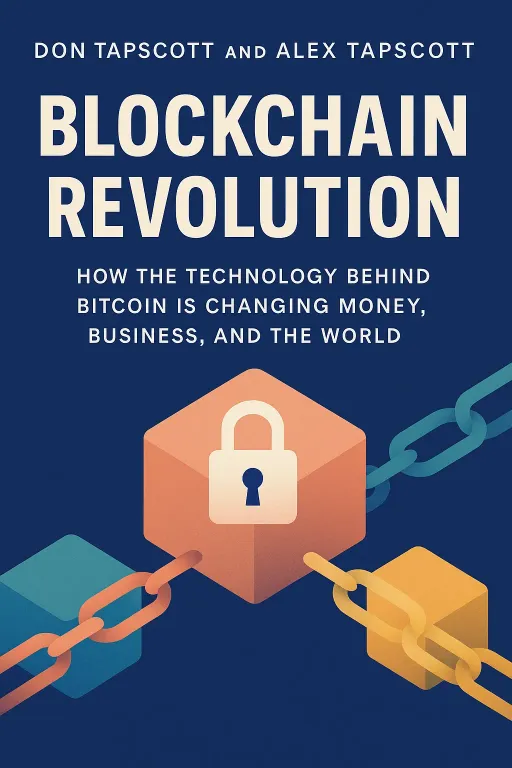
Nova: It is, Atlas. And that’s the fundamental challenge that visionaries like Don Tapscott and Alex Tapscott tackle in their seminal work, "Blockchain Revolution," and Andreas M. Antonopoulos illuminates so beautifully in "The Internet of Money." These aren’t just books about tech; they're about a paradigm shift in how we conceive of trust and protection.
Atlas: Okay, so these aren't just for crypto bros, then? Antonopoulos, especially, is known for making incredibly complex topics understandable. I imagine a lot of our listeners, who are guardians of crucial data and strategists in their fields, are thinking: "How does this apply to domain, to data, to building truly unbreakable systems?"
Nova: Precisely. Don Tapscott is a renowned business theorist, and "Blockchain Revolution" was one of the first widely acclaimed books to demystify blockchain for a mainstream business audience, establishing it as a transformative technology far beyond just cryptocurrency. Antonopoulos, on the other hand, is considered a leading independent educator, known for his accessible explanations of complex decentralized technologies, making "The Internet of Money" a foundational text for understanding the philosophical underpinnings of these systems. Today, we're going to explore how their insights provide a powerful framework for moving beyond traditional perimeter defenses, leveraging decentralized architectures for enhanced data protection and integrity.
Atlas: I'm curious to see how we bridge that gap from theoretical frameworks to tangible, unbreakable data protection.
The Achilles' Heel of Centralization & The Promise of Decentralization
SECTION
Nova: So, let's start with what we call "The Cold Fact." Centralized systems, while incredibly efficient, present attractive single points of failure for attackers. Think of it like this: if you have a massive, ornate bank vault, incredibly strong, with one single point of entry, that’s where every sophisticated bank robber is going to focus their efforts.
Atlas: Right. All their resources, all their ingenuity, are aimed at that one weak link. It's a clear target. For our listeners who manage high-stakes data, that concept of a single point of failure is probably a recurring nightmare.
Nova: Exactly. Whether it's a central server holding all customer data, a single authority verifying all transactions, or a centralized database storing sensitive records, once that one point is compromised, the entire system can unravel. The efficiency of centralization becomes its greatest vulnerability. It's not just about a hacker getting in; it's about the cascading failure when they.
Atlas: But wait, looking at this from a strategist's perspective, isn't centralization for efficiency? For control? For speed? What's the real cost of that efficiency, if it means putting all your eggs in one very tempting basket?
Nova: The real cost, Atlas, is resilience. When you centralize, you gain speed and often simplified management, but you sacrifice redundancy and robustness. A single, successful breach can lead to catastrophic data loss, privacy violations, or even system-wide shutdowns. We've seen countless examples in the news, where millions of user records are exposed because one central database was compromised. Imagine a global library where all the books are stored in one building. If that building burns down, centuries of knowledge are gone.
Atlas: That's a powerful analogy. So, the promise of decentralization, then, is to distribute those books across thousands of smaller, interconnected libraries, where no single fire can erase everything?
Nova: Precisely. A more robust and resilient approach to data protection involves distributing trust and control. Instead of one master key, imagine millions of individual keys, all needing to agree on what's authentic. This makes data harder to compromise and infinitely easier to verify. It transforms the security model from "build the biggest wall" to "make every piece of data inherently self-verifying and distributed."
Atlas: I can definitely relate to that. For anyone driven by integrity, as many of our listeners are, the idea of data being "harder to compromise and easier to verify" sounds like a holy grail. It’s not just about keeping bad actors out, but also about ensuring the data itself remains untampered with and trustworthy. That makes me wonder, what does that mean for trust in a digital world? If we don't have a central authority, who do we trust?
Nova: We shift from trusting a single entity to trusting the network, the protocol, and the cryptographic math. It’s a profound shift. Antonopoulos, in "The Internet of Money," dives deep into these foundational concepts, arguing that cryptography and decentralized networks don't just secure data; they fundamentally change the nature of trust itself. You don't need an intermediary to verify; the system the verification.
Atlas: So, it's about building secure foundations not just with technology, but with a different philosophy of trust. That's a deep insight.
Unpacking Blockchain: The Engine of Unbreakable Data Protection
SECTION
Nova: And that naturally leads us to we actually distribute trust and control in a practical, scalable way. This is where the Tapscotts and Antonopoulos really shine, by detailing the power of blockchain technology. It’s not just a fancy database; it’s the engine of unbreakable data protection.
Atlas: Okay, so we're talking about blockchain. For a lot of people, that still primarily means Bitcoin and crypto. How does that translate to protecting sensitive corporate or personal data? What makes it "unbreakable," as you say?
Nova: Great question. The Tapscotts, in "Blockchain Revolution," explain how blockchain technology, with its distributed ledger and cryptographic principles, can create immutable and transparent records. Imagine a digital ledger where every single transaction, every piece of data, is not just recorded in one place, but simultaneously across thousands, even millions, of computers worldwide. Each new entry, or "block," is cryptographically linked to the previous one, forming an unbroken "chain."
Atlas: So, it's like a shared, tamper-proof history book that everyone holds a copy of? And if anyone tries to change a page, everyone else immediately knows it's a fake because their copies don't match?
Nova: That's a perfect analogy, Atlas! Because each block is cryptographically sealed and linked to its predecessor, altering any past record would require altering every subsequent block across the – an almost impossible computational feat. This is what creates immutability. And because it's distributed, there's no single server to hack.
Atlas: That’s incredible. So, it's not just a fancy database; it's a self-auditing, self-securing, distributed record of truth. That’s going to resonate with anyone who struggles with data integrity and verification. How does this apply beyond just finance, to general data protection for, say, critical infrastructure or personal privacy?
Nova: Antonopoulos, in "The Internet of Money," shows how these principles can be applied far beyond finance. He talks about how decentralized networks create censorship-resistant systems. If you want to store medical records, supply chain data, intellectual property, or even digital identities, putting them on a blockchain means they are incredibly resistant to unauthorized alteration or deletion. For critical infrastructure, imagine a record of every maintenance event, every sensor reading, every access log, all immutable and verifiable.
Atlas: That makes me wonder, how does this actually work, and what should listeners do? For an organization looking to protect crucial data, how do you even to implement something like this? It sounds complex, like a massive undertaking. Many strategists might see the value but get lost in the "how."
Nova: It's true, the implementation can be complex, but the foundational principle is clear: identify data points that be immutable and verifiable, where trust in a single intermediary is a risk. Consider, for instance, a digital identity system. Instead of one company holding all your personal data, you could have a self-sovereign identity where control your data, and you cryptographically prove attributes about yourself without revealing the underlying data. The system allows for verification without needing to trust a central provider with all your details. That's a huge step for privacy and control.
Atlas: So, the core idea is to shift the burden of trust from a potentially fallible central entity to a mathematically verifiable, distributed network. That's a truly secure foundation.
Synthesis & Takeaways
SECTION
Nova: Ultimately, what these books teach us is that our traditional approach to data protection, which has largely been about building walls around centralized systems, is fundamentally flawed in the long term. The future of unbreakable data protection isn't about stronger locks on a single vault; it's about eliminating the single vault altogether and distributing the trust.
Atlas: That’s actually really inspiring. It means we can move towards a digital world where data integrity is inherent, not just an aspiration. For our listeners, especially those who are guardians of digital information and ethical explorers in this space, what's one immediate, actionable thing they can do with this knowledge?
Nova: My tiny step for everyone today is to research one specific application of blockchain or decentralized technology that could enhance the integrity or privacy of data within your current domain. Think about a pain point where you currently rely on a centralized authority for trust, and imagine how a distributed ledger could solve it. It's about shifting your mindset from perimeter defense to inherent data integrity.
Atlas: And that ties perfectly into the "ethical explorer" mindset. Ultimately, what kind of digital world are we building if we don't embrace these principles of distributed trust? It's about a safer, more transparent, and more accountable digital future for everyone.
Nova: Exactly. It's about building secure foundations that stand the test of time, not just against current threats, but against the evolving landscape of digital vulnerabilities.
Atlas: This is Aibrary. Congratulations on your growth!