The Unseen Force: How Intuition Shapes Our Decisions and Our World
8 minGolden Hook & Introduction
SECTION
Nova: Atlas, I've got a challenge for you. Between a meticulously crafted spreadsheet and that tiny, unsettling whisper in the back of your mind, which one secretly guides your best decisions?
Atlas: Oh, Nova, please. You know I live and breathe by the spreadsheet. That "tiny, unsettling whisper" usually tells me I left the oven on, not how to navigate a multi-million-dollar project. Come on, we're building robust systems here, not consulting a crystal ball!
Nova: Exactly! And that's the common misconception we're tackling today. We're diving into "The Unseen Force: How Intuition Shapes Our Decisions and Our World." It's not about ditching data; it's about understanding and leveraging one of our most powerful, yet often ignored, cognitive tools.
Atlas: Okay, so you’re saying there's more to that "hunch" than just a random feeling? Because for someone who's constantly trying to cultivate sustainable growth, I need something a bit more reliable than a feeling.
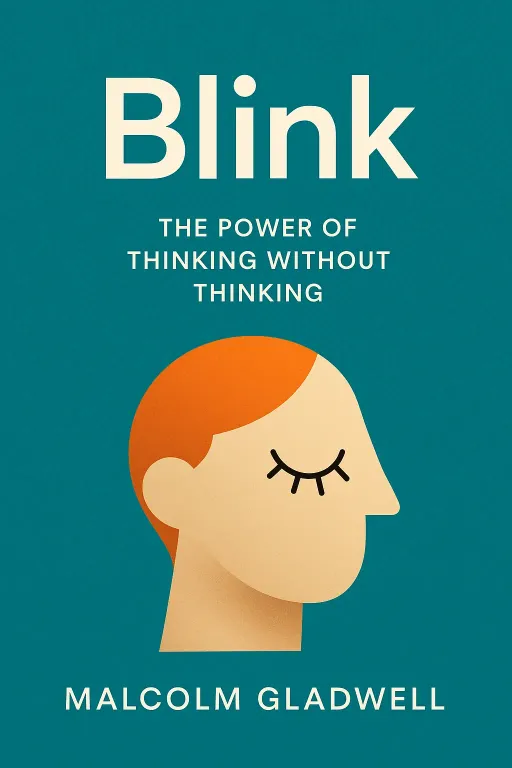
Nova: Absolutely. We're talking about insights drawn from the groundbreaking work of thinkers like Malcolm Gladwell, who explored "thin-slicing" in "Blink," and Gary Klein, who detailed expert decision-making under pressure in "Sources of Power." These are the minds that truly revealed how our fastest judgments can often be our most profound.
Atlas: Hold on, so this isn't just a fluffy concept. It's actually grounded in observation of how top performers operate? That makes me wonder how much of my own "architectural" decisions, the ones that just right, are actually this "unseen force" at play.
The Nature of Intuition: Beyond Hunch to Cultivated Skill
SECTION
Nova: Precisely, Atlas. Let's start by demystifying it. When we talk about intuition, we're not talking about some mystical power. We're talking about "thin-slicing," as Gladwell called it. It’s our unconscious mind's ability to make accurate judgments about people and situations from very minimal experience. Think about meeting someone for the first time. In seconds, your brain processes countless micro-expressions, vocal inflections, and body language cues, forming a surprisingly accurate first impression.
Atlas: So you're saying that initial gut feeling about a new hire, or the viability of a project, isn't just some random emotional reaction? It’s actually a lightning-fast, super-computer analysis happening beneath the surface?
Nova: Exactly! It’s your brain synthesizing a massive amount of data, often more than your conscious mind could ever process, in a blink. Gladwell gives the amazing example of art experts identifying forgeries in seconds, even when scientific tests struggled. They couldn't always articulate they knew, but they it was wrong. Their accumulated experience allowed them to recognize patterns that didn't fit.
Atlas: Wow. That's incredible. So it’s like an internal pattern recognition engine that’s been running in the background my whole life, picking up on incredibly subtle cues. For someone building robust systems, recognizing patterns is foundational. But how do you train that engine? Because I'm used to explicitly inputting data.
Nova: That’s where Gary Klein's work comes in, focusing on how experts make fast, effective decisions under pressure. He studied firefighters, military commanders, and ER doctors. These aren't people sitting around with checklists in a crisis. They're making life-or-death calls based on what he termed "recognition-primed decision-making." They recognize a situation as similar to one they've seen before, however subtly, and instantly know the appropriate action.
Atlas: So it's not analysis, it's. That's a huge distinction. It’s like an architect walking onto a site and knowing, without running all the calculations instantly, that a certain beam placement just isn't right. They've seen that pattern of stress or instability before.
Nova: Exactly! And here's the crucial part: this isn't innate for everyone. It's cultivated through vast experience. The more you immerse yourself, the more patterns you encounter, the more your intuitive engine is "trained." It’s about seeing what others miss because your unconscious has built up an incredible library of scenarios.
Integrating Intuition with Data: The Architect's Advantage
SECTION
Nova: Now, this brings us to the real power play: how do we consciously integrate this incredible intuitive engine with the data we meticulously collect? Because for many, "trusting your gut" feels like a soft skill, not a concrete solution.
Atlas: Definitely. For those of us who live and breathe data, 'trusting your gut' can feel like professional heresy. How do you balance that 'inner compass' with the spreadsheets, the metrics, the quarterly reports? It's easy to dismiss a feeling when you have hard numbers.
Nova: And that's where the magic happens. Intuition isn't about data; it's about your data analysis and decision-making. Your intuition can act as a sophisticated filter, highlighting which data points are most critical, or generating rapid hypotheses that you then use data to test.
Atlas: So, it's like intuition gives you the initial direction, a strong current to swim in, and then data helps you navigate the precise path and avoid the rocks? Can you give an example of how that plays out in a real-world scenario?
Nova: Think of a seasoned founder looking at market trends. The data might show slow, steady growth in a certain sector. But their intuition, honed by years of experience, might flag a subtle shift, a faint signal that this sector is about to explode, or conversely, collapse. They don't ignore the data; they use their intuition to ask of the data, to dig deeper into specific nuances, or to look for emerging patterns others might overlook.
Atlas: That makes sense. It’s about seeing the forest and the trees. The data shows the trees, but intuition helps you understand the overall health and direction of the forest. I can see how that would be a valuable asset for any architect, someone building robust systems. It sounds like for those of us who prioritize lasting value and sustainable growth, this is about more than just making a decision; it's about making the decision for the long term.
Nova: Absolutely. It's about combining pragmatic clarity with a deep understanding of human connection and market dynamics. The user profile talks about reflective journaling as a growth recommendation. This is precisely how you cultivate that intuitive muscle. By reflecting on times your gut feeling proved right against all logic, you start to build a conscious awareness of that inner wisdom. You begin to trust that quiet hum beneath your conscious thoughts.
Synthesis & Takeaways
SECTION
Nova: So, to synthesize, Atlas, our intuition is not some mystical force, but a powerful, cultivated tool. It synthesizes vast experience into rapid understanding, making it an invaluable asset in a world saturated with data. It helps us see patterns, make quick judgments, and guide our deeper analysis.
Atlas: And for those of us building robust systems and vibrant communities, for the architects and cultivators out there, it sounds like ignoring this inner compass isn't just missing an opportunity; it's actively limiting our ability to make truly impactful, sustainable decisions. It’s about building resilience by trusting our whole selves, not just our logical brains.
Nova: Exactly. It's about leveraging every part of our incredible human decision-making apparatus. So, for our listeners, especially those dedicated to building lasting value, what's one immediate step they can take to start tuning into this unseen force?
Atlas: I love that. My challenge to our listeners this week, especially if you're an architect of any kind, is to dedicate just five minutes daily to reflective journaling. Don't just list your tasks; reflect on a decision you made that day. Did you have a 'feeling' about it? Did it prove right or wrong? What did that experience teach you about your inner wisdom? Start noticing that quiet hum.
Nova: And we'd love to hear about those moments. When did your gut feeling prove right against all logic? Share your stories with us!
Atlas: Because understanding and trusting that unseen force isn't just about making better decisions; it’s about unlocking a deeper connection to our own wisdom and building a more integrated, resilient approach to life.
Nova: This is Aibrary. Congratulations on your growth!