Unlocking Your Voice: How to Share Your Unique Story Without Fear
Golden Hook & Introduction
SECTION
Nova: You know, Atlas, we often talk about the courage it takes to share our stories, the bravery to put ourselves out there. But what if I told you the biggest hurdle isn't a lack of courage at all? What if it's a fundamental misunderstanding of what sharing your story actually?
Atlas: Oh, I like that. That's a classic Nova curveball right there. So you're saying it's not about being fearless, but about reframing the entire act of sharing? That definitely challenges the conventional wisdom of 'just be brave.' I imagine a lot of our listeners, especially those who dream of captivating audiences, feel that quiet apprehension. What's the real story here?
Nova: Exactly. And that's precisely what we're diving into today, inspired by a truly insightful guide: "Unlocking Your Voice: How to Share Your Unique Story Without Fear." This isn't just another self-help book; it’s a profound exploration of how our personal narratives are not just anecdotes, but essential tools for connection and understanding. It pushes us to look past the surface-level anxieties and into the deeper mechanisms of human connection.
Atlas: That's fascinating. It sounds like it unpacks not just the 'how-to,' but the 'why' behind our struggles and triumphs in sharing. For anyone who's ever felt that knot in their stomach before hitting 'publish' or speaking up in a meeting, this feels incredibly relevant.
The Silent Apprehension: Why We Hesitate to Share Our Stories
SECTION
Nova: Absolutely. The book opens by articulating this universal feeling – this "quiet apprehension." It's a subtle mix of excitement for the potential connection, but also a deep vulnerability. It’s like standing on the edge of a beautiful cliff, wanting to jump into the water, but worried about the sudden chill.
Atlas: Hold on, so it’s not just about stage fright, or the fear of judgment? You're saying there's a more nuanced, almost inherent, vulnerability built into the very act of sharing our personal experiences? That makes me wonder, what's really going on beneath the surface?
Nova: That's the core of it. Think about it: when you share a personal story, you're not just relaying facts. You're offering a piece of your internal world, your perspective, your emotional landscape. And that feels inherently exposed. It's a primal instinct to protect ourselves, but the book argues that articulating this very feeling, acknowledging that vulnerability, is the crucial to truly connecting with others. It’s not a weakness; it’s the doorway.
Atlas: That's a great way to put it. For someone who might be a visionary creator, always looking to share their unique view, this apprehension can feel like a massive roadblock. They might think their stories aren't 'polished' enough, or 'important' enough. How does this book help us reframe that self-doubt?
Nova: It beautifully validates the "messy process," as Anne Lamott puts it in "Bird by Bird." It champions the idea that every great story starts with small, imperfect steps. Imagine someone, perhaps a world explorer, who has a trove of incredible experiences but hesitates to share because they feel their daily journal entries aren't 'epic' enough for a podcast. The book, through its emphasis on authenticity, encourages us to start with those small, unedited memories.
Atlas: So, it's about trusting that the inherent value is in the authenticity, not necessarily in the grandiosity? It's like, just write down that small memory from your travels today, don't edit it, just let the words flow freely, as the book suggests?
Nova: Precisely. The power isn't in the crafting of a perfect narrative at first, but in the raw, unadulterated act of expression. That simple act of writing down a small memory, unedited, is an exercise in trusting your voice. It proves to yourself that your experiences, however seemingly small, hold weight and potential. It's a gentle rebellion against the internal editor that tells us our stories aren't good enough.
Atlas: I totally know that feeling. That internal editor can be brutal. So, by acknowledging the vulnerability and starting with these 'small, imperfect steps,' we begin to dismantle that apprehension. And that naturally leads us to the second key idea we need to talk about, which often acts as a counterpoint to what we just discussed: the profound power of those very stories.
Storytelling as Our Primal Connective Tissue: Beyond Entertainment
SECTION
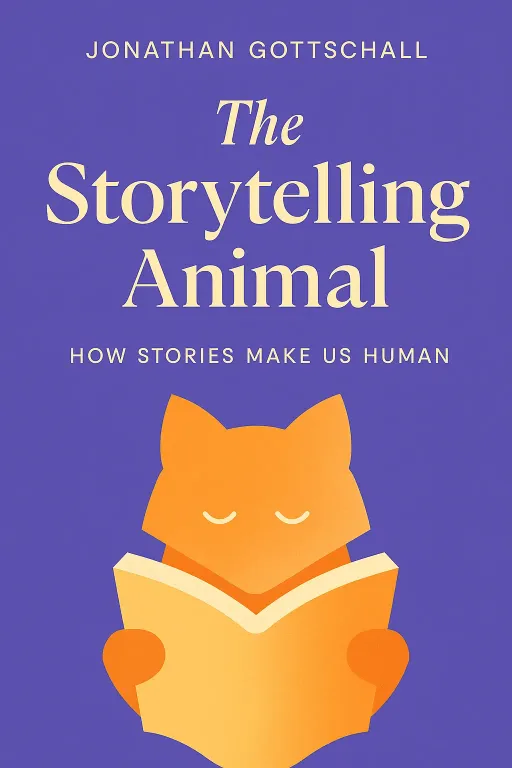
Nova: Exactly. Once we gently push past that apprehension, we unlock something truly primal. Jonathan Gottschall, in "The Storytelling Animal," makes a powerful case that storytelling isn't just entertainment; it's how we make sense of the world, and more importantly, how we connect with others. Your personal narratives, even those small, unedited travel memories, tap into this universal human need.
Atlas: So you're saying it's hardwired into us? Beyond just swapping anecdotes over coffee, what does Gottschall mean by storytelling being 'how we make sense of the world'? That sounds like a much deeper function.
Nova: It is. Think of it this way: for millennia, humans have used stories to transmit culture, values, and survival lessons. Before written language, before science, there were stories. They provided frameworks for understanding complex events, for navigating social structures, for remembering dangers and opportunities. Stories are our original operating system for reality. Gottschall argues that our brains are fundamentally wired for narrative because it's the most efficient and emotionally resonant way to process information and build shared understanding.
Atlas: That makes me wonder, for someone who travels the world and encounters so many different cultures, how does sharing their 'small' travel memory tap into this 'universal human need' that unites us all? It seems like a huge leap from a quiet apprehension to a primal human function.
Nova: That's where the magic happens. When you share an authentic memory – say, the specific scent of spices in a Moroccan market, or the unexpected kindness of a stranger in a bustling city – you're not just recounting an event. You're inviting someone into your experience. And because humans are storytelling animals, they instinctively look for common ground, for resonance. That's how connection is forged. Anne Lamott's "Bird by Bird" validates this messy, imperfect process of finding your voice precisely because that imperfection is often where authenticity, and thus connection, lies.
Atlas: So the act of sharing, even if it feels vulnerable and unpolished, becomes a bridge. It's like those small, imperfect steps she talks about in 'Bird by Bird' are the very acts that allow us to tap into this universal human need for narrative. Can you give an example of how a seemingly mundane travel memory can become a powerful story?
Nova: Absolutely. Imagine someone writing down a memory: "Woke up at dawn, saw a stray dog chasing a pigeon down a cobbled street in Rome, the air was crisp, and I smelled fresh bread." On the surface, simple. But the authenticity, the sensory details, the unedited nature of it – that's what makes it powerful. Someone listening or reading might then remember their own moment of quiet observation, or their own experience with stray animals, or the smell of bread in their childhood. It's not about the dog or the pigeon; it's about the shared human experience of quiet beauty, observation, or even longing. It's the small touch that sparks a big connection.
Atlas: That’s actually really inspiring. It’s not about crafting a perfect epic; it’s about offering an authentic slice of life, trusting that another human, wired for story, will find their own reflection in it.
Synthesis & Takeaways
SECTION
Nova: Precisely. These books show us that your personal experiences, however small they seem, are powerful tools for connection and understanding when shared authentically. The apprehension we feel is a signal of vulnerability, yes, but it's also a signal that what we're about to share. And by taking those small, imperfect steps, we lean into our innate human need to connect through narrative.
Atlas: So, if our stories are this powerful, and the apprehension is just a hurdle to be understood and navigated, what's the one thing listeners can do today to start unlocking their own voice, however small? For that aspiring narrator, that visionary creator, what's the first step?
Nova: It's simple, and it echoes Lamott’s wisdom: trust your voice, and start small. Don't wait for the perfect story, or the moment you feel completely fearless. Just articulate one small memory, one small feeling, one small observation. Write it down, speak it out loud, even if it's just to yourself. Every journey starts with a single word, and your story matters inherently, simply because it's yours.
Atlas: That’s a hopeful and practical call to action. It’s not about conquering the fear, but about recognizing its nature and moving forward with authenticity.
Nova: Exactly. Don't undervalue the power of your unique perspective. The world is waiting to connect with it.