The Peril of Perfection: Why Good Enough is Your Creative Breakthrough.
Golden Hook & Introduction
SECTION
Nova: Atlas, what's the first thing that comes to mind when I say "perfectionism"?
Atlas: Oh, Nova, that's easy. It's that tiny, annoying voice that sounds suspiciously like my high school English teacher telling me my creative project should be... "more."
Nova: More? Not better, not finished, just... more? That's the insidious nature of it, isn't it? That relentless pursuit of an unattainable ideal that often kills creativity before it even takes its first breath. Today, we're diving headfirst into "The Peril of Perfection: Why Good Enough is Your Creative Breakthrough."
Atlas: I'm curious, which guides are we bringing along for this intellectual journey? Because that "more" voice is a universal experience, especially for anyone who loves deep thinking and wants to put their ideas out into the world.
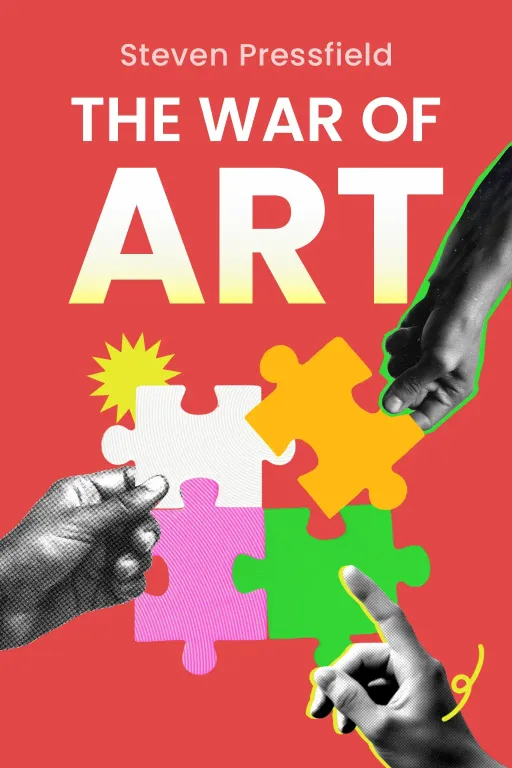
Nova: Absolutely. Our main guides today are two brilliant minds who've grappled with this very demon. First, we have Steven Pressfield, author of the widely acclaimed "The War of Art." What's fascinating about Pressfield is that he's a prolific writer himself, yet he openly talks about his daily battle with 'Resistance' – that internal force preventing him from doing his work. It makes his insights incredibly authentic, because he's living the struggle he writes about.
Atlas: That makes sense. It's not theoretical for him; it's the raw, daily grind.
Nova: Exactly. And then we're pairing him with Anne Lamott, whose "Bird by Bird" offers a refreshingly honest and often humorous take on the messy reality of writing and creating. She's known for her down-to-earth style, born from her own experiences teaching creative writing, making her advice profoundly relatable. Together, their wisdom points to a powerful truth: the act of creating, even imperfectly, is far more important than chasing some mythical ideal.
The Nature of Resistance: Why We Don't Start
SECTION
Nova: So, let's start with Pressfield and this almost mythical antagonist he identifies: 'Resistance.' He describes it as an invisible, internal, universal force that actively works against our creative endeavors. It's not just procrastination; it's something deeper, more primal.
Atlas: Wait, so it's not just procrastination? It's like an actual entity? That sounds a bit out there, but I know that feeling of an invisible force holding me back.
Nova: It's an internal saboteur, Atlas. Pressfield argues that Resistance's one and only aim is to prevent us from doing our work, from reaching our higher potential. It manifests in countless ways: self-doubt, fear of failure, fear of success, rationalization, and, crucially for our topic today, perfectionism. It tells us, "It's not good enough yet. Don't start until it's perfect. Don't show anyone until it's flawless."
Atlas: But for a curious learner, someone who loves deep thinking and genuinely wants to do work, isn't that just a sign of striving for quality? How do you tell the difference between a healthy pursuit of excellence and the insidious whisper of Resistance disguised as perfectionism?
Nova: That's a brilliant distinction, and it's where Pressfield offers a counter-intuitive insight. He says the more important a creative endeavor is to your soul, to your personal growth, to your unique contribution to the world, the stronger Resistance will be. It's actually a "tell." If you feel immense resistance, it's probably because you're on the right track, doing something that truly matters to you. Resistance aims to keep you in your comfort zone, away from the scary, transformative work.
Atlas: That's a great way to put it. So, if Resistance is this powerful, almost gravitational pull away from our true calling, how does Pressfield suggest we fight this invisible enemy? What's his tactical insight?
Nova: He offers a simple yet profound solution: "Turn professional." This doesn't mean quitting your day job and becoming a full-time artist, though it can. It means showing up daily, consistently, regardless of inspiration. It's about treating your creative work like a job, with discipline and dedication. An artist might not feel inspired, but they go to the studio. A writer might not feel the muse, but they sit at the keyboard. It's the act, not the outcome, that matters in the fight against Resistance.
Atlas: I can see that. It's like discipline over desire. But what about when the work genuinely terrible? Don't you need some level of quality control? The idea of just "showing up" feels liberating, but also a little terrifying if what comes out is truly awful.
The Power of Imperfection: Just Start, Imperfectly
SECTION
Nova: And that naturally leads us to Anne Lamott and her brilliant, liberating concept of "shitty first drafts" from "Bird by Bird." It's the perfect complement to Pressfield's "showing up."
Atlas: Shitty first drafts? That sounds like permission to fail. I love it! That’s going to resonate with anyone who’s ever stared at a blank page or a daunting project.
Nova: Exactly! Lamott's core message is that the first draft isn't about perfection; it's about getting something—anything—down on paper. It doesn't have to be good; it just has to exist. She famously recounts her childhood memory of her brother, overwhelmed by a school report on birds due the next day, crying at the kitchen table. Their father put his arm around him and said, "Bird by bird, buddy. Just take it bird by bird."
Atlas: Oh, I love that! Like, "just do the inch-by-inch work." For someone who enjoys deep thinking, the idea of "shitty" might feel counter-intuitive to intellectual rigor. How does this help someone who wants to master a complex subject, not just write a story? Is it just for creative writing?
Nova: Not at all! It applies to any complex endeavor, any field of mastery. Think about it: you don't master a new language by speaking perfect sentences on day one. You don't become a brilliant programmer by writing flawless code on your first attempt. Every master has thousands of imperfect attempts, thousands of "shitty first drafts" in their journey. The 'shitty first draft' is a learning tool. It's how you generate material, how you explore ideas, how you discover what you actually want to say or do.
Atlas: So it's not about settling for bad work, but about bad work as part of the iterative process to get to good work? It’s a strategic step, not a compromise.
Nova: Precisely. It breaks the cycle of perfectionism and paralysis. If you wait for the perfect idea, the perfect sentence, the perfect code, you'll never start. Lamott gives us permission to create without judgment, to make mistakes, to be messy. It's an embrace of iteration, a recognition that creation is a process of refinement, not instantaneous perfection.
Atlas: It's interesting how both Pressfield and Lamott, coming from different angles—one battling an invisible enemy, the other giving permission for imperfection—land on the same core message: just begin. It's like the antidote to Resistance is simply showing up and allowing yourself to be bad at it, at least at first.
Synthesis & Takeaways
SECTION
Nova: You've hit on the core synthesis, Atlas. Pressfield's "show up and do the work" combined with Lamott's "shitty first drafts" are two sides of the same incredibly valuable coin, both fighting against the "peril of perfection." They teach us that the act of creating, even imperfectly, is far more important than the pursuit of an unattainable ideal.
Atlas: That gives me chills. It's really about valuing the over the. The fear of not being 'good enough' is precisely what stops us from becoming good. It's a profound insight that transcends creative work and applies to any area of growth.
Nova: Exactly. Many creators get caught in this trap, delaying starting or finishing projects, believing their work isn't 'good enough.' This fear often kills creativity before it even begins. The key is to understand that the "good enough" first step is the bridge to the truly great work. It's the only way to get feedback, to learn, to grow, and to eventually create something polished.
Atlas: So for our listeners, the curious learners who might be delaying starting that new project, or diving into that complex topic because they're waiting for the 'perfect' moment or the 'perfect' insight, what's a tiny, honest step they can take right now?
Nova: My advice, drawing directly from both these incredible authors, is to take one small, imperfect step on a creative project you've been delaying. Don't aim for perfection. Don't judge it. Just allow yourself to make a mistake, to be messy, to just get something down. The goal is momentum, not mastery, at first.
Atlas: I guess that makes sense. Just one tiny, messy step. Not a perfect leap. I can do that. It’s like the first brushstroke on a masterpiece, which is never the final one, but without it, there’s no painting.
Nova: Absolutely, and we want to hear about it. Share your imperfect steps with us on social media. What's one small, messy thing you're going to start this week?
Nova: This is Aibrary. Congratulations on your growth!