

Engineering Tomorrow: How the History of Biotechnology Shapes the Future of Healthcare
Golden Hook & Introduction
SECTION
Dr. Celeste Vega: Imagine trying to treat a diabetic patient in the 1970s. To get just one single pound of insulin, pharmaceutical companies had to harvest the pancreases of over twenty-three thousand pigs. Think about that. It was incredibly expensive, highly inefficient, and often caused severe allergic reactions in patients because, well, pig insulin isn't identical to human insulin. But then, we learned to speak the molecular language of DNA, and everything changed.
Aliu Aliu Olawale: It is absolutely mind-blowing when you look back at where we started. As someone who believes that we have to understand the past to build a strong future, especially in healthcare, this transition is just fascinating. It shows how a massive bottleneck in medicine was solved not by just scaling up old methods, but by completely rethinking how we interact with biology. We went from harvesting nature to actively collaborating with it.
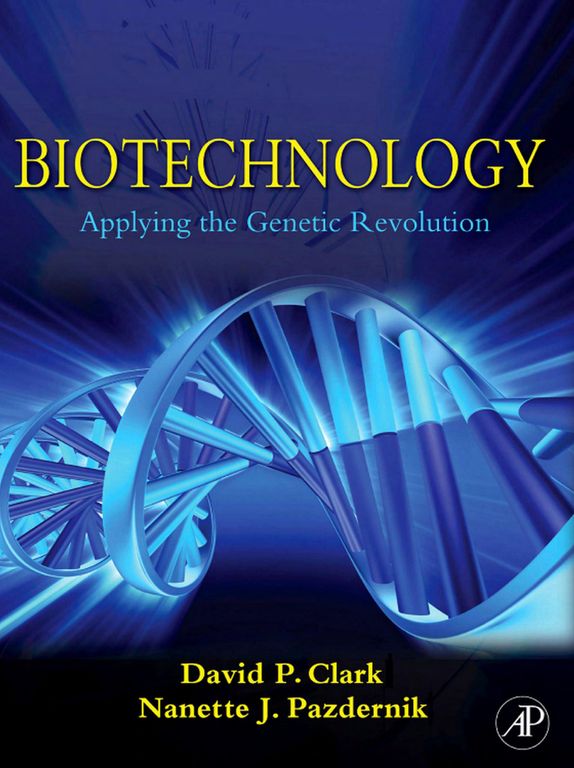
Dr. Celeste Vega: Exactly! We stopped relying on extraction and started engineering. And that is the heart of what we are talking about today, inspired by David P. Clark's brilliant book, Biotechnology: Applying the Genetic Revolution. Today, we're going to tackle this biotechnology revolution from two different angles. First, we'll explore the molecular cut-and-paste of recombinant DNA that allowed us to turn simple bacteria into highly efficient, life-saving drug factories. Then, we'll look at the diagnostic superpowers of PCR and monoclonal antibodies, showing how we can now detect and target diseases at the single-molecule level before symptoms even appear.
Aliu Aliu Olawale: I love that roadmap, Celeste. As a healthcare student, I see these tools used in clinics every day, but we rarely stop to appreciate the sheer elegance of the science behind them. Understanding the 'how' and the 'why' behind these discoveries is what truly prepares us for the next wave of medical innovation. So, where does this story of molecular collaboration actually begin?
Deep Dive into Core Topic 1
SECTION
Dr. Celeste Vega: It begins with a biological mystery. Back in the mid-twentieth century, scientists noticed that certain bacteria had a natural defense mechanism against viruses. They produced these incredible proteins called restriction enzymes. Think of restriction enzymes as highly specific molecular scissors. They don't just cut DNA anywhere; they look for a very specific sequence of chemical letters—like a molecular barcode—and snip the DNA precisely at that spot.
Aliu Aliu Olawale: Right, and in nature, the bacteria used these scissors to chop up invading viral DNA, essentially neutralizing the threat. But the real stroke of genius was when researchers realized, 'Hey, if we can isolate these scissors, we can use them to cut any DNA we want in a test tube.'
Dr. Celeste Vega: Yes! That was the breakthrough. But cutting is only half the battle. If you cut a piece of DNA, how do you paste it into another organism and get that organism to actually read it and make the protein? That's where plasmids come in. Plasmids are tiny, circular rings of DNA found inside bacteria, separate from their main chromosome. They are like little biological postcards that bacteria easily pass back and forth to share genetic traits, like antibiotic resistance.
Aliu Aliu Olawale: Ah, so the plasmid acts as the delivery vehicle, the vector.
Dr. Celeste Vega: Exactly. Scientists realized they could use those same restriction enzymes to cut open a plasmid ring. Because of the way these enzymes cut, they leave what we call 'sticky ends'—short, single-stranded overhangs of DNA. If you cut your target gene, say, the human gene for insulin, with the exact same enzyme, it will have matching sticky ends. Put them together in a tube with a little molecular glue called DNA ligase, and voila! You have recombinant DNA. You've pasted a human gene into a bacterial plasmid.
Aliu Aliu Olawale: It's like a biological puzzle where the pieces are chemically programmed to find each other and lock together. But once you have this recombinant plasmid, how do you get the bacteria to actually take it up and start churning out human insulin? Bacteria don't just open their doors to random DNA, do they?
Dr. Celeste Vega: No, they certainly don't! They are quite protective of their cellular borders. To get them to take up the plasmid—a process we call transformation—we have to give them a bit of a shock. Usually, we treat the bacteria with calcium chloride and then subject them to a sudden heat shock. This temporary stress creates tiny, microscopic pores in their cell membranes, allowing the recombinant plasmids to slip inside. Once inside, the bacteria recover, and as they grow and divide, they replicate that plasmid. More importantly, they read the human insulin gene as if it were their own, translating those genetic instructions into actual human insulin proteins.
Aliu Aliu Olawale: That is just beautiful. And from a clinical perspective, the implications of this were massive. When Humulin—the first recombinant human insulin—was approved by the FDA in 1982, it changed everything. We went from slaughtering millions of animals and dealing with impure, immunogenic insulin to having an endless, pure supply of identical human insulin grown in vats of Escherichia coli. For patients, this meant fewer side effects, more predictable blood sugar control, and a stable supply. It really was the dawn of modern biopharmaceuticals.
Dr. Celeste Vega: It truly was. And it proved that the genetic code is universal. A bacterium can read a human gene perfectly because we all share the same fundamental DNA language. But Aliu, as someone interested in the history and future of healthcare, how do you see this shift impacting how we view therapeutics today?
Aliu Aliu Olawale: Well, Celeste, it shifted our entire paradigm. Before recombinant DNA, medicine was largely about finding small molecules in nature—like penicillin from mold—and using them as drugs. Recombinant DNA showed us that we could design complex, large-molecule therapeutics—biologics—and program living cells to manufacture them. It laid the groundwork for everything from growth hormones to clotting factors for hemophiliacs, and even modern gene therapies. It taught us that the cell itself is the ultimate manufacturing plant.
Dr. Celeste Vega: I love that phrasing: 'the cell itself is the ultimate manufacturing plant.' It's so true. But to run a plant, you need quality control, and you need to know exactly what's happening at the molecular level. And that brings us to our second core topic: how we went from manufacturing proteins to amplifying and targeting the genetic code itself.
Deep Dive into Core Topic 2
SECTION
Dr. Celeste Vega: Let's talk about a tool that is arguably the most important invention in modern molecular biology: PCR, or Polymerase Chain Reaction. Invented by Kary Mullis in 1983, PCR is essentially a molecular photocopier. It allows us to take a single, microscopic fragment of DNA and make billions of identical copies of it in just a few hours.
Aliu Aliu Olawale: It's hard to overstate how revolutionary PCR is for diagnostics. Before PCR, if you had a tiny viral infection, or a minute sample of DNA at a crime scene, it was virtually impossible to detect because there simply wasn't enough material to work with. PCR solved the needle-in-a-haystack problem by copying the needle until it's the size of a haystack! But how does this copying process actually work step-by-step?
Dr. Celeste Vega: It's an incredibly elegant three-step cycle, and it all relies on temperature. The first step is denaturation. We heat the DNA sample up to about ninety-five degrees Celsius. This extreme heat breaks the weak hydrogen bonds holding the double helix together, separating it into two single strands.
Aliu Aliu Olawale: Right, which would normally destroy most proteins. But we use a very special enzyme for this, don't we?
Dr. Celeste Vega: Yes, and that's the key historical twist! Normal DNA polymerase—the enzyme that copies DNA—would unfold and become useless at those high temperatures. So, scientists looked to nature's survivors. They isolated a heat-stable DNA polymerase called Taq polymerase from a bacterium named Thermus aquaticus, which lives in the boiling hot springs of Yellowstone National Park. Because this bacterium evolved in extreme heat, its enzymes can withstand the boiling temperatures of PCR without breaking down.
Aliu Aliu Olawale: That is a perfect example of looking to the natural world to solve an engineering problem. So, once the strands are separated by the heat, what happens next?
Dr. Celeste Vega: The second step is annealing. We cool the reaction down to around fifty to sixty degrees Celsius. This allows short, pre-designed DNA sequences called primers to bind, or anneal, to the specific target region we want to copy on the single-stranded DNA. These primers act as the starting blocks for our Taq polymerase.
Aliu Aliu Olawale: And then the final step?
Dr. Celeste Vega: The third step is extension. We raise the temperature slightly to about seventy-two degrees Celsius, which is the optimal working temperature for our Taq polymerase. The enzyme grabs onto the primers and starts adding free-floating nucleotides, building a complementary second strand. Now, you have two identical double-stranded DNA molecules where you started with one. You repeat this cycle thirty to forty times, and because the growth is exponential, you end up with billions of copies.
Aliu Aliu Olawale: It's a chain reaction in the truest sense. And when you think about diagnostics, this is how we detect pathogens like HIV, hepatitis, or SARS-CoV-2 with such high sensitivity. We aren't waiting for the virus to grow in a culture for days; we are directly amplifying its genetic signature within hours. It turned diagnostics from a waiting game into a rapid, precise science.
Dr. Celeste Vega: Absolutely. But PCR is only half of the diagnostic and therapeutic revolution. While PCR amplifies DNA, we also needed a way to target specific proteins and molecules inside the human body with absolute precision. And that's where monoclonal antibodies come in.
Aliu Aliu Olawale: Ah, yes. Monoclonal antibodies. In immunology, we often talk about antibodies as the body's natural defense force. But the ability to manufacture them in a lab to target specific antigen we choose—that was a game-changer, especially in oncology and autoimmune diseases.
Dr. Celeste Vega: Exactly. Our bodies naturally make polyclonal antibodies, which are a mixture of different antibodies targeting various parts of an invader. But in 1975, researchers Georges Köhler and César Milstein figured out how to create monoclonal antibodies—identical immune cells that are all clones of a single parent cell, meaning they target one specific epitope with absolute precision. They did this by fusing a short-lived, antibody-producing B cell from a mouse with an immortal myeloma cancer cell. The result was a hybridoma.
Aliu Aliu Olawale: A hybridoma! It combines the antibody-producing capability of the B cell with the infinite lifespan and division rate of a cancer cell. It's essentially an immortal factory for a single, highly specific antibody.
Dr. Celeste Vega: Precisely. And we can design these monoclonal antibodies to act like heat-seeking missiles. In cancer therapy, for example, we can design them to bind specifically to proteins that are overexpressed on tumor cells, like HER2 in certain breast cancers. Once they bind, they can block growth signals, flag the cancer cell for destruction by the patient's own immune system, or even deliver a toxic drug payload directly to the cancer cell while leaving healthy cells unharmed.
Aliu Aliu Olawale: That is the holy grail of oncology. Traditional chemotherapy is like a carpet bomb—it kills rapidly dividing cancer cells, but it also damages healthy tissues, leading to severe side effects. Monoclonal antibodies turned that into a sniper rifle. It's highly targeted, personalized medicine. And as a healthcare student, seeing how we've transitioned from broad, systemic treatments to molecularly targeted therapies makes me incredibly optimistic about the future of patient care.
Synthesis & Takeaways
SECTION
Dr. Celeste Vega: It really is an inspiring trajectory. We've gone from using crude biological processes like fermentation to make bread and beer, to cutting and pasting genes to manufacture human therapeutics, to amplifying DNA with PCR, and finally to engineering custom proteins like monoclonal antibodies to fight cancer.
Aliu Aliu Olawale: It shows that biotechnology isn't just a collection of laboratory techniques; it's a continuous historical narrative of human curiosity and problem-solving. By understanding how these tools were developed—often by looking at how nature solved these problems first, like the heat-resistant bacteria in Yellowstone—we can better design the next generation of therapies.
Dr. Celeste Vega: Well said, Aliu. As we wrap up today's conversation, what is the key takeaway you want our listeners, especially those working in or studying healthcare, to carry forward?
Aliu Aliu Olawale: I think the biggest takeaway is that with this incredible power to edit and program life comes an equally immense ethical responsibility. As we move further into the era of CRISPR gene editing and personalized genomics, we aren't just reading the book of life anymore—we are actively rewriting it. For future healthcare leaders, our challenge won't just be mastering the technology, but ensuring it is applied equitably, safely, and compassionately to improve human lives. We must use our understanding of the past to build a future where biotechnology serves everyone.
Dr. Celeste Vega: That is a profound and beautiful note to end on. Aliu, thank you so much for sharing your insights and your analytical perspective with us today. It has been an absolute pleasure.
Aliu Aliu Olawale: Thank you, Celeste. The pleasure was all mine. Keep flipping the right books, everyone!
Dr. Celeste Vega: And to our listeners, thank you for tuning in. What genetic frontier will we cross next? We'll leave you to ponder that until next time. Stay curious!