

The Ecological Loop: How Nature's Design Builds Resilience
Golden Hook & Introduction
SECTION
Nova: We often pat ourselves on the back for human ingenuity, Atlas, celebrating our smarts for every new gadget or skyscraper. But what if our very best, most resilient ideas have actually been around for billions of years, just waiting for us to finally pay attention?
Atlas: Oh, I love that. You're saying we're essentially just late to the party, and nature's been holding the blueprint all along? That's a fascinating challenge to our ego.
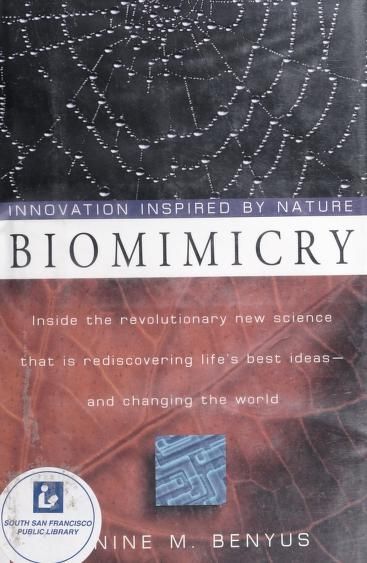
Nova: Exactly! And that's the powerful premise behind our discussion today, drawing inspiration from two incredible books that really push us to rethink design and community. First, "Biomimicry: Innovation Inspired by Nature" by Janine Benyus, a brilliant naturalist who didn't just coin the term, but truly popularized the idea of looking to life for solutions. And then, "The Hidden Life of Trees" by Peter Wohlleben, a forester who, through years of intimate observation, totally revolutionized our understanding of forest intelligence and social networks.
Atlas: Wow, a naturalist and a forester. That's a powerful combination, offering both design inspiration and systemic wisdom. I’m curious, how does this idea of nature’s R&D lab actually translate into something tangible?
Biomimicry: Nature's 3.8 Billion Year R&D Lab
SECTION
Nova: It’s a profound shift, Atlas. Benyus argues that nature isn't just a place to extract resources from; it's our ultimate mentor. We're not just copying nature’s forms, but understanding the underlying principles, the that have allowed life to thrive for nearly four billion years. Think about it: nature operates on solar energy, recycles everything, and uses only the amount of energy it needs. Those are pretty good design parameters.
Atlas: Hold on, so this isn't just about making things look "green" or slapping a leaf motif on a product? That sounds rough, because I think a lot of people might assume biomimicry is just a fancy word for eco-friendly aesthetics.
Nova: Absolutely not. That's the crucial distinction. Benyus herself is very clear: it's not "greenwashing." It's about deep emulation. For instance, consider one of nature's most efficient solar collectors: a simple leaf. We build massive, flat solar panels, right? But a leaf is a complex, three-dimensional structure designed to maximize light absorption at various angles throughout the day, while also managing water and temperature. Its internal architecture, down to the cellular level, is a masterclass in photon capture.
Atlas: So you're saying scientists are looking at the actual microscopic structure of a leaf to make better solar panels? That’s wild. How does that work?
Nova: Precisely. They're studying the arrangement of chloroplasts, the way light scatters and bounces within the leaf’s layers to increase absorption. Imagine designing a solar panel that isn't just a flat rectangle, but has a textured, porous surface inspired by a leaf, allowing it to capture more diffuse light and function more efficiently even on cloudy days. That's a game-changer for energy innovation.
Atlas: That’s actually really inspiring. It means we’re not just trying to invent from scratch, but learning from systems that have already perfected their craft. What’s another example of this kind of natural genius?
Nova: Oh, there are so many. Take spider silk. It's one of the strongest, toughest materials known to man, pound for pound stronger than steel, yet incredibly lightweight and biodegradable. Spiders spin it at room temperature, using water-based chemistry, unlike our energy-intensive factories.
Atlas: Wow, how is that even possible? I mean, it’s just a spider web.
Nova: It's far from "just" a spider web! The secret lies in its molecular structure: a complex arrangement of proteins that self-assemble into a crystalline-like fiber. Scientists are studying how spiders produce this silk to create synthetic materials with similar properties. Think about the implications: incredibly strong, lightweight materials for aerospace, medical sutures that are biocompatible, even bulletproof vests that are flexible and light. It's about understanding the self-assembly process, the ingenious way nature builds things from the bottom up, without extreme heat or toxic chemicals.
Atlas: That gives me chills. So basically, Benyus is telling us that if we want truly innovative, resilient designs, we don't need to reinvent the wheel; we need to observe the wheel that's been rolling perfectly for eons. For anyone looking to innovate, this is a massive paradigm shift.
Nova: It really is. It’s a shift from 'what can we extract from nature?' to 'what can we learn from nature?' And what we learn isn't just about individual design elements, but about entire systems.
Ecological Networks: The Wisdom of Interconnected Communities
SECTION
Atlas: That makes me wonder, if individual designs are so brilliant, what about nature's communities? Because as an innovator, you don't just build a single product; you're building systems and communities around those products. Does nature have lessons there too?
Nova: Oh, absolutely. And that naturally leads us to the second key idea we need to talk about, which often acts as a counterpoint to our human-centric view of individualism: the profound, interconnected wisdom of ecological networks, beautifully articulated by Peter Wohlleben in "The Hidden Life of Trees."
Atlas: I’ve heard whispers of trees talking to each other. Is that just a poetic metaphor, or is there actual science behind it? Because that sounds a bit out there.
Nova: It's not a metaphor, Atlas; it's science, observed and explained with a naturalist's eye. Wohlleben, as a long-time forester, saw things that pure lab science sometimes misses. He describes how forests aren't just collections of isolated trees competing for sunlight. They're vast, complex, social communities, an underground internet he calls the "wood wide web."
Atlas: The "wood wide web"? That’s a great way to put it. So, how does this forest internet actually work?
Nova: Through intricate fungal networks, mainly. These mycorrhizal fungi connect the roots of nearly all trees in a forest, even different species. And here's the incredible part: older, stronger "mother trees" actually share nutrients — sugars from photosynthesis, water, nitrogen — with younger, struggling saplings, or even with sick trees that are genetically unrelated.
Atlas: Wait, so the big, successful trees are essentially subsidizing the weaker ones? That’s going to resonate with anyone who struggles with team dynamics or resource allocation in a community. In human terms, we often prioritize the strongest, the most productive.
Nova: Exactly! It challenges our very notion of "survival of the fittest" in a purely individualistic sense. The forest understands that the strength of the depends on the well-being of its members. A healthy young tree today contributes to the forest's resilience tomorrow. If a mother tree is cut down, the sudden influx of light and loss of shade can devastate the younger trees it was nurturing. The forest thrives on cooperation, not just competition.
Atlas: That’s actually really profound. It means true resilience isn't just about an individual tree being strong; it's about the entire community supporting each other. Are there other ways they "communicate"?
Nova: Absolutely. Wohlleben details how trees can warn each other of danger. If one tree is attacked by insects, it can release chemical signals, specific volatile organic compounds, into the air. Neighboring trees detect these signals and ramp up their own defenses, producing more tannins or other protective chemicals, making themselves less palatable to the attackers.
Atlas: So, like an early warning system? That’s incredible. It’s like a biological alarm bell ringing through the canopy. What does this mean for human communities? Because we’re often so siloed, so focused on individual gain.
Nova: It suggests that our relentless pursuit of individual efficiency or growth, at the expense of community well-being, might actually be making our systems resilient in the long run. Nature shows us that true strength comes from interconnectedness, from sharing resources and information, and from actively supporting those who are struggling. It's a life-centric approach to community building, where the health of the whole dictates the health of the parts. It’s about creating a living, adaptive design, rather than just maintaining something that’s constantly battling its own internal weaknesses.
Synthesis & Takeaways
SECTION
Nova: So, what both Benyus and Wohlleben really illuminate for us, Atlas, is that the most resilient systems on Earth aren't just maintained; they're self-sustaining because they've evolved these incredible, interconnected strategies. It's a powerful argument for moving beyond simple "greening" to truly understanding and integrating nature's deep wisdom into our own innovations and communities.
Atlas: That's such a hopeful way to look at it. It’s not just about solving problems; it's about shifting our entire mindset from human-centric to life-centric, recognizing that we are part of a larger, incredibly intelligent system. It means our innovations shouldn't just be us, but and nature.
Nova: Precisely. The profound insight here is that the problems we face, from climate change to social fragmentation, often stem from our disconnect from these fundamental ecological principles. When we design like nature, for nature, we unlock solutions that are not just sustainable, but truly regenerative.
Atlas: That’s a powerful call to action. For our listeners who are ecological innovators and community builders, this is essential. So, what’s one tiny step someone can take to start applying this wisdom, even if they're not designing a new solar panel or managing a forest?
Nova: That's a great question, and it's something the book content itself suggests. Find a local natural system – a park, a garden, even a single tree or a patch of weeds. Spend just 15 minutes observing it. Watch how it solves three problems without human intervention. How does it manage water? How does it get nutrients? How does it deal with pests? Just observe.
Atlas: Oh, I love that. It’s about building that observational muscle. And we’d love to hear what you discover! Share your insights with us, and let’s keep this conversation going about how nature’s design can build truly resilient communities.
Nova: Absolutely. This is Aibrary. Congratulations on your growth!