

The 'Adaptive Advantage': How Nature's Blueprints Drive Engineering Breakthroughs.
Golden Hook & Introduction
SECTION
Nova: Atlas, five words to describe the core idea behind 'The Adaptive Advantage.' Go.
Atlas: Nature's cheat codes for brilliant engineering.
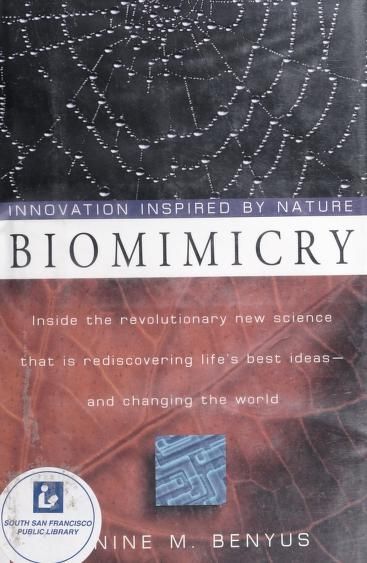
Nova: Ooh, I like that! And that's exactly what we're diving into today. We're exploring the incredible power of biomimicry, drawing inspiration from foundational works like Janine Benyus’s "Biomimicry: Innovation Inspired by Nature," and Jennifer Ackerman’s "The Genius of Birds."
Atlas: Oh, I see. Benyus is often credited with really putting the term 'biomimicry' on the map, isn't she? Like, she took a scientific concept and made it accessible to so many. And Ackerman's book was a critically acclaimed bestseller, revealing just how astonishingly intelligent birds are, right?
Nova: Exactly! It's that kind of foundational work that helps us understand that humanity doesn't need to reinvent the wheel. Nature has been running its R&D department for billions of years, solving some of the most complex engineering and design challenges imaginable. And that's what makes this so exciting.
Nature's Billions-Year R&D: Why Biomimicry Isn't Just Copying, It's Deep Understanding
SECTION
Atlas: Okay, so when you say 'Nature's R&D department,' it makes me think we're just talking about copying, right? Like, 'Oh, that bird flies, let's make a plane that looks like a bird.' But that implies a certain superficiality, doesn't it?
Nova: That sounds a bit out there, doesn't it? But no, it's far from superficial. The core idea here, what the 'cold fact' really points to, is that many complex engineering challenges – from material science to structural design – have already been elegantly solved by nature. What we're talking about is tapping into biomimicry, and it isn't just about copying the surface look of something. It's about understanding the deep principles, the algorithms, if you will, that allow organisms to thrive with incredible efficiency and resilience.
Atlas: I guess that makes sense. You're saying we're not just mimicking the form, but the function, and the underlying logic of that function. But what does that really look like in practice? Give me an example of a 'deep principle.'
Nova: Absolutely. Think about a mollusk shell. It's incredibly strong, lightweight, and tough, despite being made from relatively simple, brittle materials like calcium carbonate. If an engineer were trying to design a new composite material for, say, a lightweight armored vehicle, they might try to layer different plastics or metals. But nature's solution, seen in the nacre or mother-of-pearl of a shell, is a microscopic brick-and-mortar structure, where tiny, hexagonal plates are stacked and cemented together by a thin, elastic organic layer.
Atlas: Oh, I see. So the 'deep principle' isn't just 'make it hard,' it's 'layer brittle materials with a flexible binder to dissipate energy.'
Nova: Precisely! That structure prevents cracks from propagating straight through. It allows the material to deform slightly, absorbing impact, rather than shattering. Ignoring this natural library, as the content puts it, means we're often trying to reinvent the wheel when a perfect, optimized design already exists, a design that's been tested and refined for millions of years. It’s about recognizing that nature has already run countless experiments in resilience and efficiency.
Atlas: That makes me wonder, though. For someone immersed in designing complex systems, trying to bridge disparate worlds like engineering and art, as many of our listeners do, this idea of 'reinventing the wheel' might feel a bit harsh. Isn't innovation also about completely new approaches?
Nova: That’s a great way to put it, and it’s a valid point. Innovation certainly includes entirely novel creations. But what biomimicry offers is a profound shortcut, a source of proven, sustainable strategies. Instead of starting from scratch, you're starting from a highly optimized solution, then adapting and translating it. It's like having access to billions of years of validated research and development. It’s about asking, 'How would nature solve this problem?' before we even draw the first blueprint.
Translating Nature's Genius: Practical Applications and Inspirational Blueprints
SECTION
Atlas: Okay, so if we accept that nature has all these 'cheat codes,' how do we actually read them? What are some of the most compelling translations of this natural genius into real-world engineering breakthroughs?
Nova: That’s where books like Benyus’s "Biomimicry" really shine, offering countless examples. Take the lotus leaf, for instance. It's famously self-cleaning. Water droplets roll off, picking up dirt and dust as they go, leaving the surface perfectly dry and clean.
Atlas: Oh, I know that feeling. I wish my car had that! So what's the secret?
Nova: The secret isn't a chemical coating; it's a physical structure. The leaf surface is covered in microscopic bumps, each coated with tiny wax crystals, creating a superhydrophobic surface. This means water can't stick to it.
Atlas: So you’re saying engineers looked at this and thought, 'How can we replicate that structure?'
Nova: Exactly! Engineers and material scientists studied this, and now we have self-cleaning paints, glass, and fabrics. Imagine buildings that clean themselves with every rain shower, or clothes that never need washing. It totally changes material science.
Atlas: Wow, that’s incredible. And that's a direct translation of a natural principle into a practical application. What about something more dynamic, like flight? I know Jennifer Ackerman's "The Genius of Birds" dives deep into avian intelligence and engineering.
Nova: Oh, "The Genius of Birds" is a masterclass in natural engineering. Ackerman meticulously details the incredible sophistication of bird flight. It’s not just about wings; it's about the intricate mechanics, the variable geometry of their feathers, and their unparalleled navigation skills. Think about a bird's wing – it's not rigid. The feathers can individually rotate and flex, allowing for incredibly precise control, lift, and maneuverability.
Atlas: So how does that translate into, say, aerospace? It's not like we're going to put feathers on a Boeing 747.
Nova: Not literally feathers, no. But the principle of variable geometry, of dynamic, adaptive surfaces, is hugely inspiring. Researchers are developing morphing wings for aircraft and drones that can change shape in flight to optimize for different speeds and conditions, much like a bird does. It's about designing structures that are inherently flexible and responsive, improving fuel efficiency and control. And their navigation? Birds use multiple cues – the Earth's magnetic field, the sun's position, even olfactory maps. This multi-sensory approach inspires autonomous navigation systems, making them more robust and resilient.
Atlas: That totally makes sense for someone working on complex systems. It's not just about one sensor, but integrating diverse inputs, just like nature does. I’m curious, then, for our listeners who are always looking for innovative design inspiration, how do they even begin to apply this? Like, let's say I'm an engineer trying to solve a problem with, I don't know, energy storage. How does a bird or a lotus leaf help me there?
Nova: That's a great question, and it brings us back to that 'tiny step' challenge. It's about shifting your mindset. If you're tackling energy storage, you wouldn't necessarily look for a bird that generates electricity. Instead, you'd ask: 'How does nature store and release energy efficiently? How do organisms manage energy flows? What are the principles of resilience in energy systems in ecosystems?' Think about how plants store solar energy, or how animals store fat for long migrations. The solutions might not be direct copies, but the underlying strategies—the ways nature optimizes for collection, storage, and release—can be incredibly insightful.
Synthesis & Takeaways
SECTION
Atlas: So, it's really about moving beyond the obvious, beyond just looking at the surface, and digging into the deep, elegant solutions that have been refined over eons. It's about asking profound questions of nature.
Nova: Exactly. It's a shift from human-centric design to life-centric design. Nature doesn't produce waste, it optimizes for minimal energy, and it builds for resilience. These aren't just good ideas; they are proven, sustainable blueprints for our own engineering and design challenges. We're talking about billions of years of trial and error, leading to solutions that are inherently efficient and sustainable.
Atlas: That’s actually really inspiring. It means the answers to some of our toughest problems might not be in a lab, but right outside our window. For those of us who are driven by impact, by bringing imagination to life through engineering, this is a powerful framework.
Nova: It absolutely is. And it transforms how we think about innovation. It's not just about what we create, but what nature has already. So, for all our listeners, especially those grappling with a specific engineering problem right now, take that 'tiny step.' Pick that problem, and brainstorm three different ways a natural organism might solve it given its biological constraints. You might be surprised by the insights that emerge.
Atlas: That’s a fantastic challenge. It really pushes you to connect those disparate worlds.
Nova: It does. It’s about recognizing the adaptive advantage that nature offers, and bringing that wisdom into our world.
Atlas: This is Aibrary. Congratulations on your growth!