Unlocking Your Inner Artist: How to Cultivate Creative Flow Without the Pressure
Golden Hook & Introduction
SECTION
Nova: Alright, Atlas, quick game: give me a five-word review for the idea of "cultivating creative flow without the pressure." Go!
Atlas: Oh, I love this! Hmm… "Permission granted to just."
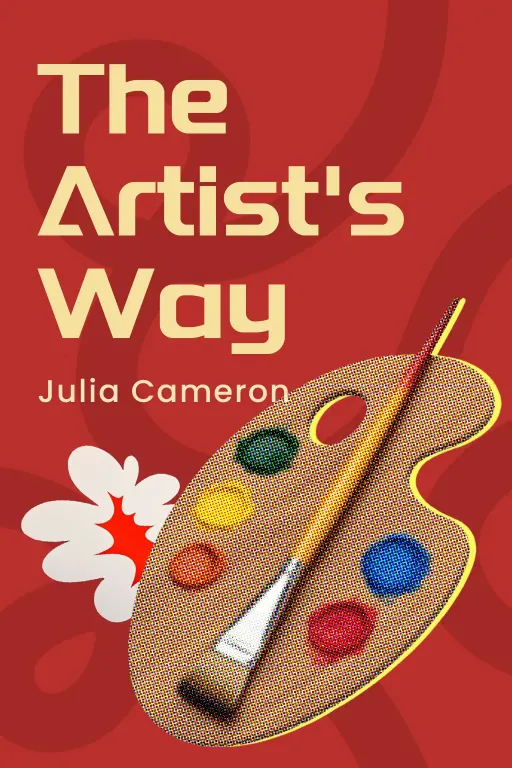
Nova: Oh, I like that! "Permission granted to just be." That perfectly encapsulates what we're diving into today, which is all about "Unlocking Your Inner Artist: How to Cultivate Creative Flow Without the Pressure." We’re pulling insights from two absolute titans in the field: Julia Cameron's and Elizabeth Gilbert's.
Atlas: I can definitely relate. I imagine a lot of our listeners feel that quiet longing to create, but then the paralysis kicks in. It’s like, you want to make something beautiful, but the moment you think about it, the pressure to be 'good' or 'original' just crushes you.
Nova: Exactly! And what's fascinating about Julia Cameron, the author of, is her background. Before she became this spiritual teacher and creativity guru, she was a prolific journalist and filmmaker. That blend of practical, disciplined storytelling with a deep understanding of the human spirit really shines through in her work. She's not just talking theory; she's lived the creative struggle.
Atlas: That makes sense. It’s not just abstract philosophy then. So, where do we even begin to tackle this beast of creative apprehension? How do we acknowledge that feeling without getting completely overwhelmed by it?
Acknowledging Creative Apprehension & Case Study: The Morning Pages
SECTION
Nova: That's the perfect question, Atlas, because acknowledging that blend of aspiration and apprehension is truly the first step. Cameron, in, makes it clear that creative blocks are often deeply rooted in fear and self-doubt. It’s not a lack of talent; it’s an emotional landscape we need to navigate.
Atlas: Right? It’s like you have this amazing idea bubbling up, and then your inner critic shows up with a megaphone, telling you all the reasons it’s terrible before you even start. For curious learners who enjoy deep thinking, that self-doubt can be particularly insidious because we overthink everything.
Nova: Precisely. And that's where Cameron introduces one of her most powerful tools: 'Morning Pages.' It’s deceptively simple, yet profoundly effective. Every morning, first thing, you write three pages of stream-of-consciousness longhand. No editing, no rereading, no judgment. Just get whatever is in your head onto the paper.
Atlas: Three pages every morning? Honestly, that sounds like another pressure point, especially for someone already feeling overwhelmed or struggling to even start. Is there really magic in the mundane act of just writing, or is it just more homework to avoid?
Nova: See, that’s the common misconception! It’s not about writing something. The content is irrelevant. You are literally just getting the 'gunk' out. Think of it like clearing out the lint trap in your dryer. You wouldn't judge the lint, right? It's just the stuff that accumulated. Morning Pages are a mental detox. They silence the inner critic by giving it a designated, unjudged space to rant and get it all out of the way before you engage with your actual creative work.
Atlas: Okay, I see how that could drain the fear bucket. It’s like a mental decluttering, a brain dump before you even sit down to create. So, it's about building a consistent, almost ritualistic practice to clear the path for creativity, not force it, and certainly not to produce a masterpiece every morning.
Nova: Exactly. I remember hearing about an aspiring novelist who felt completely blocked. Every time she sat down to write her book, she’d be paralyzed by self-doubt. After a few weeks of Morning Pages, she realized she wasn't getting brilliant plot ideas on the page, but she was getting out all the anxieties about her finances, her relationship, her fear of failure. Once that mental clutter was externalized, she suddenly found the mental space and emotional clarity to actually working on her novel, not because the pages gave her the answers, but because they cleared the noise.
Atlas: That’s a perfect example. It's not about the output of the Morning Pages, but the of clearing the internal static. It lets you differentiate between the genuine creative impulse and the noise of fear and doubt. It builds a muscle of showing up, even when you don't feel inspired.
Practical Pathways to Creative Flow & Case Study: Ideas as Living Entities
SECTION
Nova: And while Cameron helps us excavate our inner artist by clearing the debris, Elizabeth Gilbert, with, offers a completely different, yet wonderfully complementary, perspective on creativity shows up and how we should approach it.
Atlas: I know is widely acclaimed. Gilbert's approach always felt a bit more... ethereal, maybe? More about inspiration floating down from the heavens. How does she reconcile that with the very real, often gritty work of creation, especially for someone who might feel they don't have a creative bone in their body?
Nova: That's a great point. Gilbert’s core argument is that ideas are living entities. They're not something you happen; they're out there, floating around, looking for human collaborators. And if you’re not open, if you’re too busy agonizing or being a perfectionist, that idea will simply float off and find someone else. She famously wrote her bestselling memoir, and the pressure to follow up such a monumental success was immense. It was that very pressure that led her to develop this playful, less agonizing approach to creativity, which she then shared in.
Atlas: Hold on, ideas as living entities? That sounds a bit out there, even for me who enjoys deep thinking. So you're saying if I don't grab an idea, it just floats off to someone else? Isn't that just a fancy way of saying 'don't procrastinate' or 'seize the moment'?
Nova: It’s more profound than just procrastination, and it offers a powerful reframing of how we relate to our work. Gilbert illustrates this with a compelling, almost uncanny, story. She had a friend who had this brilliant, unique idea for a book. They talked about it extensively, the friend was passionate, but kept procrastinating, putting it off. Years later, Gilbert met another author who had just published a book. And the shocking thing was, it was, down to specific, unusual details, that her friend had procrastinated on.
Atlas: Wow, that’s a perfect example! That’s actually really inspiring, and a little terrifying! So it's about being open, curious, and having the courage to say 'yes' to these creative whispers, rather than trying to force a masterpiece or waiting for perfect conditions. It’s almost like a sacred trust with the universe.
Nova: Exactly! Gilbert emphasizes curiosity over passion. She argues that passion can be intense but also fleeting and prone to burnout. Curiosity, on the other hand, is a quieter, more sustainable, and often more joyful fuel for creativity. It’s about following what intrigues you, being open to discovery, and letting go of the need for every creative endeavor to be a grand, world-changing statement. It's about being a good host to the idea, not its master, and understanding that creativity is a universal birthright, not just for a chosen few.
Atlas: That resonates deeply. Because if you’re constantly chasing that high-pressure 'passion,' it can feel exhausting. But curiosity? That’s something you can tap into every day. It makes creativity feel accessible, not like this daunting task reserved for 'true artists.' It shifts the focus from the outcome to the journey, and the inherent joy in the exploration.
Synthesis & Takeaways
SECTION
Nova: So, bringing these two incredible authors together, we have Cameron's disciplined self-excavation with Morning Pages, which helps us clear the internal emotional debris, and Gilbert's playful openness to ideas as external, almost magical forces, encouraging us to engage with curiosity. Both, in their own powerful ways, dismantle the pressure to be 'good' or 'original' and instead focus on the of engagement and the inherent joy of creation.
Atlas: That’s a great way to put it. For anyone who struggles with that internal critic, or feels like they're not 'artistic enough' or 'creative enough,' these two approaches offer a powerful one-two punch. It's about healing the fear, then opening yourself up to the magic. It’s a very holistic approach to creativity.
Nova: Absolutely. And the healing moment for our listeners today, inspired by both, is to simply play. Take a moment to engage with any artistic medium, any medium at all, without judgment or expectation. Just for the sheer, unadulterated joy of it. It could be doodling on a napkin, singing off-key in the shower, moving your body to music, or just building a sandcastle with your kids. It’s about reconnecting with that childlike freedom and remembering that creativity is fundamentally about play.
Atlas: I love that. It’s a reminder that creativity isn't solely about grand masterpieces or professional output; it's about the act of creation itself, in whatever form it takes. It's about finding that joy again, silencing that inner critic, and just letting yourself explore.
Nova: Indeed. And as Gilbert often reminds us, the creative life is an amplified life. It's a bigger, more colorful, more terrifying, more thrilling, and ultimately, more expansive invitation to live fully. It's about living with more courage, more curiosity, and more wonder.
Atlas: Definitely. So, if you're feeling that quiet longing to create, perhaps it's time to pick up a pen for morning pages, or just open yourself up to the next idea that comes knocking. What an inspiring thought to carry into the rest of the week.
Nova: Thank you for joining us on this exploration of unlocking your inner artist. We hope you found some valuable insights today.
Atlas: We'd love to hear how these ideas resonate with you. Share your creative healing moments with us online.
Nova: This is Aibrary. Congratulations on your growth!