Unlocking Your Creative Flow: Stop Overthinking, Start Making
Golden Hook & Introduction
SECTION
Nova: Atlas, I have a challenge for you today. In five words, tell me your review of the concept of "creative flow."
Atlas: Oh, man, five words? Okay, let's see... "Elusive, but probably worth chasing."
Nova: Ha! "Probably worth chasing." I love that hint of skepticism mixed with optimism. Mine would be: "Listen more, think less, make." And that, my friends, is exactly what we’re diving into today—the art of unlocking your creative flow by stopping the overthinking and just, well, starting to make.
Atlas: That resonates deeply. I imagine a lot of our listeners, especially those who love creating, feel that push and pull. We all want that flow state, but it often feels like there’s a giant boulder in the way.
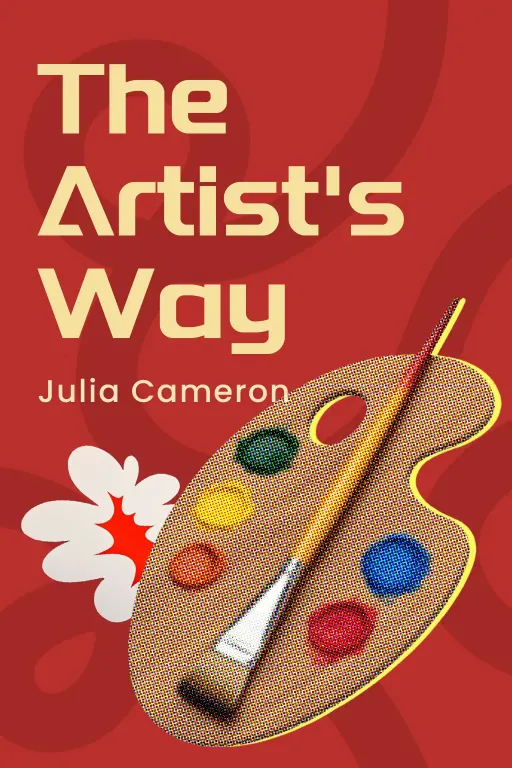
Nova: Absolutely. And when we talk about this topic, we can't help but draw inspiration from two absolute titans: Julia Cameron’s seminal work, The Artist's Way, and Elizabeth Gilbert’s Big Magic. What's so fascinating is how these books came to be. Julia Cameron, a playwright, composer, and poet herself, actually developed The Artist's Way after experiencing a profound creative block. She sought a spiritual solution to unlock her own artistic voice, and what emerged was this incredible, widely acclaimed guide that has helped millions worldwide.
Atlas: I can relate to that. It’s like she wrote the instruction manual out of her own struggle.
Nova: Exactly. And then you have Elizabeth Gilbert. After the immense, almost overwhelming success and pressure of Eat, Pray, Love, she wrote Big Magic. She wanted to demystify creativity, to make it accessible to everyone, not just some tortured artist archetype. It’s about normalizing the ups and downs. So, today, we're really exploring the universal struggle of creative blocks, and then, crucially, the actionable, compassionate ways to move past them and unlock your unique creative flow.
The Universality of Creative Blocks: Validating the Struggle
SECTION
Nova: So, let's talk about that initial feeling. That self-doubt, that internal resistance that stops you before you even begin. It's a feeling that’s so universal, yet we often internalize it as a personal failing.
Atlas: I imagine a lot of our audience, who are often "creative crafters" or "joyful learners," feel this deeply. Is this "resistance" more about the fear of failure, or sometimes, even the fear of success and what that might entail?
Nova: That’s a brilliant question, Atlas. It can be both, and more. Cameron, in The Artist's Way, has this concept of 'shadow artists.' These are people who deeply long to create, but instead, they live vicariously through others. They might be the art gallery owner who dreams of painting, or the music critic who wishes they could compose. It’s a powerful validation to realize you're not alone in feeling that pull without acting on it. It’s not a personal failing; it’s a shared human experience.
Atlas: Oh, I know that feeling. It’s like admiring a beautiful cake and wishing you could bake one, but never getting past looking at the recipe. That makes sense for anyone who's ever felt like their passion is just sitting there, untouched. But what distinguishes a genuine creative block from, say, just good old-fashioned procrastination?
Nova: That’s where Gilbert’s perspective in Big Magic really shines. She suggests that creative ideas are living entities, almost like spirits, seeking human partners to bring them into the world. When we overthink, when we resist, when we procrastinate, that idea, that spark, simply moves on to someone else who might be more receptive. It reframes the struggle. It’s less about your personal inadequacy and more about your responsiveness.
Atlas: That sounds a bit out there, honestly. Ideas as living entities? Is that just a whimsical way to describe inspiration, or is there a practical takeaway here? Does that let people off the hook for not trying hard enough?
Nova: That’s a fair push. It might sound whimsical, but the practical takeaway is profound. It shifts the pressure. When you view an idea as something that to be created, that to come through you, the fear of failure or the pressure of perfection diminishes. It becomes less about being good enough, and more about you being a willing vessel. It encourages curiosity and openness rather than self-judgment. It’s not about letting yourself off the hook; it’s about changing the nature of the hook.
Actionable Pathways to Creative Flow: Beyond Overthinking
SECTION
Nova: Understanding the struggle is one thing, but what do we actually about it when the muse feels miles away, or when that internal critic is just screaming? That naturally leads us to the actionable pathways.
Atlas: Exactly. For our listeners who are practical guides and hands-on, the "how-to" is crucial. What’s the first step when you’re staring at a blank page or a silent instrument?
Nova: Julia Cameron offers one of the most powerful, yet deceptively simple, tools: Morning Pages. It’s a tangible, non-judgmental practice for clearing mental clutter and accessing your inner wisdom. The rule is simple: three pages, longhand, stream of consciousness, first thing in the morning. You don't edit, you don't reread, you just write whatever comes to mind – complaints, worries, dreams, grocery lists. It’s a brain dump.
Atlas: Okay, but for someone who's already feeling time-poor, the idea of dedicating 15 minutes to "mind-dumping" before the day even properly begins might feel like another chore. How does that genuinely lead to creative breakthroughs? Can you give an example of how it plays out?
Nova: I know it sounds counterintuitive to add something to an already busy morning, but the magic of Morning Pages is in its consistency. It's like sweeping out your mental attic. People often report unexpected insights appearing on the page – solutions to problems they’d been wrestling with, emotional releases, or even just a sudden clarity about what they want to create that day. It clears the static so the creative signal can come through.
Atlas: That’s actually really inspiring. So it's not about writing something profound, it's about clearing the path for profundity.
Nova: Precisely. And then, complementing Morning Pages, Cameron also suggests 'Artist Dates.' These are playful, solo excursions designed purely to fill your creative well. They’re non-productive, purely nurturing. It could be visiting a hardware store, going to a thrift shop, walking in a park with no agenda, or simply observing people in a cafe. The goal is to spend time alone, doing something that sparks your curiosity and wonder.
Atlas: I love that. "Artist Dates." That connects so well with the "joyful learner" aspect of our audience. So it’s about actively seeking out inspiration, not waiting for it to strike. But what if you’re, say, on a tight budget or have limited mobility? What’s an accessible Artist Date?
Nova: It can be as simple as listening to a new genre of music with full attention, or trying a new recipe just for the fun of it, or even just observing the patterns in the clouds. The key is the intention: it's not about making something; it's about experiencing something new and letting your inner artist be fed. It’s embracing curiosity over fear, which Elizabeth Gilbert champions.
Atlas: That makes me wonder, how does one curiosity when fear feels so overwhelming and almost instinctual? Is there a technique for that shift?
Nova: Gilbert has a wonderful perspective on this. She says fear is natural, it's an old, primitive emotion, and it will always be there when you step into the unknown of creation. But you don't have to give it the steering wheel. You can acknowledge fear, even invite it along for the ride, but let curiosity be the driver. Imagine fear sitting in the backseat, shouting directions, but you, as curiosity, are firmly in control, choosing the path. It's a reorientation, not an eradication of fear.
Synthesis & Takeaways
SECTION
Nova: So, what we've really been talking about today is that creative flow isn't some magical, elusive state reserved for a chosen few. It's about developing practices and a mindset that allows creativity to move through us, despite the inevitable struggle.
Atlas: I can see that now. Validating the struggle, knowing it’s universal, is a crucial first step. And then, these simple, consistent actions like Morning Pages and Artist Dates, they’re surprisingly powerful. It’s like how small, consistent actions in any craft eventually build skill and mastery. You don't just wake up a master photographer; you practice.
Nova: Exactly. It reinforces the idea that consistent, small efforts are far more effective than waiting for some grand, perfect inspiration to strike. It's about showing up for your creativity, just like you show up for a friend.
Atlas: For our listeners who are ready to take that first step, what's a concrete, tiny action they can take this week to start unlocking their own creative flow?
Nova: I would say: dedicate 15 minutes this week to 'Morning Pages.' Just try it. Three pages, stream of consciousness, first thing in the morning. See what your inner creative voice has to say, without judgment.
Atlas: And trust your innate curiosity to lead you. That’s a beautiful way to put it.
Nova: Indeed. This is Aibrary. Congratulations on your growth!