Unlocking Your Creative Flow: How to Design a Life of Artistic Output
Golden Hook & Introduction
SECTION
Nova: Alright Atlas, quick game. I want you to give me a five-word review of the concept of "waiting for inspiration." Go!
Atlas: Oh, that's easy. "A luxurious, agonizing, mythical excuse."
Nova: Ha! I love that. "Luxurious, agonizing, mythical excuse." Mine would be: "A well-intentioned, creativity-killing delusion."
Atlas: Ooh, "creativity-killing delusion." That's sharp. You know, it's such a pervasive idea, isn't it? This notion that genius strikes like lightning, and if it doesn't, well, better just wait by the window, hoping for a storm.
Nova: Absolutely. And that's precisely the myth we're dismantling today. We're diving into how to design a truly sustainable, vibrant creative life, moving beyond that passive waiting game and into a realm of intentional practice and fearless engagement. We're going to explore this through the lens of two incredibly influential books that, while different in their approach, share a common, powerful truth.
Atlas: Which are? Lay it on me.
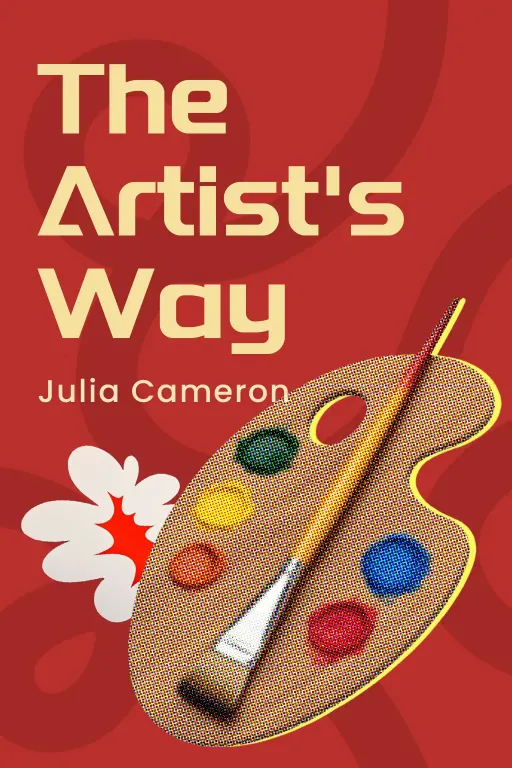
Nova: First up, we have by Julia Cameron. You know, Cameron actually started her career as a filmmaker and screenwriter, and she herself battled intense creative blocks and addiction. This book, published in the early 90s, really emerged from her own journey to reclaim her creative self, and it quickly became a kind of therapeutic guidebook for artists and non-artists alike, wanting to 'recover' their innate creativity. It's less about talent and more about healing.
Atlas: So, it's a "recovery program" for your muse? That’s already intriguing. And the second?
Nova: The second is Elizabeth Gilbert's. Now, Gilbert, of course, is widely known for. After that massive success, she faced immense pressure and curiosity about how she maintained her own creative flow without succumbing to fear or external expectations. was her answer, a deeply personal and philosophical exploration of how to live a life driven by curiosity rather than fear, treating creativity as a playful pursuit. It’s a very different vibe from Cameron, but equally profound.
Atlas: So we've got the structured, almost therapeutic recovery, and then the playful, philosophical partnership with ideas. This sounds like an excellent combo.
Nova: Exactly. Today we'll dive deep into this from two perspectives. First, we'll explore the disciplined, structured approach to 'recovering' your creativity through practices like morning pages. Then we'll discuss how to cultivate a fearless, playful partnership with your ideas. Finally, we'll synthesize how these seemingly different paths lead to a life of consistent artistic output.
The Disciplined Path to Creative Recovery: Julia Cameron's 'The Artist's Way'
SECTION
Nova: So let's kick things off with Julia Cameron and. Her core argument is beautifully simple: creativity isn't this mystical, elusive gift that only some are born with. It's a muscle. And like any muscle, it needs to be worked, consistently and deliberately. It’s a practice, not a lightning bolt.
Atlas: That makes sense. I guess that takes some pressure off, right? If it's a muscle, I can train it. But what are the heavy lifts in her program? What are the key practices?
Nova: Her most famous, and arguably most impactful, tool is something called "Morning Pages." It’s incredibly simple, yet profoundly effective. Every morning, immediately after waking, you sit down and write three pages of longhand, stream-of-consciousness writing. No self-editing, no rereading, no striving for literary genius. It’s just getting whatever is on your mind out onto the page.
Atlas: Hold on, so it’s like journaling? But three pages, every single morning? That sounds like a big commitment for someone who barely has time to brew coffee before work. What’s the actual difference, beyond the page count?
Nova: That’s a great question, and it's a crucial distinction. While it shares similarities with journaling, the behind Morning Pages is different. Journaling often has a thematic focus – reflecting on your day, planning, or working through specific emotions. Morning Pages are about mental decluttering. Think of it as sweeping out the cobwebs in your mind. It’s about dumping all the anxieties, the to-do lists, the petty grievances, the half-formed ideas, the worries about what you need to buy at the grocery store – everything – onto the page. It’s not meant to be read, it’s meant to be.
Atlas: So basically you’re saying it’s a brain dump, a data cleanse for your subconscious?
Nova: Exactly! And the magic happens because by getting all that mundane, distracting chatter out, you create space. You clear the static. It allows your true creative impulses, your intuition, your deeper thoughts, to finally surface. People often find that after consistently doing Morning Pages, they start to hear their own inner voice more clearly, they get ideas out of nowhere, or they suddenly see solutions to problems that were previously baffling.
Atlas: That’s fascinating. I can definitely relate to the feeling of having so much mental clutter that it's hard to focus on anything truly creative. But if you don't reread them, how do you know if it's working?
Nova: You don't necessarily 'know' in a measurable sense in the beginning. It's a leap of faith, a consistent practice that builds momentum. Cameron emphasizes that the benefit isn't in the content, but in the itself. It’s the ritual, the discipline, the commitment to showing up for yourself creatively, even before the day truly begins. It’s about building that habit.
Atlas: Okay, I’m starting to get it. It’s less about the output and more about the process. What’s the other big practice?
Nova: The other cornerstone is the "Artist Date." This is a weekly, solo excursion dedicated to nurturing your inner artist. It could be visiting a museum, going to a quirky antique shop, taking a walk in nature, trying a new recipe, or watching a foreign film. The key is that it’s something purely pleasurable, something that sparks your curiosity or wonder, and something you do alone.
Atlas: A solo "play date" with yourself? I like that. But again, for someone with a demanding schedule, maybe a family, a high-pressure job – how do you fit in a dedicated solo excursion every week without feeling like you're neglecting other responsibilities or, frankly, just feeling guilty?
Nova: That’s a common challenge. Cameron would argue that it's not a luxury; it's a necessity for creative well-being. It's about refilling your creative well, which often gets drained by the demands of daily life. If you're constantly pouring out, you need to pour back in. And it doesn't have to be a grand, expensive outing. It can be an hour spent sketching in a park, or listening to a new genre of music with full attention, or even just sitting by a window and watching the world go by. The point is to engage with something that delights or intrigues you, purely for the sake of it, without any agenda or productivity goal. It’s about playtime for your inner child, your inner artist.
Atlas: That’s actually really inspiring. So, Morning Pages clear the path, and Artist Dates refill the tank. It’s a very structured, almost therapeutic approach to making space for creativity.
Nova: Precisely. And that naturally leads us to the second key idea we need to talk about, which often acts as a powerful complement to what we just discussed. Because while discipline is essential, sometimes we also need a different kind of magic.
Embracing Courage and Play in Creativity: Elizabeth Gilbert's 'Big Magic'
SECTION
Nova: So, if Julia Cameron gives us the practical tools for creative recovery, Elizabeth Gilbert, with, offers us a profound philosophical shift. She tackles the fear, the pressure, the expectation that often surrounds creative pursuits.
Atlas: Yeah, I imagine a lot of our listeners who are deep thinkers and creators often feel that weight. The fear of not being good enough, the fear of judgment, the fear of failure. It's paralyzing.
Nova: It absolutely is. And Gilbert offers a radical reframe. She suggests that ideas themselves are living entities. They're not born us; they're out there, floating around, looking for human partners to bring them into reality.
Atlas: Wait, so ideas just float around? That sounds a bit... woo-woo, as you said earlier. How does that reconcile with the rigorous discipline of? One says 'do the work,' the other says 'ideas find you'?
Nova: It’s a beautiful reconciliation, actually. Gilbert’s perspective isn't about being passive; it's about being and. She tells a story, almost a parable, about an idea that tried to partner with her. She was too busy, too scared, too distracted. So, the idea, like a persistent houseguest, eventually got bored and moved on, finding another writer to manifest itself through. And Gilbert later saw that exact idea, that exact story, published by someone else.
Atlas: That’s incredible! Almost chilling. So, if you ignore the idea, it just packs its bags and goes to someone else? That puts a different kind of pressure on.
Nova: It does, but it's a positive pressure. It reframes the creative process from a burden of genius to a playful collaboration. You’re not solely responsible for inventing everything; you're responsible for showing up, being open, and having the courage to say "yes" to the ideas that knock on your door. She emphasizes that courage is the most important ingredient. It’s not about being fearless, it’s about acting the fear.
Atlas: That makes me wonder, what about the fear of failure, the fear of judgment? For someone who wants to share their insights, to create content, that’s a huge barrier. Gilbert says 'courage,' but how do you actually that?
Nova: She suggests treating creativity like a playful pursuit, not a torturous one. She encourages us to approach it with curiosity and lightness, rather than heavy self-importance. She says, "If you're not having fun, you're doing it wrong." That’s a radical departure from the "tortured artist" trope we often romanticize. It’s about detaching from the outcome. Your job is to do your part, to bring the idea to life as best you can, and then release it. The success or failure, the reception, that’s not entirely yours to control.
Atlas: So, it’s about showing up, being open, and having fun with it? That’s a refreshing take. So, Cameron says build the muscle, Gilbert says foster the relationship and be brave.
Nova: Exactly! Gilbert encourages us to ask ourselves, "What is the most interesting thing you could do right now?" rather than "What is the most important thing you should do to achieve success?" This shifts the focus from external validation to internal delight and curiosity. It’s about finding your "big magic" in the everyday pursuit of what genuinely fascinates you. This is crucial for our listeners, the "Infinite Seekers" who want to simplify the complex and share profound insights. It's not about being perfect; it's about being persistent and playful in your pursuit of knowledge and creation.
Atlas: I really like that. It feels less like a daunting task and more like an exciting adventure.
Synthesis & Takeaways
SECTION
Nova: And that brings us to the synthesis, to what Nova's Take on this truly means. Both Cameron and Gilbert, in their unique ways, are telling us that creativity is not about waiting for inspiration to strike. It's about building habits and systems, yes, but also about cultivating a fearless, playful approach.
Atlas: So it's the consistent rituals, the Morning Pages, the Artist Dates, that create the fertile ground. And then it's the fearless approach, the courage to engage with those living ideas, that allows the seeds to grow.
Nova: Precisely. It's the synergy of discipline and delight. Consistent rituals create the container, the structure within which your creative energy can flow. And a fearless approach, treating ideas as partners rather than burdens, fills that container with vibrant, authentic energy. It’s about transforming fleeting inspiration into a sustainable creative life. It's not about finding your voice; it's about clearing the obstructions so your voice can emerge. It's about showing up, day after day, not just for the big ideas, but for the tiny whispers.
Atlas: That's such a powerful takeaway. Because for many who are driven by self-mastery and impact, it’s easy to get caught up in the outcome, in the "profound insight" part, and forget the consistent, sometimes messy, process. It’s a reminder that even the most insightful work comes from consistent, brave engagement.
Nova: Absolutely. It’s about understanding that your creative output, your ability to simplify the complex and share insights, isn't contingent on some external event or a sudden burst of genius. It's built, brick by brick, page by page, curious exploration by curious exploration. It’s about making a commitment to your creative self, and then showing up with courage and curiosity.
Atlas: So, for anyone listening right now, feeling that pull to create, to share, to build, but perhaps feeling a bit stuck or overwhelmed by the sheer scale of it all, what’s one tiny step they can take, right now?
Nova: The tiny step, the simplest yet most profound action, is to start your morning pages tomorrow. Three pages of freehand writing, immediately after waking. Don't think, just write. It’s a small, consistent ritual that can unlock enormous creative potential.
Atlas: I love that. A practical, immediate action. It’s not about waiting for the grand inspiration, it’s about showing up.
Nova: Indeed. It's about designing a life where creativity isn't a happy accident, but a consistent, joyful output.
Atlas: A life of artistic output. What a beautiful goal.
Nova: This is Aibrary. Congratulations on your growth!