Unleash Your Inner Architect: How to Build Creative Habits That Last
Golden Hook & Introduction
SECTION
Nova: Creativity isn't magic, it's work.
Atlas: Practical steps for everyday genius.
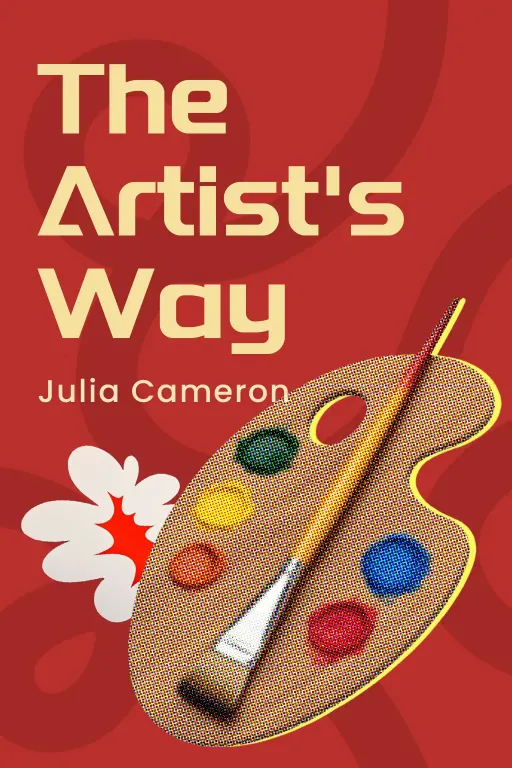
Nova: Exactly, Atlas! We're talking about taking something often shrouded in mystery and making it, well, a daily habit. Today we are diving into two phenomenal books that demystify the creative process: Julia Cameron's seminal work, The Artist's Way, and Elizabeth Gilbert's more contemporary and equally inspiring Big Magic.
Atlas: Oh, I've heard so much about both of those. What's fascinating is how The Artist's Way has been a true classic for decades, often credited with launching entire creative careers, while Big Magic offers a more playful, yet equally powerful, perspective. It makes me wonder if they're saying the same thing, or if they offer different paths to the same goal.
Nova: That’s a great question, and it's precisely what we'll explore. These books are widely acclaimed for making creativity accessible, not just for "artists," but for anyone who feels a creative spark, even if it's buried under layers of doubt or routine.
Atlas: I can definitely relate to that. A lot of our listeners, myself included, might feel a pull towards something creative, but then life, work, and that nagging inner critic just… take over.
Nova: Oh, I know that feeling. And that brings us to the core of what these authors teach us: the cold, hard fact that creativity is a practice, not a mood. It doesn't strike like lightning; it's something you cultivate, day in and day out.
Creativity as a Deliberate Practice
SECTION
Atlas: So, you're saying I don't need a lightning bolt moment? That's going to resonate with anyone who feels like they're waiting for inspiration to hit before they can even start.
Nova: Exactly. Julia Cameron, in The Artist's Way, fundamentally shifts our understanding. She presents creativity as a spiritual path, a journey of self-discovery that you embark on through consistent, often humble, acts. It's about showing up, not waiting for inspiration.
Atlas: Okay, but for someone who feels utterly uninspired, or even creatively blocked, how do you just "show up"? What's the first step when you feel like you have nothing to say or make?
Nova: That's where her most famous tool, "Morning Pages," comes in. It's a simple, yet profound ritual: every morning, before your inner critic fully wakes up, you grab a notebook and handwrite three pages of anything that comes to mind. No judgment, no editing, just a stream of consciousness.
Atlas: Three pages, every single day? That sounds a bit daunting. What's the "why" behind it? Is it just journaling?
Nova: It’s more than journaling. It's a form of active meditation, a brain dump. Imagine a hypothetical aspiring writer, Sarah, who's been staring at a blank screen for months, convinced her novel idea is dead. She starts Morning Pages. For the first few weeks, it's mundane stuff: grocery lists, complaints about her neighbor, worries about deadlines. But then, subtly, something shifts.
Atlas: Something shifts? Like what?
Nova: She might find herself writing about a childhood memory she hadn't thought of in years, or a snippet of dialogue that feels authentic, or even just a frustration about her plot that suddenly reveals a solution. The act of writing without judgment creates a channel, clearing out the mental clutter. It's not about what you write, but the act of writing itself.
Atlas: So basically you’re saying it's like cleaning out the pipes so the creative water can flow again. That makes sense for a writer, but what about someone in a visually creative field, like a graphic designer trying to break a block on a major project?
Nova: The principle is the same. The Morning Pages unblock the inner critic, that voice that tells you your ideas aren't good enough before they even fully form. For that graphic designer, it might be writing about the pressure they feel, the fear of disappointing a client, or even just doodling words and shapes. It helps them access a more intuitive, less self-censoring part of their mind. The cause is the consistent ritual, the process is the uninhibited flow, and the outcome is often an unexpected breakthrough, not because they "found" inspiration, but because they created the space for it.
Atlas: That’s actually really inspiring. It means you don't have to wait for the muse; you just have to create the conditions for the muse to show up. And that naturally leads us to the second key idea we need to talk about, which often acts as a counterpoint to what we just discussed: the role of play and persistence in nurturing that creative flow.
Unblocking Creativity Through Ritual and Play
SECTION
Nova: Absolutely. While Cameron emphasizes discipline and ritual, Elizabeth Gilbert, in Big Magic, brings in the element of playfulness and persistence. She argues that ideas are alive, almost like conscious entities, and they seek collaborators.
Atlas: Ideas are alive? That sounds a bit out there. What do you mean?
Nova: She suggests that creative ideas "travel" and if one person doesn't pick them up, they'll move on to someone else. This perspective immediately frees you from the burden of perfectionism and the fear of failure. It's less about "I have to come up with a brilliant idea" and more about "I'm open and playful enough for a brilliant idea to find me."
Atlas: So you’re saying it's less about force and more about invitation? That's a huge mindset shift, especially for our listeners who might be in high-pressure roles where everything feels like a high-stakes, perfection-driven task.
Nova: Exactly. Gilbert encourages a lighthearted, persistent approach. She advocates for "Artist Dates," which, similar to Cameron's concept, are solo excursions to find inspiration. But the emphasis here is purely on joy and exploration, not necessarily on a specific outcome.
Atlas: Can you give an example? How does a playful "Artist Date" actually unblock someone? Because honestly, that sounds like something I'd feel guilty doing when I have a mountain of work.
Nova: Imagine an artist, Mark, who's stuck on a commission. He feels drained, his work feels stale. Instead of forcing it, he takes an "Artist Date." He might go to a quirky antique shop, spend an hour just people-watching at a park, or even visit a local science museum, not with a goal, but just to feel curious.
Atlas: And what happens? Does he suddenly paint a masterpiece?
Nova: Not necessarily immediately. But through this joyful, low-stakes exploration, he might see an unexpected color combination in a stained-glass window, or overhear a conversation that sparks a character idea, or simply feel his sense of wonder reawakened. It’s about replenishing the well, not forcing water out of a dry one. He returns to his studio feeling refreshed, less burdened, and perhaps with a new perspective that allows the creative block to dissolve naturally.
Atlas: That’s a perfect example. It sounds like Cameron gives us the tools to clear the internal noise, and Gilbert gives us permission to go out and play and trust that the ideas will find us. But how do you combine that discipline with the playfulness, especially when the fear of failure is so strong?
Nova: The two approaches truly complement each other. Cameron provides the structure and the daily habit that builds creative muscle, while Gilbert liberates us from the pressure and reminds us that creativity should be a joyful dance, not a grueling battle. It's about showing up consistently and then approaching that "showing up" with an open, curious, and fearless spirit.
Synthesis & Takeaways
SECTION
Nova: So, what we really learn from both Julia Cameron and Elizabeth Gilbert is that creativity isn't an elusive gift bestowed upon a lucky few, nor is it a mood you wait for. It's a muscle you build, a garden you tend, and a force you actively engage with.
Atlas: That’s a great way to put it. It feels less intimidating and much more empowering. The profound insight here is that you don't need to be born a genius; you just need to commit to the practice and cultivate a relationship with your own creative spirit.
Nova: Exactly. Whether it's through the disciplined channel-clearing of Morning Pages or the playful, fear-free exploration of Artist Dates, the message is clear: consistent, humble acts build a strong creative foundation. It’s about building deliberate channels and maintaining a curious, open relationship with ideas. It’s about showing up consistently and allowing space for magic to happen.
Atlas: That gives me chills. Thinking about it, what small, consistent step could our listeners take tomorrow to invite more creativity into their lives? Just one tiny step.
Nova: Just one. Maybe it's five minutes of unedited writing, or a five-minute walk through a park with no destination in mind, just to observe. The point is to start.
Atlas: Start somewhere, anywhere.
Nova: This is Aibrary. Congratulations on your growth!