The Elusive Spark: How to Nurture Your Creative Genius Without Burning Out.
Golden Hook & Introduction
SECTION
Nova: Welcome to the Creative Confession Booth, Atlas. Quick, what's your biggest creative sin of the week?
Atlas: Oh, that's easy. I stared at a blank document for an hour, decided it was judging me, and then watched a documentary about competitive cheese rolling. It felt... important research.
Nova: Important research! I love that. Relatable, truly. And honestly, my friends, Atlas's experience is exactly why our topic today is so vital. That feeling of a demanding muse, the blank page paralysis, the pressure cooker of creation that can leave us utterly drained or completely blocked. It's not a personal failing; it's a common struggle.
Atlas: Tell me about it. It feels like this invisible weight, right? Like you're supposed to just the genius, and if you don't, you're somehow less than.
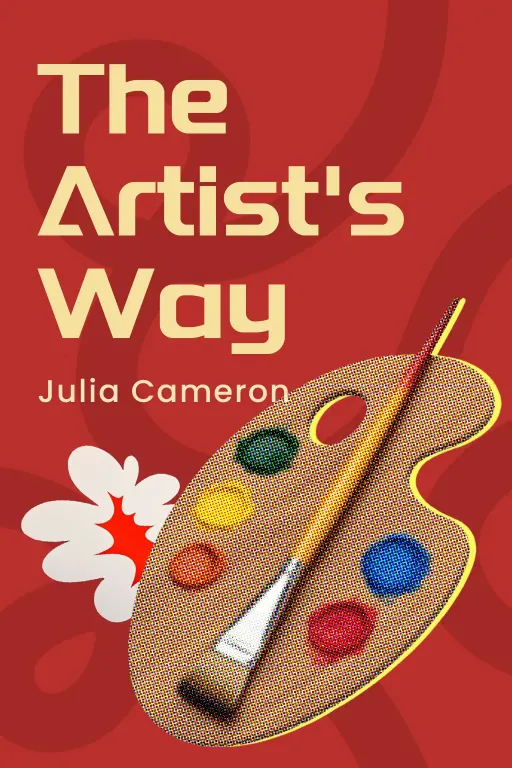
Nova: Absolutely. And today, we're diving into the heart of that struggle, guided by two incredible voices who offer profoundly different, yet complementary, paths to creative liberation: Julia Cameron's seminal work,, and Elizabeth Gilbert's wildly popular.
Atlas: Cameron, a long-time artist and teacher herself, really built a framework for creative recovery. Her book became a global phenomenon, almost like a 12-step program for the artistic soul, guiding countless people back to their creative selves. And Gilbert, after the massive success of, consciously shifted her focus to demystify creativity for the masses, offering a much more playful perspective. It's a fascinating contrast in approaches.
Nova: It really is. And that feeling you just described, Atlas, of the blank page judging you? That's the perfect entry point into Julia Cameron's world. She helps us understand that for many, creative blocks aren't about a lack of talent, but about unaddressed wounds and fear.
Unlocking the Inner Artist: Healing Through Creative Practice
SECTION
Atlas: So, you're saying it’s not just about trying harder, but about something deeper? That’s going to resonate with anyone who’s ever felt that wall.
Nova: Precisely. Cameron's core insight in is that our inner artist, that spontaneous, joyful, creative child within us, often gets wounded or silenced by criticism, past failures, or societal expectations. Her work, which she refined over decades of teaching workshops, isn't about becoming a professional artist; it's about recovering your creative self for the sheer joy of it.
Atlas: But how does writing three pages every morning actually anything? Isn't it just journaling?
Nova: It’s so much more than just journaling, though it shares some similarities. Cameron calls them 'Morning Pages,' and the instruction is simple: three pages of longhand, stream-of-consciousness writing, first thing in the morning, without editing, censoring, or rereading. The magic is in the consistency and the absolute lack of judgment. It’s a mental drain cleaner.
Atlas: A mental drain cleaner. I like that. So, what’s happening in those pages? Are you just complaining about your landlord?
Nova: You might be! Or you might be processing anxieties, dredging up old resentments, or even just writing about what you need to buy at the grocery store. The point is, you’re emptying your mind of all the clutter, the noise, the fears, the to-do lists, the inner critic’s pronouncements. It’s a way to clear the channel, to get past the gatekeepers of your own mind. Think of it like this: if your creative well is clogged with debris, you can’t draw clear water. Morning Pages are the daily act of scooping out the debris.
Atlas: I imagine a lot of our listeners, especially those in demanding analytical roles, might feel like they don't have an "inner artist" to recover. How do you even start with an "Artist Date" if you feel completely creatively bankrupt?
Nova: That’s where the companion practice, the 'Artist Date,' comes in. It's a weekly, solo excursion to explore something that genuinely delights or interests you. It doesn't have to be 'artistic' in a traditional sense. It could be visiting a hardware store, going to a flea market, walking in nature, watching a silly movie, or exploring a new neighborhood. The key is that it's a date with your inner artist, a time for creative replenishment and play.
Atlas: So, it's about nurturing that playful, curious part of yourself, even if you don't call yourself an artist. It's almost like a form of self-care, but with a creative twist.
Nova: Exactly! I remember a hypothetical student of hers, let's call her Sarah. Sarah had loved painting as a child, but after a harsh art teacher and years of corporate work, she hadn't touched a brush in decades. She felt completely blocked, convinced she had no talent. Cameron’s method felt daunting at first. But Sarah committed to the Morning Pages, even if they were just complaints about her commute. And for her Artist Dates, she started small – visiting a botanical garden, then a quirky antique shop. Slowly, almost imperceptibly, the colors and textures she saw started to spark something. One day, after weeks of these practices, she found herself buying a cheap set of watercolors and just started playing. No pressure, no expectation, just the joy of mixing colors. The healing came from giving herself permission, from consistently clearing the mental clutter, and from playfully refilling her creative well. It wasn't about becoming a famous painter; it was about reclaiming a lost piece of herself.
Atlas: Wow. That's actually really inspiring. It sounds less like a strict regimen and more like a gentle coaxing back to joy. But it also sounds like a lot of internal work. What if the pressure we feel isn't just internal, but comes from the very of creativity itself?
Ideas as Living Entities: Reducing Pressure and Embracing Collaboration with Inspiration
SECTION
Nova: That’s a brilliant segue, Atlas, because while Cameron helps us excavate and heal our inner artist, Elizabeth Gilbert offers a completely different, almost whimsical, way to to creativity, taking the pressure off our shoulders entirely. She asks us to consider a radical notion: what if creative genius isn't us, but us?
Atlas: So, you're telling me my next great idea isn't born from my tortured genius, but is just floating out there, waiting for me? That sounds a bit... magical, almost too good to be true. Isn't that letting creators off the hook for the 'hard work'?
Nova: Gilbert's perspective in is indeed magical, but in the most liberating way. She posits that ideas are disembodied, intelligent energy forms. They have consciousness, a will, and they actively seek human collaborators to bring them into being. When an idea finds you, it knocks. If you don't answer, it moves on to someone else.
Atlas: Huh. That makes me wonder about all the times I’ve had a great idea, didn't act on it, and then saw someone else do it a year later.
Nova: Exactly! Gilbert would say that idea simply found a more willing or available partner. This perspective fundamentally reframes the burden of creation. You’re not the sole, isolated genius responsible for conjuring brilliance from nothing. You’re a vessel, a partner, a collaborator. This reduces the immense pressure that often leads to burnout.
Atlas: But wait, doesn't that sound a bit... passive? Like we're just waiting for inspiration to strike, instead of actively pursuing it? How does this connect with historical views of inspiration, like the Muses? Is it just a modern repackaging?
Nova: It’s a fantastic question, and actually, Gilbert intentionally invokes those historical concepts. For centuries, ancient Greeks and Romans believed in Muses or daemons – external spirits that delivered inspiration. The idea of "genius" as an attribute a person is relatively modern. Gilbert suggests we return to that older, less ego-centric view. It's not about being a genius; it's about having a genius you, a collaborative spirit.
Atlas: I see. So, instead of thinking, "I have to be brilliant today," it's more like, "I wonder what brilliant idea might want to play with me today?"
Nova: Precisely. This shift in mindset can be incredibly powerful. Take Mark, for instance, a writer I know who was paralyzed by the pressure to write "the next great American novel." Every sentence felt like a monumental effort, every idea had to be perfectly original and profound. He was constantly blocked, constantly burnt out. When he encountered, he started experimenting with Gilbert's philosophy. Instead of forcing ideas, he began to treat them like curious visitors. He'd sit down, invite an idea to play, and if it didn't show up, he'd just do something else. He started saying things like, "Well, the novel idea isn't talking to me today, but maybe a short story idea is whispering in the corner."
Atlas: That's a bit like taking the ego out of it, isn't it? It's not about brilliance, but about honoring the idea itself.
Nova: Absolutely. And paradoxically, by taking the pressure off himself, by viewing ideas as playful partners rather than demanding masters, he found himself more prolific, more joyful, and less prone to the crippling anxiety that had defined his creative process. He wasn't less disciplined; he was more creatively. He learned to show up for the work, and trust that the ideas would meet him halfway. It’s a radical act of humility and trust that transforms the entire creative experience.
Synthesis & Takeaways
SECTION
Atlas: That’s a profound shift. So, if we put Cameron and Gilbert together, it sounds like Cameron helps us build the inner resilience and practice to even the ideas, and Gilbert helps us reframe our relationship with those ideas so they don't crush us.
Nova: You've nailed it, Atlas. Cameron gives us the tools to clear the internal clutter, heal our creative wounds, and build a consistent practice. She reminds us that our unique creative expression is a birthright, not a privilege. Gilbert, in turn, liberates us from the crushing weight of expectation, reminding us that creativity isn't a solitary, painful endeavor, but a process that can be nurtured with self-compassion and approached with playful collaboration.
Atlas: It’s like they both point to the same truth: creativity isn't about suffering for your art; it's about finding joy in the process. It's about transforming that demanding muse into a joyful, collaborative journey. And ultimately, preventing burnout by being kind to ourselves and to the ideas that visit us. This really challenges the bias that creative work be agonizing.
Nova: Precisely. The core insight is that by understanding the emotional journey of creation and reframing our role within it, we can turn pressure into playful collaboration. It’s about giving yourself permission to create imperfectly, just for the joy of it, without judgment or expectation. That’s the healing moment.
Atlas: So, what imperfect creation are going to give yourself permission to make today, just for the pure joy of it, without judgment?
Nova: This is Aibrary. Congratulations on your growth!