Stop Chasing Perfection, Start Creating Authentically: The Guide to Artistic Flow
Golden Hook & Introduction
SECTION
Nova: Atlas, if you had to sum up "Stop Chasing Perfection, Start Creating Authentically" in just five words, what would they be? Go.
Atlas: Whoa, five words? Hmm. Fear less, create more, joyfully.
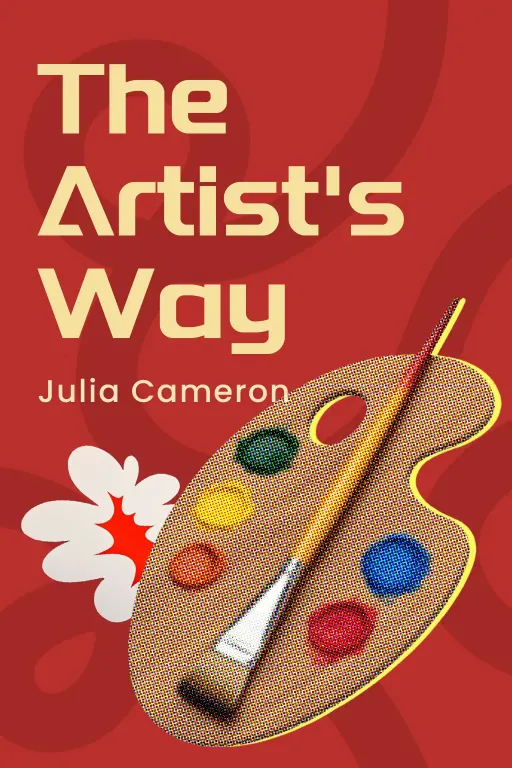
Nova: Ooh, I like that. Mine would be: Permission granted, your art awaits. And that, my friends, sets the stage perfectly for today’s deep dive into two incredibly influential books: Julia Cameron’s seminal "The Artist’s Way" and Elizabeth Gilbert’s wonderfully playful "Big Magic."
Atlas: Absolutely. These aren't just books; they're creative manifestos. Cameron’s "The Artist's Way," for instance, is often called the foundational text for creative recovery, born from her own struggles and a profound desire to help others unblock their artistic selves. It offers a structured path back to creativity.
Nova: Exactly. And then you have Gilbert, a celebrated novelist herself, who wrote "Big Magic" as a more playful, less structured companion, encouraging a fear-free approach to creativity, especially after the immense success and pressure that came with her own work. They’re both about getting out of your own way, but they offer different lenses.
Atlas: That’s a fascinating pairing. It sounds like they tackle the same core problem from different angles. Which, frankly, is a problem I think many of our listeners, especially those who approach their work with intense intellectual rigor, can relate to. The pressure to be "perfect" often feels like it's suffocating the very thing we're trying to achieve.
The Perfection Paralysis: Unblocking Creative Flow
SECTION
Nova: Precisely, Atlas. And that brings us to our first big idea: the perfection paralysis. It’s the counter-intuitive truth that the very pursuit of flawlessness is often the enemy of creation. We worry about judgment, about not being good enough, and this block stops us from sharing our true selves.
Atlas: Oh, I know that feeling. It's like you have this brilliant idea, but then the internal editor kicks in before you've even started, scrutinizing every potential flaw, every possible critique. For someone used to producing highly polished, impactful work, say, in a sustainable systems design role, that initial fear of imperfection can be completely debilitating.
Nova: It absolutely can. Let me paint a picture for you: imagine "The Architect's Blank Page." This is an architect, brilliant, highly trained, with a deep ethical drive to design sustainable, impactful buildings. But for weeks, their drafting table remains empty. They’re endlessly researching the latest eco-materials, comparing every structural stress test, scrutinizing every award-winning design from their peers. The desire for a 'perfect,' unassailable design, something that will be universally lauded and flawlessly executed, completely paralyzes them.
Atlas: Wow. So they’re stuck in this loop of information gathering and comparison, never actually putting pen to paper. That rings true. It's like the more information you have, the more reasons you find to start.
Nova: Exactly. The root cause isn't a lack of ideas or skill; it’s an internalized critic demanding external validation. They’re so focused on how their work will be judged, on achieving an impossible standard of flawlessness, that the joy of creation, the inherent drive to build and express, gets completely smothered. The pursuit of flawlessness, rather than protecting their vision, actually prevents its very existence.
Atlas: So, for our Deep Divers and Practical Scholars, who are driven by impact and understanding, this isn’t just about making art, it's about the fundamental ability to anything new. If you're always aiming for a perfect system, a perfect solution, you might never even propose a viable one.
Nova: You've hit the nail on the head. This isn't about ignoring quality or rigor. It's about understanding that the for creation needs to shift. When the motivation is purely external—the fear of judgment, the desire for universal acclaim—it’s like trying to drive a car with the parking brake on. You expend immense energy but go nowhere.
Atlas: That’s a powerful analogy. It makes me wonder, then, how do we release that parking brake? How do we move from this paralyzing fear of not being good enough to actually creating something, even if it’s not 'perfect'? Because for many, "joy" as a metric might feel a bit… unscientific in a professional context.
Creativity as a Natural Process: Joy Over Performance
SECTION
Nova: That’s a fantastic question, Atlas. And it leads us directly to our second core idea: embracing creativity not as a high-stakes performance, but as a natural, joyful process. If perfection is the enemy, then consistent, playful engagement is our greatest ally. And this is where Julia Cameron and Elizabeth Gilbert offer such brilliant, complementary wisdom.
Atlas: Okay, so how do we translate that into actual practice? Because "playful engagement" sounds great, but when you're grappling with complex ethical dilemmas or designing sustainable systems, playfulness isn't always the first thing that comes to mind.
Nova: That’s precisely why Cameron's "Morning Pages" are so revolutionary. It's three pages of longhand, stream-of-consciousness writing, first thing in the morning. No judgment, no editing, just getting whatever is in your head onto the page. It's not about writing a masterpiece; it's about clearing the mental clutter, bypassing that internal critic, and giving yourself permission to just. It re-establishes creativity as a daily spiritual journey, not a grand performance.
Atlas: I can see how that could be therapeutic, a kind of mental detox. But how does that connect to, say, generating a breakthrough idea for a complex research project?
Nova: It builds creative resilience and intuition. Think of it as exercising your creative muscle. Then you have Cameron’s "Artist Dates"—scheduled, solo excursions to explore something that delights or inspires you. It could be visiting a museum, taking a walk in nature, or simply buying a new art supply. It’s about refilling your creative well, purely for joy, without any expectation of outcome.
Atlas: So, it's about nurturing the source, not just demanding output. That makes a lot of sense. It’s like, you can't just keep drawing from the well without ever refilling it.
Nova: Exactly. And then Elizabeth Gilbert comes in with "Big Magic," which takes a slightly different, more playful approach. She talks about ideas as living entities, floating around, looking for a human collaborator. If you don’t grab them, they’ll move on to someone else. It's a delightful way to remove the ego from the creative process. It's less about genius and more about to show up and let the idea flow through you.
Atlas: That’s a fascinating reframing. It makes creativity feel less like a solitary, tortured genius act and more like a collaboration with the universe. But for our Ethical Explorers, those who want to actively shape the world, is "letting ideas flow through you" too passive? They want to make an impact.
Nova: It’s not passive at all, Atlas. It's about becoming a. Imagine a researcher focused on sustainable urban planning. For years, they’ve been data-driven, analytical, perfecting models. They start doing morning pages and artist dates, maybe even sketching complex system diagrams just for the sake of understanding, not publication. Suddenly, a new, intuitive connection emerges between two seemingly disparate datasets during a walk in the park. That "idea" wasn't forced; it flowed through a mind that had been actively cleared and nurtured.
Atlas: So, the playful, fear-free pursuit isn't about abandoning rigor; it's about building a creative intuition and resilience that then feeds into impactful, authentic work. It allows that inner compass to guide their intellectual rigor, rather than being stifled by it.
Nova: Precisely. It’s about shifting from outcome-focused creativity—"I must produce a perfect, impactful thing"—to process-focused creativity—"I will engage joyfully and consistently, trusting that meaningful output will follow." It's about giving yourself permission to create something purely for joy, without any expectation of outcome, because that act itself is healing and generative.
Synthesis & Takeaways
SECTION
Nova: So, what we're really talking about here, Atlas, is a profound reorientation. It’s moving away from the internal critic that demands an impossible standard of perfection and toward an embrace of creativity as a natural, human right and a joyful process.
Atlas: It’s liberating, honestly. For anyone who feels the weight of high expectations, whether from their own intellectual standards or external pressures, this is less about abandoning those standards and more about understanding where true creative power comes from. It's not in the perfect outcome at the start, but in the consistent, authentic engagement with the process.
Nova: Exactly. As Julia Cameron often emphasizes, creative recovery is a spiritual journey. And Elizabeth Gilbert reminds us that creativity is our birthright, an inherent part of being human. It’s a process to enjoy, not a performance to fear.
Atlas: And for our listeners, the Deep Divers, the Ethical Explorers, the Practical Scholars – this isn't about becoming a 'fluffy' artist. It's about integrating a vital, often neglected, aspect of human experience into their lives to make their impact more authentic, more sustainable, and ultimately, more resonant. If you're always chasing the perfect solution, you might miss the truly innovative one that emerges from a place of genuine, uninhibited exploration.
Nova: What I hope listeners take away today is this: give yourself permission. Permission to create, to experiment, to make something that might not be perfect, or even good, by external standards. Do it purely for the joy of it. Try a "Morning Page" tomorrow, or take yourself on an "Artist Date" this week. Just one small creative act, purely for the joy, without any expectation of outcome.
Atlas: That’s a fantastic challenge. It's about trusting your inner compass and letting your curiosity guide you, not just towards understanding, but towards creation itself.
Nova: This is Aibrary. Congratulations on your growth!