Embrace the Imperfect: Why Letting Go Fuels Your Masterpiece
Golden Hook & Introduction
SECTION
Nova: We're often told to chase perfection, to polish every edge until it gleams. We hear about the "masterpiece" and imagine it springing forth fully formed, flawless, and impactful. But what if that very chase isn't actually leading to your masterpiece, but is instead burying it under a mountain of self-doubt and paralyzing pressure?
Atlas: Oh, I know that feeling. It's like you have this incredible vision, this deep, soulful urge to create something impactful, but the moment you sit down, the weight of getting it "just right" crushes the joy right out of it. It turns the entire process into a burden, doesn't it?
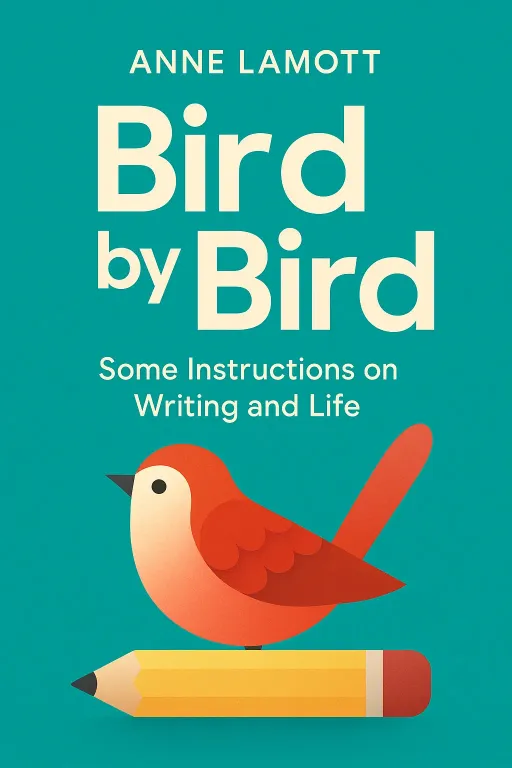
Nova: Absolutely, Atlas. It's a common trap for so many creators, especially those who feel an innate drive to express themselves, to live their art through their body and emotions. And that's exactly what we're diving into today, drawing wisdom from two incredible authors: Anne Lamott with her beloved guide, "Bird by Bird," and Elizabeth Gilbert, who gave us "Big Magic."
Atlas: Both powerful voices in the creative world. I mean, Lamott's "Bird by Bird" is famed for its raw honesty and humor, directly emerging from her own struggles as a writer. And Gilbert, after the global success of "Eat, Pray, Love," offered this expansive, almost spiritual take on creative living in "Big Magic." They really challenge that conventional, often agonizing, view of creative work.
Nova: They do. And what's fascinating is how, despite their distinct styles and backgrounds, they both arrive at a similar, incredibly liberating truth: the path to your most authentic creation often lies in embracing imperfection. It's about shifting from the paralysis of pressure to the playful exploration of your true voice.
Atlas: Okay, I'm intrigued. Because for someone who deeply cares about impact and authenticity, releasing that pressure can feel… counterintuitive. Like you're letting go of the very thing that makes your art resonate.
The Paralysis of Perfectionism & The Monster of the Blank Page
SECTION
Nova: That's the core tension, isn't it? We're conditioned to believe that quality equals flawless, and that anything less is a failure. But for the artist, for the embodied creator, that relentless pursuit of an ideal, pristine outcome often backfires. It actively stifles the very authenticity they seek to express. Imagine a musician with an incredible melody in their head, but they can't play a single note because they're terrified it won't be the perfect, chart-topping hit right out of the gate.
Atlas: I imagine a lot of our listeners, especially those who feel a deep connection to their art, know that feeling. What does that kind of perfectionism actually to our creative voice? Does it just silence us?
Nova: It absolutely does, Atlas. It turns the joy of creation into this heavy burden, transforming what should be a playful exploration into a high-stakes performance. It makes you hide, makes you second-guess every instinct, and ultimately prevents your true, unique voice from emerging. Anne Lamott, in "Bird by Bird," validates this messy process beautifully.
Atlas: Okay, so she really leans into the messiness. Tell me more about that.
Nova: She does. The title itself comes from this wonderful, incredibly relatable story. Her ten-year-old brother was facing an overwhelming school report on birds. He'd had three months to do it, and the night before it was due, he hadn't even started. He was in tears at the kitchen table, surrounded by books and notes, completely paralyzed by the sheer enormity of the task. He was trying to write about the birds.
Atlas: Oh man, I know that feeling. That overwhelming blank page, or in this case, the blank computer screen. It's like the entire weight of the universe is on your shoulders.
Nova: Exactly. And his father, seeing his son's distress, put his arm around him and simply said, "Bird by bird, buddy. Just take it bird by bird." Not "write a perfect report," not "get an A," just "focus on this one bird, right now."
Atlas: Oh, I love that. It’s like when you’re trying to build a complex piece of music, and you just stare at the empty score. You’re saying it’s not about the flawless symphony, it’s about one note at a time?
Nova: Precisely. That simple instruction liberated him. It broke down an impossible task into manageable, imperfect steps. Lamott uses this anecdote to emphasize that perfectionism is the enemy of creation. The messy, halting, imperfect first draft is not just acceptable; it's essential. It's the only way forward. It validates the struggle, the false starts, the less-than-brilliant sentences, and tells you it's okay for things to be rough around the edges.
Atlas: But wait, for someone who truly cares about impact and authenticity, isn't there a risk that 'messy' just means 'not good enough'? That by embracing imperfection, you're lowering your standards?
Embracing Imperfection: The Path to Authentic Creation & The Playful Spirit
SECTION
Nova: That's a powerful question, Atlas, and it leads us beautifully into our second core idea, which is really about reframing that fear. Elizabeth Gilbert, in "Big Magic," offers a profound shift in mindset that addresses exactly that concern. She encourages artists to embrace curiosity over fear.
Atlas: So you're saying creativity isn't this arduous, suffering process? That sounds a bit out there for artists who pour their soul into their work, who live art through their body and emotions. It feels like a betrayal of the depth.
Nova: It's not about denying the depth or the effort, but about shifting the of the drive. Gilbert challenges the idea that creative ideas are solely the product of a tortured genius, born of endless struggle and suffering. Instead, she posits that creative ideas are living entities, almost like spirits, that want to be brought to life. They "visit" people, looking for a collaborator.
Atlas: That’s a fascinating, almost whimsical way to look at it. Like the idea itself has agency.
Nova: Exactly! She tells stories about ideas that abandoned one artist who wasn't ready and then found another. Her point is, our job isn't to agonizingly perfection from scratch, but to playfully with these ideas, to be open to them, and to bring them forth without the crushing weight of expectation. It shifts the burden from internal pressure to external, joyful partnership.
Atlas: Okay, so it’s less about wrestling a perfect masterpiece into existence and more about being a playful steward for an idea that wants to be born.
Nova: Think of her own journey. After the massive success of "Eat, Pray, Love," the pressure for her next book was immense. She felt paralyzed. But she decided to approach her next novel, "The Signature of All Things," not with fear of failure or the need for perfection, but with curiosity and joy in the research and writing process itself. She literally told herself, "I'm just going to enjoy writing this book, and if it fails, so be it." That playful detachment, that embrace of the process over the perfect outcome, allowed her true voice to emerge.
Atlas: It's like when a musician is just jamming, experimenting with sounds, not trying to force a hit song, but just letting the music flow. That's a powerful reframe. It transforms that creative anxiety into playful exploration.
Nova: It truly does. My own take echoes both of them: releasing the need for immediate perfection allows your true voice to emerge. It transforms creative anxiety into playful exploration and genuine self-expression. It’s a profound shift that helps you understand your own artistic process and unlock new ideas, rather than getting stuck in the initial paralysis.
Atlas: Okay, so for our listeners who are natural creators, who want to understand their artistic process and unlock new ideas, how do they actually this? How do they shift from that paralyzing perfectionism to playful exploration? How do you just "let go"?
Synthesis & Takeaways
SECTION
Nova: It starts with acknowledging the pressure, Atlas. Then, it's about consciously adopting these strategies. From Lamott, it's about the "bird by bird" approach: breaking down your grand vision into the tiniest, most manageable steps. Don't worry about the entire album; worry about this one chord progression. Don't worry about the perfect novel; focus on this one sentence.
Atlas: So it's about validating the messy first draft, the imperfect beginning, and giving yourself permission for that.
Nova: Exactly. And from Gilbert, it's about approaching your work with curiosity, not fear. Treat the idea as a playful entity you're collaborating with, not a demanding master. Ask yourself, "What would be fun here? What's the next interesting thing to explore?" instead of "What's the perfect thing to do?" This holistic approach, this embodied creation, allows your unique voice to truly shine through. It's about trusting your intuitive wisdom, letting your art lead.
Atlas: What if the idea of a 'perfect' masterpiece is itself the trap? That the real masterpiece is the act of creating authentically, flaws and all? That the value isn't in a pristine finish, but in the genuine, unvarnished expression of your soul?
Nova: Absolutely, Atlas. It's in the vulnerability, the honesty, the imperfect humanity woven into the work that it truly resonates and creates impact. For anyone listening right now, especially those who deeply care about the impact and authenticity of their work, the true healing moment is right now. It's about thinking of a recent creative project—it could be a piece of music, a written brief, a design—and releasing just one small piece of it from the pressure of perfection.
Atlas: That’s actually really inspiring. So, can you just let it simply exist as it is for now, without the weight of perfection? Maybe it's just a rough sketch, a raw vocal track, an unedited paragraph.
Nova: Yes, just let it be. Let it exist. Allow yourself that freedom, and watch how that playful exploration transforms your anxiety into genuine self-expression. It's a small step, but it's the beginning of trusting your intuitive wisdom and letting your art lead.
Atlas: That's a fantastic challenge for our soulful innovators out there. What small piece of your creative work can you release today? Can you just let it be, without the weight of perfection? We'd love to hear about it. Share your imperfect creations with us.
Nova: Thank you for joining us on this journey to embrace the imperfect.
Atlas: This is Aibrary. Congratulations on your growth!