

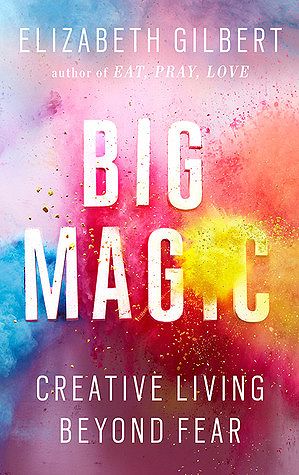
Big Magic
Creative Living Beyond Fear
Introduction
Nova: Have you ever had a brilliant idea for a story, a business, or even just a clever joke, but you didn't act on it, and then a few months later, you saw someone else doing that exact thing? It feels like they stole it right out of your brain, doesn't it?
Atlas: It is the most frustrating feeling in the world. You start wondering if you have a carbon copy of your mind walking around somewhere, or if you're just losing it. It makes you feel like you missed the train.
Nova: Well, according to Elizabeth Gilbert, you didn't just miss the train. You actually let a living, breathing entity move out of your house because you weren't paying enough attention to it. Today we are diving into her smash hit book, Big Magic: Creative Living Beyond Fear.
Atlas: I have to admit, when I first heard the title Big Magic, I thought we were going to be talking about card tricks or something mystical. But this is really about the psychology of being a creator, right?
Nova: It is, but Gilbert would argue that the psychology and the mystery are actually the same thing. She challenges the idea that creativity is just a function of the brain. Instead, she proposes that ideas are these disembodied, energetic life forms that roam the earth looking for human partners.
Atlas: That sounds a little out there, Nova. Are we saying ideas have feelings now?
Nova: Maybe not feelings in the human sense, but they have intent. They want to be made manifest in the physical world, and they can't do it alone. They need a human collaborator. If you say no, or if you're too busy, they don't just die. They go find someone else who is ready to say yes.
Atlas: It's a wild way to look at it, but it definitely explains that feeling of seeing your idea on a store shelf six months later. I'm excited to dig into this because, honestly, I think everyone has a bit of a complicated relationship with their own creativity.
Nova: Exactly. Whether you're a professional artist or someone who just wants to start a garden, Big Magic is about how to live a life that is driven more by curiosity than by fear. So, let's get into the mechanics of how these ideas actually work.
Key Insight 1
The Physics of Ideas
Nova: To understand Gilbert's perspective, we have to look at her story about the Amazon. This is one of the most famous anecdotes in the book. She had this idea for a novel set in the Brazilian jungle. It was about a middle-aged woman from Minnesota who gets involved in a construction project in the Amazon, there's a kidnapping, a love affair, the whole thing.
Atlas: Sounds like a bestseller. Did she write it?
Nova: She didn't. She got distracted by life, her success with Eat Pray Love, and other projects. The idea sat on her shelf for two years. When she finally went back to it, she felt like the spark was gone. The idea had literally left the building. She describes it as a physical sensation of the idea departing.
Atlas: Okay, so she loses interest. That happens to everyone. But where did the idea go?
Nova: This is the crazy part. A while later, she becomes close friends with the novelist Ann Patchett. They hadn't discussed their work in detail, but one day Ann describes the book she's currently writing. It is the exact same story. The Minnesota woman, the Amazon, the construction project, the kidnapping. Everything.
Atlas: No way. You're telling me they both came up with the same specific plot independently?
Nova: Gilbert argues it wasn't independent. She believes the idea realized she wasn't going to write it, so it migrated to Ann Patchett, who was ready and willing to do the work. They even tracked the timeline, and the moment Gilbert felt the idea leave her was right around the time Ann Patchett started having the first inklings of her novel, State of Wonder.
Atlas: That is spooky. It turns the whole concept of intellectual property on its head. If ideas are these free agents, then we don't really own them; we just host them.
Nova: Precisely. And she uses the musician Tom Waits as another example. He used to get so frustrated when a melody would come to him while he was driving or didn't have a pen. He'd actually look up at the sky and yell, Can't you see I'm driving? Come back when I'm in the studio!
Atlas: I love that. It takes the pressure off. If the idea is a separate entity, then you're not a failure if you can't catch it; you're just a collaborator who wasn't available at the moment.
Nova: It also changes how we view genius. In the ancient world, people didn't say someone was a genius. They said someone had a genius. Like a guardian spirit that would visit them. It keeps your ego in check because if the work is great, you can't take all the credit, and if it's bad, you don't have to take all the blame.
Atlas: That's a huge relief. But if ideas are looking for us, why are we so often terrified to actually work with them? Why is the creative process usually filled with so much anxiety?
Nova: That brings us to the biggest obstacle in the room: Fear. Gilbert has a very specific, and honestly very funny, way of dealing with it.
Key Insight 2
The Fear Passenger
Nova: Gilbert's take on fear is revolutionary because she doesn't tell you to kill it. She says that trying to kill your fear is like trying to kill your own shadow. It's impossible, and it's actually dangerous because fear is linked to your survival instincts.
Atlas: Right, because if I'm not afraid of anything, I might walk into traffic or pet a mountain lion. Fear has a job to do.
Nova: Exactly. But fear doesn't know the difference between a mountain lion and a watercolor painting. To your lizard brain, doing something new and vulnerable feels like a life-or-death situation. So, Gilbert suggests a road trip analogy.
Atlas: I've heard this one. It's about who gets to drive the car, right?
Nova: Yes. She says when you're embarking on a creative project, you should have a talk with Fear. You say, Look, Fear, I know you're coming. You're part of the family, so you're allowed to come on this road trip. You can have a seat in the back.
Atlas: But there are rules.
Nova: Very strict rules. Fear is allowed to have a voice, but it doesn't get a vote. It's not allowed to touch the map. It's not allowed to suggest detours. And it is absolutely, under no circumstances, allowed to touch the radio.
Atlas: I think that's where most of us mess up. We let Fear pick the music, and suddenly we're listening to the Greatest Hits of Why You're Going to Fail for twelve hours straight.
Nova: And then we pull over and let Fear drive, which is when we quit. Gilbert's point is that you don't need to be fearless. You just need to be brave. Bravery is doing the thing even though you're terrified. She points out that the word courage comes from the French word for heart. It's about acting from the heart, not the absence of dread.
Atlas: It's interesting because she also talks about how we use perfectionism as a shield for that fear. We say we're just being high-achievers, but really we're just scared of being judged.
Nova: She calls perfectionism just fear in fancy shoes and a mink coat. It's a high-end version of fear that keeps you from ever finishing anything. If it's not perfect, you don't have to release it, and if you don't release it, no one can tell you it's bad.
Atlas: So the antidote is just being okay with being average? That's a hard pill to swallow for a lot of people.
Nova: She calls it being a hack. But in a good way! A hack is someone who just does the work. They don't wait for the perfect moment or the perfect inspiration. They just show up and put paint on the canvas. There's a certain freedom in giving yourself permission to be mediocre.
Key Insight 3
Permission and the Shit Sandwich
Nova: One of the most empowering parts of Big Magic is when Gilbert talks about permission. She says you don't need an MFA, you don't need a gold star from a critic, and you certainly don't need someone to tell you that you're allowed to be an artist.
Atlas: That's a big one. I think a lot of people feel like they're imposters if they haven't been validated by some institution. Like, can I call myself a writer if I haven't published a book?
Nova: Gilbert says yes. She calls it arrogant politeness. It's the idea that you have a right to be here, simply because you are a constituent of the universe. You are allowed to create just because you're alive. You don't need to justify it by being the best in the world.
Atlas: I love that phrase, arrogant politeness. It's like saying, Excuse me, I'm just going to be over here making this thing, and I don't really care if you think it's important or not.
Nova: Exactly. And she couples that with a very grounded piece of advice about the reality of the work. She calls it the shit sandwich.
Atlas: Okay, I have to hear the explanation for this one.
Nova: It's a concept she borrowed from a friend. Every single pursuit, no matter how glamorous it looks, comes with a side of garbage. If you're a professional actor, the shit sandwich is constant rejection and long hours of waiting. If you're a politician, it's the loss of privacy and constant scrutiny.
Atlas: So the question isn't what do you love, but what kind of struggle are you willing to endure?
Nova: Precisely. What flavor of shit sandwich are you willing to eat? If you want to be a writer but you hate sitting alone in a room for eight hours a day, then you don't actually want to be a writer. You just want the results of being a writer. The creative life is for the people who actually enjoy the process, including the parts that suck.
Atlas: That's a reality check. It moves creativity away from this ethereal, magical thing and turns it into a blue-collar job. You show up, you eat the sandwich, you do the work.
Nova: And she's very firm about not putting too much pressure on your creativity to pay your bills. She says she didn't quit her day job until after Eat Pray Love became a massive success. She kept her creativity as a hobby for years because she didn't want to kill the magic by demanding it provide her with health insurance.
Atlas: That's actually very practical. It's hard to be inspired when you're worried about making rent. By keeping your job, you're actually protecting your art.
Key Insight 4
Martyr vs. Trickster
Nova: Now, let's talk about the vibe of the creator. Gilbert makes a huge distinction between the Martyr and the Trickster. For centuries, we've been obsessed with the idea of the suffering artist. The martyr who bleeds for their work, who is tortured and miserable.
Atlas: It's a very romantic image, though. The starving artist in the garret, drinking absinthe and dying for their craft. We've been taught that great art requires great pain.
Nova: Gilbert says that's total nonsense. She argues that the martyr is rigid and obsessed with outcome, while the trickster is playful and focused on the process. The martyr says, This work must be perfect or I will die. The trickster says, Let's see what happens if I mix these two colors together.
Atlas: So the trickster is basically just playing a game?
Nova: Yes! The trickster knows that the universe is a bit of a prankster itself. The trickster is resilient. If a project fails, the trickster just shrugs and tries something else. They don't take themselves too seriously. Gilbert points out that the martyr is always trying to control the world, while the trickster is just trying to dance with it.
Atlas: It sounds like the trickster has a lot more fun. But does the trickster actually produce good work?
Nova: Often, they produce better work because they aren't paralyzed by the weight of their own importance. When you're in trickster mode, you're open to those living ideas we talked about earlier. You're a more attractive host for an idea because you're not going to suffocate it with your own ego.
Atlas: I think about how many people stop creating because they feel like they aren't suffering enough, or because they feel like their work isn't serious enough. This trickster mindset gives you permission to just be light about it.
Nova: She uses the example of a woman who took up figure skating in her 40s. She wasn't going to the Olympics. She wasn't even going to be the best at her local rink. But she did it because it made her feel alive. That's the trickster way. Doing it for the sheer joy of the movement, not for the medal.
Atlas: It's about following your curiosity instead of your passion. She makes a big point about that, doesn't she? Passion is heavy and intimidating, but curiosity is accessible.
Nova: Exactly. Passion is a tower of fire that you have to maintain. Curiosity is just a little thread. You just pick it up and see where it leads. It's much easier to find a thread than it is to find a burning bush.
Conclusion
Nova: As we wrap up our look at Big Magic, the biggest takeaway is that a creative life is available to everyone. It's not a restricted club for the elite or the tortured. It's a way of moving through the world with your eyes open to the possibilities that ideas are throwing at you every day.
Atlas: It really changes the perspective from I have to create something great to I get to collaborate with the universe. It's much more inviting. I think I'm going to go look for some of those threads of curiosity today.
Nova: That's the spirit. Remember, the universe buries strange jewels deep within us all, and then stands back to see if we can find them. The hunt to uncover those jewels, that's what Gilbert calls Big Magic.
Atlas: And even if we don't find a diamond, the hunt itself is where the life is. It's been an eye-opening discussion, Nova. I'm definitely going to stop letting Fear pick the radio stations in my head.
Nova: Good luck with that road trip, Atlas. And to everyone listening, go find your curiosity and see where it takes you. You might just find some magic of your own.
Atlas: This is Aibrary. Congratulations on your growth!