

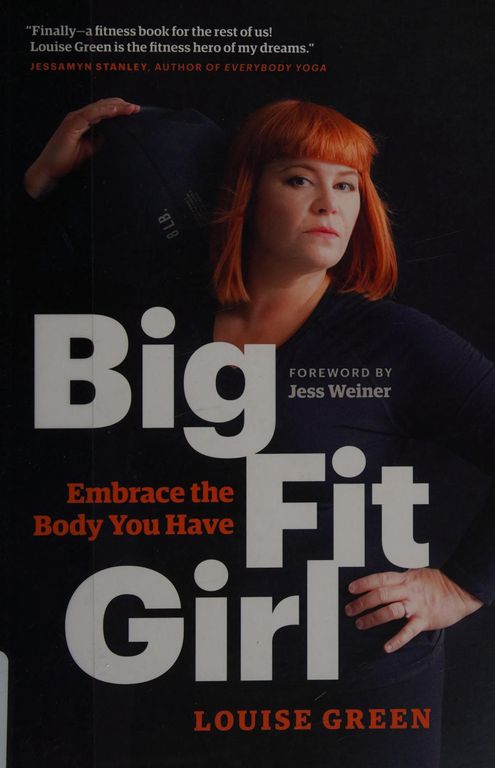
Big fit girl
Introduction
The Fitness Industry's Biggest Blind Spot
Nova: Welcome to the show. We’re talking about a book that feels less like a guide and more like a revolution disguised in workout gear: Louise Green’s "Big Fit Girl: Embrace the Body You Have." Here’s a statistic that blew my mind: For decades, the fitness industry has operated on the assumption that 'fit' looks one specific way—lean, small, and often, thin. If you didn't fit that mold, you were simply told you didn't belong.
Nova: : That’s the core problem, isn't it? It’s like being told you can’t play soccer because you don't own the right brand of cleats. It completely ignores the desire to move. What was Louise Green’s entry point into this space? How did she even start coaching when the industry was so set in its ways?
Nova: She started forging this path back in 2007. She’s an award-winning trainer with over 18 years of experience, and she founded her company exclusively for women in larger bodies. She saw that the existing model wasn't just unhelpful; it was actively harmful. She calls it a fight for fitness justice. It’s about claiming space where you were told you didn't have a right to sweat.
Nova: : Fitness justice. That’s a powerful phrase. It implies there’s been an injustice committed. So, this book isn't just a collection of exercises; it’s a manifesto against exclusion?
Nova: Exactly. It’s a kick-ass call to arms. It’s saying, 'Your body is capable right now, today, regardless of its size.' We’re going to dive into how Green dismantles the stereotypes, how she redefines what it means to be an athlete, and why finding joy in movement is more important than chasing a number on a scale. Stay with us.
Key Insight 1: Fitness Justice and Exclusion
Dismantling the 'Fit' Stereotype
Nova: Let’s start with the cultural landscape Green was pushing against. She notes that fitness campaigns often show bodies that are 'ripped' or 'shrinking.' This creates an immediate barrier for anyone who doesn't see themselves represented.
Nova: : It’s the visual rhetoric of fitness. If every magazine cover shows a size four running a marathon, and I’m a size sixteen, my brain automatically flags movement as something I’m not equipped for. How does Green address that deep-seated psychological barrier?
Nova: She tackles stereotypes head-on. She argues that if fitness only celebrates one kind of body, it’s not about strength; it’s about conformity. Her philosophy is that movement should be accessible, affirming, and equitable. She’s not just training bodies; she’s retraining the culture that judges them. She wants people to unearth their inner athlete.
Nova: : Unearthing the inner athlete. That sounds so much more empowering than 'starting a new diet.' But for someone listening who has internalized years of fat-shaming or fitness exclusion, what does that 'unearthing' actually look like in practice? Is it just about finding a new gym?
Nova: It’s much deeper than the gym. It starts with rejecting the idea that fitness is a punishment for what you ate. Green emphasizes that the industry often fails plus-size women because it assumes they are inherently unhealthy or unmotivated. She flips that script. She provides research-based advice, not just anecdotes, to help women get fit.
Nova: : So, if the industry’s narrative is 'You must change your body to deserve fitness,' Green’s narrative is 'Fitness is your birthright, now let’s find what works for this body.' That’s a massive paradigm shift. Does she offer specific examples of how this plays out in real-world training?
Nova: Absolutely. Her work, including her popular app, showcases this progression. You can start with chair fitness—a completely valid, powerful entry point—and progress all the way up to high-intensity workouts. The key is that the is dictated by the individual’s comfort and strength, not by a pre-set size expectation. It’s about meeting people where they are, not where society thinks they should be.
Nova: : That accessibility is crucial. I think many people assume that if they aren't immediately ready for a boot camp, they aren't ready for fitness at all. It sounds like Green is building a bridge, not just a destination.
Nova: A very sturdy, inclusive bridge. She’s building a movement where belonging is the prerequisite for participation. It’s about creating an environment where sweat, endorphins, and victory belong to every body, full stop. This is the foundation of her entire approach.
Key Insight 2: Intuitive Movement and Body Neutrality
Movement Over Metrics: The Weight-Neutral Approach
Nova: Chapter two has to focus on the radical concept she champions: weight neutrality. In a world obsessed with the scale, how does one successfully divorce fitness goals from weight loss targets?
Nova: : That’s the million-dollar question. Most people who start exercising do so with the implicit or explicit goal of weight loss. If you take that away, what is the motivation? Is it just about feeling good?
Nova: It’s about shifting the focus from aesthetics to function and feeling. Green’s philosophy is deeply rooted in body positivity, but she often leans into body neutrality. It’s less about loving your body every second—which can feel like a lot of pressure—and more about respecting what your body for you. It’s about honoring its capability.
Nova: : Body neutrality—I like that. It lowers the stakes. Instead of 'I must love my thighs today,' it becomes 'My thighs are strong enough to carry me through this walk.' How does this translate into choosing activities?
Nova: This is where intuitive movement comes in. Green encourages readers to stop asking, 'What exercise will burn the most calories?' and start asking, 'What movement feels good to my body today?' It could be dancing in your living room, swimming, lifting weights, or gentle stretching. The book guides you through finding that intrinsic motivation.
Nova: : That sounds like a direct challenge to the diet industry’s mandate that exercise must be hard, sweaty, and preferably unpleasant to be effective. I’ve heard that sentiment echoed by many who quit fitness programs because they felt like self-punishment.
Nova: Precisely. She argues that if you hate it, you won't stick with it. And consistency beats intensity every single time. She provides practical tips for this, too. For instance, she discusses how to gauge your effort level based on how you feel, not just on a heart rate monitor. It’s about tuning into your body’s signals—the very definition of intuitive movement.
Nova: : So, if I’m listening and I’ve always felt guilty for enjoying a gentle yoga session instead of forcing myself through a high-impact class, this book gives me permission to trust my own physical intelligence?
Nova: It gives you evidence-based permission. She grounds this in science, showing that the health benefits—improved cardiovascular function, better sleep, increased strength—are achieved through consistent, enjoyable movement, regardless of whether the scale budges. The goal is health and capability, not shrinking. It’s a revolutionary re-framing of the entire fitness contract.
Key Insight 3: Improving the Relationship with Food
Reclaiming Food and Confidence
Nova: We can’t talk about fitness without talking about food, and this is where Green’s approach is perhaps most necessary. She explicitly advocates for moving away from diet culture.
Nova: : That’s a huge undertaking. Diet culture is pervasive. When she talks about improving the relationship with food, is she offering specific meal plans, or is this more about the psychological aspect of eating?
Nova: It’s overwhelmingly psychological and behavioral. She focuses on helping plus-size women break the cycle of restriction, guilt, and bingeing that so often follows restrictive dieting. The book provides tools to help readers identify true hunger and satiety cues, which is the core of intuitive eating, but framed within her broader fitness context.
Nova: : So, it’s about recognizing that food is fuel and pleasure, not just a moral failing or a calorie count to be managed? I imagine this ties directly into confidence, because food guilt drains so much mental energy.
Nova: Absolutely. Think about the mental load. If you’re constantly policing every bite, you have zero mental bandwidth left to think about enjoying a hike or trying a new dance class. Green’s work aims to free up that energy. By providing research-based advice on nutrition that isn't rooted in deprivation, she allows the reader to focus on the.
Nova: : I read that her work is often described as revolutionary in a climate where body positivity is sometimes co-opted by brands selling weight loss products. How does Big Fit Girl maintain its integrity against that commercial pressure?
Nova: By being uncompromisingly weight-neutral. She’s been doing this since 2007, long before 'body positive' became a marketable hashtag. Her commitment is to the client’s well-being and self-acceptance, not to selling a specific aesthetic outcome. Her entire brand, from the book to the app, is built on the premise that you are worthy of fitness support.
Nova: : That authenticity must be why she has such a loyal following. It sounds like the book gives readers permission to stop fighting their bodies and start working them, whether that means lifting heavier or simply choosing to rest when needed. It’s about self-stewardship, not self-punishment.
Nova: Exactly. It’s about stewardship. And that stewardship extends to how you view your physical capabilities. You are an athlete in training, even if your training looks different than what you see on TV. That’s the message that resonates and creates lasting change.
Conclusion
The Legacy of Belonging
Nova: We’ve covered a lot of ground today, moving from the systemic exclusion in fitness culture to the deeply personal work of finding intuitive movement and food freedom. If you had to distill the essence of "Big Fit Girl" into one core takeaway for our listeners, what would it be?
Nova: : I think the most powerful takeaway is that fitness is not a destination you earn by shrinking; it’s a practice you engage in because you are already worthy of strength and joy. Louise Green’s work is a masterclass in reclaiming your narrative from an industry that profits from your insecurity.
Nova: It truly is. The book is a blueprint for building a sustainable, joyful, and most importantly, relationship with your body and movement. Whether you’re a plus-size woman looking for a starting point, or someone who has always felt like an outsider in the gym, the principles of size-inclusive, weight-neutral training apply to everyone seeking genuine health.
Nova: : It forces us to ask: What does my body need today to feel strong, capable, and respected? Not what does society demand it look like. That’s the revolutionary act of simply showing up for yourself.
Nova: And that’s where the real transformation happens. It’s not about the size of the body; it’s about the size of the spirit you bring to the movement. Louise Green has given us the tools to make that spirit unstoppable.
Nova: : A powerful message to end on. Thank you for guiding us through this essential read, Nova.
Nova: My pleasure. Keep moving in ways that honor you. This is Aibrary. Congratulations on your growth!