Breaking Through Plateaus and Betting on Your Potential
Golden Hook & Introduction
SECTION
Nova: What if the very qualities that propelled you to your highest achievements are now the invisible chains holding you back from your next big leap?
Atlas: Whoa. That's a gut punch, Nova. We spend our lives trying to be good at things, and now you're telling me my superpowers might actually be my kryptonite? That's a tough pill to swallow for anyone driven by impact and mastering their craft.
Nova: It is, Atlas, but it's also the essential truth we're diving into today. Because for many of us, the path to our next level isn't about acquiring new skills, but about shedding old habits. We're talking about breaking through plateaus and truly betting on your potential.
Atlas: And I imagine this isn't just about some abstract concept. Are we talking about specific behaviors that are almost baked into our success stories?
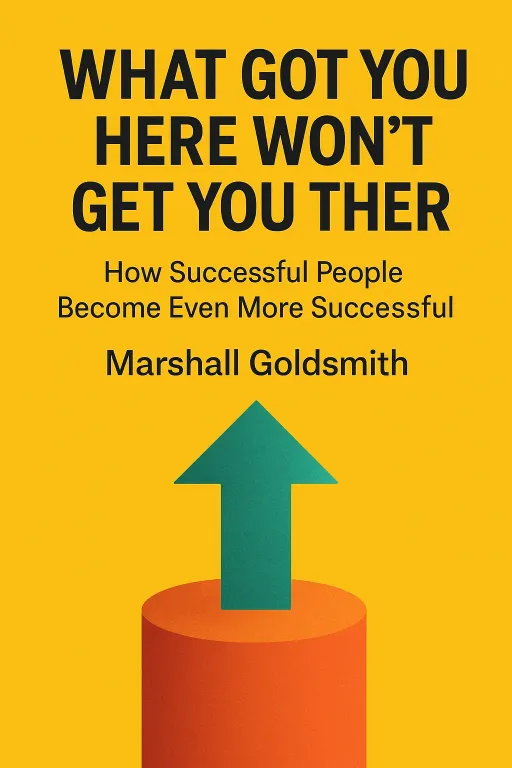
Nova: Exactly. We're pulling insights from two powerful books that tackle this head-on. First, the absolute classic, "What Got You Here Won't Get You There" by Marshall Goldsmith. Goldsmith is a world-renowned executive coach, famous for helping top leaders identify and overcome the very behavioral quirks that are sabotaging their next career step. His work is incredibly practical, often challenging the conventional wisdom that more success means just doing more of the same.
Atlas: And the second book?
Nova: The second is "Bet on Yourself" by Ann Hiatt. Hiatt brings a fascinating perspective, having spent 15 years as an executive business partner to tech giants like Eric Schmidt at Google and Jeff Bezos at Amazon. Her book is a framework for cultivating self-belief, strategic risk-taking, and continuous learning in those high-stakes, rapidly evolving environments. It’s all about proactive self-investment. Together, these books form a powerful one-two punch for anyone looking to truly evolve.
Atlas: So, it's about identifying the invisible walls we've built and then finding the courage and strategy to blast through them. I'm already hooked. Where do we start with Goldsmith's idea of what's holding us back? Because honestly, the idea that my successful habits are problematic feels counterintuitive.
The Paradox of Past Success: What Got You Here Won't Get You There
SECTION
Nova: It absolutely does, and that’s the paradox. Goldsmith argues that successful people often exhibit twenty common behavioral flaws. And the kicker? These aren't necessarily malicious flaws; they're often overextensions of what them successful in the first place. Think about it: a meticulous person becomes a micromanager. A decisive person becomes impatient.
Atlas: So, the strength becomes a weakness. That makes sense on paper, but can you give an example that really illustrates how a good intention can go so wrong? For someone who values clarity and impact, I can see how something subtle could really throw them off.
Nova: Let's take "Adding Too Much Value." On the surface, what could be wrong with that? We're taught to contribute, to be helpful. But Goldsmith explains it like this: imagine your direct report comes to you with a fully formed idea, ready to execute. Instead of simply affirming and empowering them, you, the successful leader, feel compelled to "tweak" it, to add your own two cents, to "make it better."
Atlas: And the impact?
Nova: The impact is devastating. You've just subtly undermined their ownership, their confidence, and their learning. You've implicitly told them their idea wasn't quite good enough on its own. Over time, that person stops bringing you fully formed ideas. They start bringing you half-baked thoughts, waiting for you to complete them. You've inadvertently created dependency and stifled initiative, all while thinking you were being helpful.
Atlas: Whoa. That's actually really profound. I can immediately see how that could erode communication skills and team productivity. I imagine a lot of our listeners, especially those in leadership roles, might do that without even realizing it. They're just trying to be effective.
Nova: Precisely. It's not about bad intentions; it’s about blind spots. Another one Goldsmith highlights is "Winning Too Much." Again, we're conditioned to win, to be right. But in relationships, whether personal or professional, always needing to be right can be destructive. It can alienate colleagues, stifle dissent, and prevent true collaboration. When the goal becomes "I must be right" instead of "we must find the best solution," you lose.
Atlas: That sounds rough, but it's incredibly common. So, how does one even begin to identify these "success flaws" in themselves? It feels like we're inherently biased towards seeing our own actions as justified.
Nova: And that's the toughest part. Goldsmith's approach often involves 360-degree feedback, getting honest input from colleagues, direct reports, and superiors. Because, as you said, we have blind spots. What got you here often did so because it worked in a previous context. The challenge is recognizing when the context has changed, and your old winning strategy is now a liability. It requires a level of self-awareness and humility that many highly successful people find difficult to cultivate.
Atlas: So, it's not about saying "I'm bad at this," but "this behavior, which was once a strength, is no longer serving my highest potential." That's a powerful reframe, especially for people who are driven by self-growth. It moves from self-criticism to strategic recalibration.
Nova: Exactly. It's about evolving. And once you've identified those subtle self-sabotaging patterns, the next step is crucial: how do you actively break free and propel yourself forward? That's where Ann Hiatt's work becomes incredibly relevant.
Strategic Self-Betting: Bet on Yourself
SECTION
Nova: So, if Goldsmith helps us identify the invisible walls, Hiatt gives us the blueprint for building the launchpad to jump over them. Her core message is about cultivating self-belief, taking strategic risks, and committing to continuous learning. It’s about proactively investing in your future self.
Atlas: Betting on yourself sounds great, but what does that look like for someone focused on, say, daily productivity and building financial acumen? How do you take a "strategic risk" without just being reckless, especially if you're trying to build a foundation?
Nova: That's a brilliant question, Atlas, and Hiatt addresses it directly. A strategic bet isn't about impulsive leaps. It's rooted in a clear vision and a deep understanding of your own potential, even if that potential is currently untapped. For example, she talks about taking on a project or a role that you're only 70% qualified for. It’s a stretch, it feels uncomfortable, but you’ve identified it as a growth opportunity that aligns with your long-term vision.
Atlas: So, it's not just "quit your job and start a startup," it's more like "raise your hand for that intimidating cross-functional project even if you don't know all the answers."
Nova: Precisely! Or, for someone focused on financial acumen, it might be consciously dedicating 15 minutes daily to learning about investment strategies, even if it feels overwhelming at first. It’s a small, consistent bet on your future knowledge. Hiatt emphasizes that this isn't about being fearless; it's about being courageous enough to lean into the discomfort of growth, knowing that the learning will be exponential.
Atlas: That makes sense. But what about the self-belief part? When you're constantly pushing boundaries and taking risks, there are bound to be setbacks. How does Hiatt advise cultivating that inner resilience when you're facing those inevitable moments of doubt?
Nova: She stresses the importance of having a clear, articulated vision for yourself. When you know you're taking a risk, when you understand the long-term benefit for your career trajectory or personal development, that vision acts as your anchor during turbulent times. It’s not blind optimism; it's a deep, rational conviction in your potential and the value of continuous learning. She also highlights building a strong support network and seeking out mentors who believe in you, even when you might not fully believe in yourself.
Atlas: So, it's about having a strong internal compass, but also external scaffolding. And I imagine that continuous learning piece is non-negotiable in her framework, given her background in tech giants where obsolescence is always around the corner.
Nova: Absolutely. For Hiatt, continuous learning isn't just about staying current; it's part of the 'bet.' You're betting that by constantly acquiring new knowledge and skills, you're increasing your odds of success. It's proactive self-investment. Whether it's scheduling those 15 minutes daily for focused learning, as our user profile suggests, or taking on a new communication skills course, it’s all part of building that foundation for exponential growth.
Atlas: I can see how that ties into the user's focus on daily productivity and mastering their craft. It's not just about doing tasks; it's about strategically allocating time to grow yourself.
Synthesis & Takeaways
SECTION
Nova: So, bringing it all together, we have Goldsmith telling us to look inward, to examine the very habits that once served us but might now be holding us back. It's the uncomfortable truth that what got you here truly won't get you there. And then Hiatt comes in, saying, "Okay, now that you've identified those blockers, how do you actively, strategically, and courageously move forward?"
Atlas: It sounds like both books are saying: don't just work harder, work about your own development. And that clarity is key – clarity about what's holding you back, and clarity about the vision you're betting on. For the pragmatic strategist, that's actionable wisdom right there. It’s about taking ownership of your growth journey.
Nova: It is. The deep question we posed at the beginning was: What established habits or comfort zones might subtly be hindering your next breakthrough, and how can you bravely challenge them to 'bet on yourself' for exponential growth? Goldsmith gives us the diagnostic tools, and Hiatt offers the strategic roadmap and the mindset shift.
Atlas: I think for me, the biggest takeaway is that growth isn't just about accumulation; it's also about subtraction. It's about letting go of what's no longer serving you, even if it feels like part of your identity as a "successful person." And then having the courage to invest in the unknown.
Nova: And that courage comes from a clear vision and a willingness to learn continuously. It’s about understanding that every step forward counts, even the small ones. So, I challenge our listeners: take 15 minutes this week. Identify one "success habit" that might secretly be a hidden flaw. And then, identify one small, strategic "bet" you can make on yourself – maybe it's learning a new communication skill, or researching a financial topic you've avoided.
Atlas: That's a tangible action. It’s not about overhauling everything overnight, but making those deliberate, strategic choices. It’s about embracing the journey and evolving.
Nova: Absolutely. Because the journey of growth is constant, and the only way to truly unlock your full potential is to keep challenging your own status quo.
Atlas: Fantastic insights, Nova. This was incredibly thought-provoking.
Nova: Always a pleasure, Atlas.
Nova: This is Aibrary. Congratulations on your growth!