** Constructing Reality, Constructing 'The Other': A Neuroscientific Look at Inclusion
Golden Hook & Introduction
SECTION
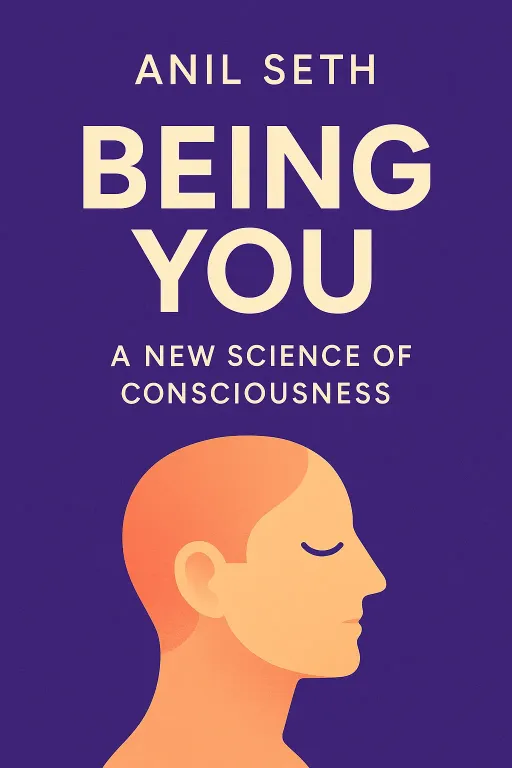
Orion: Maria, as an educator and researcher, you've spent thousands of hours in classrooms and communities across Latin America. But what if I told you that you've never truly a student as they are? What if, instead, your brain was just making its best about them? According to neuroscientist Anil Seth in his book "Being You," that's exactly what's happening. He argues that all of our perceptions—of the world, of other people, of ourselves—are a kind of 'controlled hallucination'.
Maria Paulina Reyes Foronda: That's a provocative start, Orion, and it immediately resonates. In my field, we talk a lot about perspective and bias, but framing it as a 'controlled hallucination' takes it to a whole new level. It suggests our experience of reality is far more constructed than we'd like to believe.
Orion: Exactly. And this idea is a potential game-changer for anyone working in social impact. So today, we're going to tackle this from two powerful perspectives. First, we'll explore this radical idea that everything we perceive is a 'controlled hallucination,' and what that means for bias and social justice.
Maria Paulina Reyes Foronda: And then, I'm guessing, we'll turn that lens inward?
Orion: You got it. Then, we'll turn that lens inward to deconstruct the 'self,' examining how understanding its malleability can be a key to unlocking genuine empathy.
Deep Dive into Core Topic 1: The World as a Controlled Hallucination
SECTION
Orion: So let's start with that first, mind-bending idea: perception as a controlled hallucination. To make this real for everyone, let's talk about something that broke the internet a few years ago: 'The Dress'.
Maria Paulina Reyes Foronda: Ah yes, I remember the great dress debate. I was firmly in the blue and black camp, and I couldn't understand how anyone saw it differently.
Orion: You and about half the internet! So, for anyone who missed it, in 2015 a photo of a dress went viral. The simple question was: what color is it? But it sparked this massive, global argument. People were absolutely certain it was either blue and black, or white and gold. Families were torn apart!
Maria Paulina Reyes Foronda: It felt that serious at the time.
Orion: It did! And what Anil Seth explains in "Being You" is that this wasn't just a trick of the light; it was a profound demonstration of how our brains work. The photo was taken in very ambiguous lighting. Your brain didn't know if the dress was in a bright, natural daylight or under dim, yellowish artificial light. So, it had to make a guess. It had to the context.
Maria Paulina Reyes Foronda: And that guess is based on our prior experiences?
Orion: Precisely. Your brain has a set of unconscious assumptions, or 'priors,' about how light works. If your brain assumed it was in shadow, it would subtract the blueish tint and you'd see it as white and gold. If your brain assumed it was in bright, direct light, it would subtract the yellowish glare and you'd see it as blue and black. The critical point is this: two groups of people, looking at the exact same pixels, had fundamentally different, and equally certain, conscious experiences of reality.
Maria Paulina Reyes Foronda: That's such a powerful, low-stakes example of a high-stakes problem. In my work on inclusion and social justice, we grapple with 'othering.' This theory suggests that when a leader or a teacher looks at a person from a different background, their brain isn't just filtering information—it's actively a different reality of that person based on its priors, its past experiences and ingrained societal biases.
Orion: Yes! Seth calls it the 'beholder's share.' Your brain is constantly filling in the gaps. The sensory data from the world is actually quite noisy and incomplete. Your perception is the brain's best guess to make sense of it.
Maria Paulina Reyes Foronda: And that reframes the entire conversation around bias. It's not necessarily a conscious moral failing, a choice to 'other' someone. It's the very mechanism of perception at work. It means the 'reality' of a student's potential or a community's needs is something the observer's brain is actively.
Orion: So it's not about being a 'bad person,' it's about the fundamental mechanics of the brain.
Maria Paulina Reyes Foronda: Right. And that shifts the challenge for us as educators and program designers. It's not enough to run a workshop and say 'be aware of your bias.' The question becomes, how do we give the brain better to challenge its predictions? How do we design experiences that create new, more inclusive priors so that its 'best guess' about another person becomes more accurate and more compassionate?
Deep Dive into Core Topic 2: The Self as a Malleable Construct
SECTION
Orion: And that question of designing new experiences leads us perfectly to the second big idea. If our perception of the is a construct, Seth argues our perception of our is too. He says the self isn't a solid, unchanging entity, but a bundle of perceptions. And if it's a perception, it can be manipulated.
Maria Paulina Reyes Foronda: So the 'I' that is doing the perceiving is also a controlled hallucination? That's a bit unsettling.
Orion: It is! But it also opens up incredible possibilities. Seth discusses a range of illusions that prove this, but one of the most fascinating is a project called 'The Machine to Be Another.' It's essentially a body-swapping experiment using virtual reality.
Maria Paulina Reyes Foronda: Body-swapping? Tell me more.
Orion: Imagine you and I are in a room, both wearing VR headsets. My headset shows me the video feed from a camera you're wearing, and your headset shows you my feed. So, when I look down, I don't see my body; I see yours. We're instructed to move in sync, mirroring each other's actions. After a few minutes of this, the brain starts to adapt.
Maria Paulina Reyes Foronda: It starts to accept the new body as its own.
Orion: Exactly. And then comes the most powerful moment. An assistant holds up a mirror. And when you look in the mirror, you see your own face, but you are experiencing it from. People describe this profound, almost shocking feeling of seeing themselves as an 'other.' In the experiment, they even have the two participants hug, and people report the surreal sensation of hugging themselves.
Maria Paulina Reyes Foronda: This is incredible. We design mentorship and leadership programs, and a core challenge is fostering genuine empathy, moving beyond just an intellectual understanding of someone else's situation. This technology feels like a direct intervention on what Seth would call the 'perspectival self.' It's not just a leader to see another's perspective; it's them experience it, even for a moment.
Orion: It's a controlled hallucination of being someone else. Now, Seth is careful to point out that these illusions are often subjectively weak and depend on suggestion. It's not a perfect mind-meld. But the potential is there.
Maria Paulina Reyes Foronda: But even a weak illusion could be a powerful catalyst for reflection. It makes me think about program design. We might not have access to this specific VR tech, but could we use simpler, low-tech versions of this to break down barriers? For example, I've seen the power of structured storytelling exercises where participants have to narrate a key life event from another person's first-person perspective. It's about hacking the 'narrative self'—another one of Seth's layers of selfhood—to build a bridge to the 'social self.'
Orion: I love that. 'Hacking the narrative self.' You're taking Seth's theory and immediately turning it into a practical tool for human flourishing, which is right in your wheelhouse. It shows that understanding these mechanisms isn't just an academic exercise; it's a blueprint for action.
Maria Paulina Reyes Foronda: Absolutely. It gives us a new language and a new set of tools. If the self is a story the brain tells itself, we can help people tell new, more connected stories.
Synthesis & Takeaways
SECTION
Orion: So, to bring this all together, we have these two powerful, interconnected ideas from Anil Seth's "Being You." First, our reality is a controlled hallucination, built from our brain's predictions, which has massive implications for how we understand bias and social perception.
Maria Paulina Reyes Foronda: And second, our very sense of self is part of that same predictive construction. It's a collection of perceptions that can be explored, questioned, and even reshaped to foster empathy.
Orion: It really does reframe everything. The world isn't something we passively observe; it's something we actively co-create with our brains.
Maria Paulina Reyes Foronda: And the implication for all of us, especially those of us trying to build a more just and inclusive world, is profound. The work isn't just about changing minds; it's about changing the very 'priors' our brains use to construct reality. It means we have to be architects of experience. We have to design interactions and learning journeys that feed the brain new data.
Orion: That's a beautiful and empowering way to put it. So, what's the final takeaway for our listeners?
Maria Paulina Reyes Foronda: I think it's a call to action. So the question I'd leave everyone with is this: What one new experience can you seek out this week that will give your brain a new piece of data, a new prior, to help it build a more compassionate and accurate reality of the world and the people in it? It could be reading a book, visiting a new neighborhood, or having a deep conversation with someone whose life is very different from yours. Be an architect of your own perception.