Unlocking the Mind: Innovative Psychology for Deeper Impact
Golden Hook & Introduction
SECTION
Nova: Atlas, if I told you that you have two distinct minds constantly battling for control inside your head, would you believe me? One's a lightning-fast improviser, the other's a slow, deliberate strategist.
Atlas: Whoa, that sounds like a sci-fi movie pitch! My inner monologue is already chaotic enough. Are you saying there’s actually a committee meeting happening in there, and I’m just the bewildered chairperson?
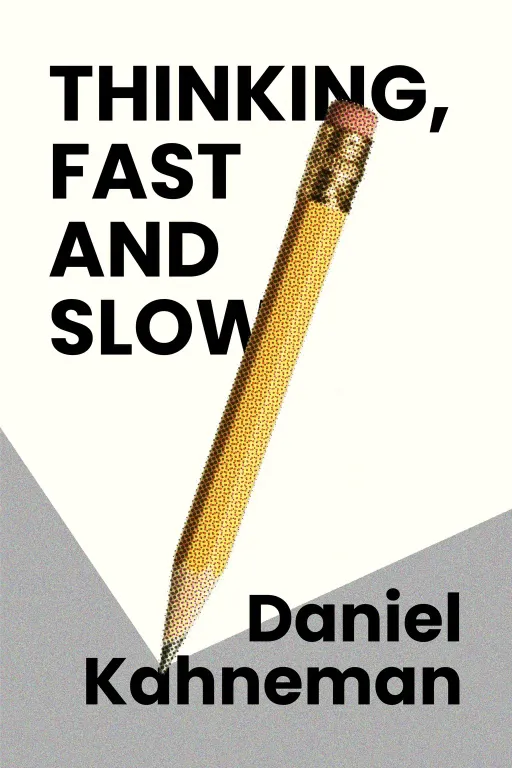
Nova: Precisely! And it’s not science fiction, but groundbreaking psychology. Today, we're diving deep into the fascinating world of human decision-making and behavior, drawing heavily from Daniel Kahneman's seminal work, "Thinking, Fast and Slow."
Atlas: Ah, Kahneman. The Nobel laureate who basically told us our brains are both brilliant and incredibly lazy. I remember hearing about his work, it was quite the splash, wasn't it? Like, he fundamentally shifted how we understand cognitive biases.
Nova: Absolutely. Kahneman, a psychologist winning the Nobel Prize in Economics, really underscores the interdisciplinary power of his insights. His book, co-authored with Amos Tversky, who sadly passed before the Nobel was awarded, laid bare the elegant yet flawed machinery of human thought. It's a foundational text that's been widely acclaimed for its rigor and readability, though some critics suggest its practical applications can be oversimplified. We're going to explore how understanding these two systems, System 1 and System 2, helps us not just recognize our own cognitive quirks, but also profoundly enhances our empathy and our ability to innovate, especially in mental health.
Atlas: That makes me wonder, how do we even begin to untangle these two systems without getting lost in our own heads? Because, let's be honest, self-reflection can sometimes feel like staring into a funhouse mirror.
The Dual Engines of Thought
SECTION
Nova: That’s a perfect segue, Atlas. Kahneman introduces us to System 1, which is your intuitive, automatic, lightning-fast thinking. It’s what allows you to recognize a familiar face, understand simple sentences, or react instantly to a sudden noise. It operates effortlessly, often without conscious control.
Atlas: Oh, I get that. So, like, when I slam on the brakes without even thinking about it, that’s System 1. Or when I see a puppy and my brain just screams "cute!"
Nova: Exactly! It’s the engine of our instincts and heuristics. But then there’s System 2, the deliberate, effortful, and much slower part of your brain. This is what you engage when you’re solving a complex math problem, learning a new language, or carefully weighing the pros and cons of a major life decision. It requires attention and energy.
Atlas: So, System 2 is basically the responsible adult in the room, while System 1 is the impulsive toddler? It sounds like System 1 is running the show most of the time, then.
Nova: It often feels that way because System 1 is incredibly efficient and constantly generating suggestions for System 2. If System 2 is busy or lazy, it tends to endorse System 1’s impulses. The challenge is, System 1, for all its speed, is prone to biases and errors. It sees patterns where none exist, jumps to conclusions, and is heavily influenced by emotion.
Atlas: That’s actually really inspiring, because it means we're not just victims of our immediate reactions. We have a choice, or at least a second chance, to engage System 2. But how does this connect with why we what we do, beyond just thinking?
Nova: That's where we bring in Robert Sapolsky's "Behave: The Biology of Humans at Our Best and Worst." Sapolsky takes us on an incredible journey, looking at behavior from milliseconds before an action all the way back to evolutionary pressures. He examines the biological underpinnings, from the hormones swirling in our bloodstream to the cultural context we're embedded in, to explain the full spectrum of human behavior.
Atlas: So, if Kahneman gives us the "how" of thinking, Sapolsky gives us the "why" of behaving, with a huge biological lens? That sounds like a massive undertaking. I mean, behavior is so complex.
Nova: It is. Sapolsky’s book is a monumental achievement, praised for its incredible scope and his ability to synthesize vast amounts of scientific information into a coherent narrative. He covers everything from neuroscience and endocrinology to primatology and sociology. It's a dense read, but one that’s incredibly illuminating, even if some readers find it almost overwhelming in its detail. He doesn't just treat symptoms; he understands systems, and that's critical for us.
Atlas: That makes me wonder, how does this biological perspective tie into our System 1 and System 2 thinking? Are our fast, intuitive reactions hardwired biologically, while our slower ones are more learned?
Nova: Absolutely. Think of System 1 as deeply intertwined with those instantaneous biological and evolutionary responses Sapolsky talks about. Our fight-or-flight response, for example, is a classic System 1 operation, heavily influenced by our biology. Our brain is constantly assessing threats and opportunities, much of it happening subcortically, before System 2 even gets a memo.
Atlas: So, when I get a gut feeling, it's not just some mystical intuition, it's a culmination of System 1 processing, filtered through my unique biological and experiential history? That’s kind of empowering.
Nova: It is! And understanding this integration is crucial. It allows us to move beyond simply judging ourselves or others for "bad" decisions or "irrational" behavior. Instead, we can understand the underlying mechanisms—the interplay of fast-thinking biases and deep biological drives—that lead to those actions. This holistic view is the bedrock of what we call empathetic innovation.
Cultivating Cognitive Empathy
SECTION
Nova: Now, this brings us to cultivating cognitive empathy. If we understand these dual engines of thought and their biological roots, we can start to observe our own rapid judgments.
Atlas: Oh, I've had plenty of those. I mean, honestly, my System 1 can be a real jerk sometimes. Like, instantly judging someone based on their clothes or assuming the worst about a situation.
Nova: It's universal, Atlas. The "tiny step" here is to observe those rapid judgments, those System 1 knee-jerk reactions, and then consciously engage your System 2. Pause. Ask yourself, "What other interpretations are possible here? What am I missing?"
Atlas: So, it's like catching myself before I send that angry email, and instead, taking a breath and thinking, "Okay, what's going on? Is there another way to see this?"
Nova: Exactly. And the difference you’ll notice in your emotional and intellectual response is profound. System 1 often triggers strong emotions—anger, fear, defensiveness. System 2, when engaged, allows for a more nuanced, less emotionally charged perspective. It’s about creating that crucial space between stimulus and response.
Atlas: That’s such a practical takeaway. For anyone trying to navigate complex human interactions, whether it's in a therapeutic setting or just daily life, that pause feels like a superpower. It's like giving yourself a mental time-out.
Nova: It truly is. And this leads us to a deeper question: How can understanding the biological and cognitive roots of behavior inform more compassionate and effective therapeutic strategies? When we know that someone's "irrational" fear might be a deeply ingrained System 1 response, amplified by specific neurochemical pathways, our therapeutic approach shifts dramatically.
Atlas: So, instead of just telling someone to "think positively," we can help them understand the circuitry that's making it so hard to do that. We can help them engage their System 2 to override those automatic, often unhelpful, System 1 impulses.
Nova: Precisely. It moves us from a place of judgment to one of profound understanding. It allows us to design interventions that are not only psychologically informed but also biologically aware. For example, recognizing that chronic stress can physically impair System 2's ability to regulate System 1 means we prioritize stress reduction as much as cognitive restructuring.
Atlas: That’s a great way to put it. It sounds like we're not just treating the mind, but the whole person, with all their intricate biological and cognitive wiring. And for anyone who's ever felt stuck in a pattern, knowing there's a biological component can take away some of the self-blame.
Nova: And that’s where the true empowerment lies. This isn’t about excusing behavior, but about understanding its origins to foster genuine change and resilience. It’s about embracing the journey of self-discovery, because your own well-being fuels your capacity to care and innovate.
Synthesis & Takeaways
SECTION
Nova: So, what we've really explored today is the incredible dance between our fast, intuitive System 1 and our slower, deliberate System 2, as articulated by Kahneman, and how that intricate dance is fundamentally shaped by our biology, as illuminated by Sapolsky.
Atlas: It's such a profound insight. It’s like discovering the operating manual for being human, with all its beautiful complexities and frustrating glitches. It reminds us that our brains are not always rational supercomputers, but often emotional, biased, and biologically driven machines.
Nova: Exactly. And the deep insight here is that by integrating these perspectives, we move beyond simplistic explanations of human behavior. We gain a nuanced understanding that is absolutely crucial for empathetic innovation in mental health and beyond. It teaches us to observe our own rapid judgments, to consciously engage our slower, more analytical perspective, and to recognize that our biology is not destiny, but a powerful influence we can learn to work with.
Atlas: It really does. It allows us to move from "why are they doing that?" to "what systems are at play here?" And that shift in perspective can be transformative for anyone working to empower others or even just trying to understand themselves better. Practicing mindful pauses daily, reconnecting with that inner strength, becomes not just a nice-to-have, but a strategic imperative.
Nova: Absolutely. This understanding is the foundation for not just better therapeutic strategies, but also for building a more compassionate world. Recognizing the dual engines of thought and their biological roots allows us to design more effective interventions, foster deeper self-awareness, and ultimately, empower individuals to navigate their inner landscapes with greater wisdom and empathy.
Atlas: What a powerful way to frame it. It’s a journey of continuous learning, not just about others, but about ourselves. It’s about building resilience and sustaining that empathy that is so vital.
Nova: This is Aibrary. Congratulations on your growth!