

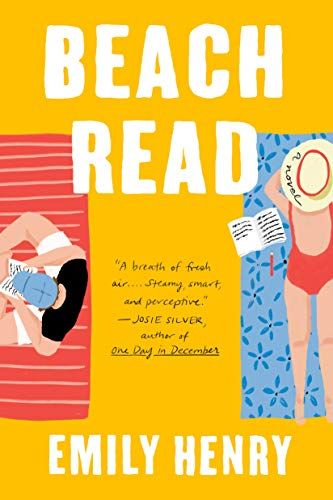
The Narrative Code: Deconstructing 'Beach Read' and the Logic of Love Stories
Golden Hook & Introduction
SECTION
Nova: Imagine two master architects. One designs beautiful, light-filled homes where everything is designed for happiness. The other designs stark, brutalist structures that are critically acclaimed but profoundly sad. Now, what if they were both suffering from creative block, and to fix it, they made a bet: they have to swap blueprints and build in each other's style?
Saumya Mishra: That’s a fascinating problem to solve.
Nova: Isn't it? That's the brilliant premise at the heart of Emily Henry's. And today, we're not just going to talk about the love story. We're going to deconstruct it. And we have the perfect person to do that with. With us is software engineer and analytical thinker, Saumya Mishra. Welcome, Saumya!
Saumya Mishra: Thanks for having me, Nova. I love that premise because it’s not just a creative challenge, it feels like a system-level challenge. You’re asking two fundamentally different processors to run alien software. I’m excited to get into it.
Nova: Me too! And that's exactly how we want to look at it. Today we'll dive deep into this from two perspectives. First, we'll explore the idea of storytelling genres as competing 'operating systems' for life. Then, we'll discuss how the characters must 'debug' their own personal histories to overcome their creative and emotional blocks.
Deep Dive into Core Topic 1: Genre as an Operating System
SECTION
Nova: So let's start with that first idea, Saumya. Genre as an operating system. For our listeners who haven't read the book, can you help me set the scene? Who are these two 'architects'?
Saumya Mishra: Absolutely. So, who are our two protagonists?
Nova: On one side, we have January Andrews. She’s a bestselling romance novelist. Her entire career is built on meet-cutes, witty banter, and the unwavering belief that love conquers all and leads to a happily ever after. But when we meet her, her world has been shattered. Her dad just died, and she discovered he was living a double life with a secret mistress. So she’s broke, heartbroken, and living for the summer in her dad's secret beach house, completely unable to write the happy book she owes her publisher.
Saumya Mishra: So her entire belief system, the very foundation of her work, has just been invalidated by new data. That's a critical failure.
Nova: Exactly. And then, who moves in next door? Augustus 'Gus' Everett. He's her old college rival, and he's the complete opposite. He writes serious, dark, literary fiction where, as January puts it, "everyone is miserable and then they die." He’s critically acclaimed but just as stuck as she is. He’s a total cynic.
Saumya Mishra: So you have the ultimate optimist and the ultimate pessimist, both with writer's block, living side-by-side.
Nova: You got it. And after some very tense encounters, they make a bet. He will try to write a book with a happy ending, and she will try to write a dark, serious literary novel. To help each other, they agree to take each other on "research" field trips into their respective genres. And this is where it gets so interesting.
Saumya Mishra: This is the experiment. They're trying to understand each other's code.
Nova: They are! And January goes first. She is determined to show him that the world of romance is real. So, picture this: Gus, this brooding, serious guy who writes about death and despair, is forced by January to go to a small-town carnival. She's making him ride the Ferris wheel at sunset. She takes him to a drive-in movie to watch a cheesy rom-com. She is literally trying to input 'hopeful' and 'joyful' data into his cynical processor. It's awkward, it's funny, and it's a total system clash.
Saumya Mishra: That's a fantastic way to put it. It’s like she's running a user acceptance test on him for the 'romance genre' product. She's saying, 'Here are the required inputs for a happy feeling. I've followed the documentation. Why aren't you processing them correctly?' She’s testing her worldview against his hardware.
Nova: Right! And his hardware keeps rejecting it! He's rolling his eyes, he's making cynical comments. He's just not wired for it. And then it's his turn. He's trying to teach her how to write his kind of book. So where does he take her for research?
Saumya Mishra: I'm almost afraid to ask.
Nova: He takes her to interview the remaining members of a local death cult.
Saumya Mishra: Oh, wow. Okay. So that’s a hard pivot from the Ferris wheel.
Nova: A very hard pivot. He's showing her the dark, messy, unresolvable parts of reality that he builds his stories from. He's essentially feeding her system data that it's not designed to handle. Her whole career is based on tying things up in a neat bow, and he's showing her a world of loose ends and trauma.
Saumya Mishra: You know, it reminds me of trying to make two different software APIs from two different companies talk to each other when they were never designed to. At first, you just get a stream of errors and unexpected outputs. The communication fails. The interesting part of the book, and in tech, is what happens when they start to build a translator, a sort of middleware, between their two systems. They have to find a common language.
Nova: I love that. A middleware for the soul! And that's what starts to happen. He starts to see the value in a moment of simple joy on the Ferris wheel, and she starts to see the humanity and truth in the stories of the cult survivors. They're slowly building that translator.
Saumya Mishra: Which suggests that a functional worldview, a good story, needs to be able to process both kinds of data. The happy and the tragic. If your system can only handle one, it's brittle. It's not robust.
Deep Dive into Core Topic 2: Debugging the Self
SECTION
Nova: And that idea of a 'brittle' system, of 'errors' and 'unexpected outputs,' is the perfect bridge to our second topic. Because this book argues that their writer's block isn't just about a clash of genres. It's a deeper, more personal 'system error' for both of them.
Saumya Mishra: Right, the writer's block is a symptom, not the disease. So what's the underlying bug for January?
Nova: For January, the bug is catastrophic. Her entire operating system was built on the story of her parents' perfect marriage. That was the source code for her belief in 'happily ever after.' Then, after her dad dies, she finds love letters from his mistress in his desk, in this secret house he owned. The core premise of her life—'my parents' love is perfect and eternal'—is proven false. Her belief system is corrupted, and her program crashes. She can't write a romance because she no longer believes the logic holds.
Saumya Mishra: That makes perfect sense from an analytical perspective. Her code was built on a fundamental assumption that has just been proven false by irrefutable new data. The entire logical structure that she uses to write her stories is now invalid. Of course she can't write. It would be like trying to run a program after deleting its most critical library.
Nova: What a great way to put it. And what about Gus? His system is just as broken, but for different reasons. We learn his 'source code' is full of bugs from a traumatic childhood. His father was physically and emotionally abusive. Then, his own marriage fell apart in a devastating way when his wife left him after she suffered a series of miscarriages.
Saumya Mishra: So his life experience has provided him with a dataset that says relationships lead to pain, and hope is a statistical anomaly.
Nova: Exactly. So he writes stories where everyone is miserable because, in his logic, that's the only possible, realistic outcome. His system is designed to only produce tragic outputs. He can't write a happy ending because, to him, it's a logical fallacy. It's a fantasy that doesn't compute with the grim reality he's experienced.
Saumya Mishra: So you have two writers who are stuck because their personal narratives, their own source code, is fundamentally broken. January's is broken by a sudden, catastrophic error. Gus's has been corrupted by years of bad data and trauma. So the question becomes, how do you debug your own life? You can't just hit a reset button.
Nova: Well, that's the beautiful heart of the book. So, how do they fix it, Saumya? From your perspective, how do they 'debug' themselves?
Saumya Mishra: They do it through a process that looks a lot like 'peer review' in software development. In coding, you can stare at your own work for days and not see a glaring error. But when you show it to another developer, they spot it in seconds because they have a fresh perspective. That's what January and Gus do.
Nova: They start sharing their manuscripts with each other...
Saumya Mishra: Yes, but it's more than that. They start sharing their. They tell each other the stories they've never told anyone else. January tells Gus about her father's affair. Gus, for the first time, tells someone the full story of his abusive father and his painful divorce. By exposing their 'buggy code' to another developer, they finally get the feedback they need to see the flaws.
Nova: And what do they see?
Saumya Mishra: Gus helps January see that her dad's failure doesn't invalidate the concept of love itself. He helps her rewrite that part of her code to be more resilient—to understand that love can be real even if it's messy and imperfect. And she helps him see that his past trauma doesn't have to be a life sentence of misery. She introduces the possibility of a different outcome. She shows him that a happy ending isn't a bug; it's a feature you can choose to build. They are literally helping each other refactor their entire worldview.
Synthesis & Takeaways
SECTION
Nova: I love that so much. Refactoring their worldview. So in the end, it's not about romance being 'better' than literary fiction, or cynicism being more 'real' than hope.
Saumya Mishra: Not at all. It's about integration. A robust system, whether it's a person or a piece of software, needs to be able to handle all kinds of inputs—the happy, the tragic, the predictable, the chaotic. They upgrade their personal 'operating systems' by merging the best parts of each other's code. They build something new together that's stronger than what they had apart.
Nova: They build that middleware for the soul! They learn to write a new kind of story, one that has the hope and heart of a romance but is grounded in the complex, sometimes painful, reality of literary fiction. They write a story that feels true.
Saumya Mishra: And in doing so, they fix their own stories. It's a really elegant narrative structure, when you break it down. The solution to the external problem—the writer's block—is to solve the internal one.
Nova: It's such a powerful idea, and it's a beautiful way to look at not just this book, but our own lives. It makes us want to ask our listeners a final question.
Saumya Mishra: Let's hear it.
Nova: What's the genre of your life story right now? Is it a comedy, a tragedy, a thriller, a romance? And more importantly, what's one small 'research trip' you could take this week to experience a scene from a completely different genre? Maybe it's visiting a museum if you're in a comedy, or going to a stand-up show if you're in a drama. Just to see what new data you can give your own system.
Saumya Mishra: I love that. A small, controlled experiment in changing your own narrative. That's a takeaway anyone can work with.
Nova: Saumya Mishra, thank you so much for deconstructing this with us today. It was an absolute pleasure.
Saumya Mishra: The pleasure was all mine, Nova. Thanks for having me.