

The High-Performance Habit Loop
Golden Hook & Introduction
SECTION
Atlas: You have a high-performance engine, but you are driving with the parking brake on. Most people spend their entire careers wondering why they are exhausted, yet they are not actually moving toward anything specific.
Nova: That is the perfect way to frame it. It feels like motion, but it is just friction. We see this all the time. People are running faster and faster on a treadmill, burning out, but when you ask them where they are going, they have no answer.
Atlas: I have been there. We all have. The question is, how do we release that brake? Because simply telling someone to work harder is usually the worst advice possible.
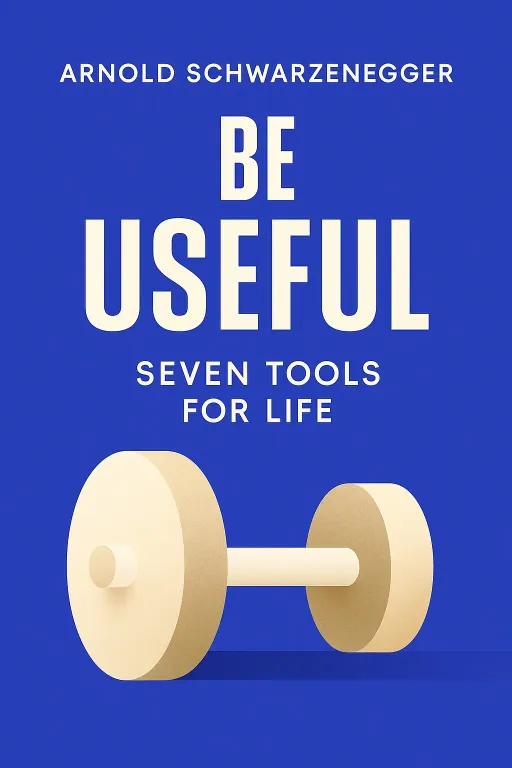
Nova: Absolutely. Today, we are looking at two distinct but deeply compatible frameworks for exactly that. We are pulling from the insights in Be Useful by Arnold Schwarzenegger, and combining that with the neurological tools found in The High 5 Habit by Mel Robbins.
Atlas: Two very different personalities. You have the ultimate action-hero-turned-governor-turned-icon, and the high-energy, no-nonsense life coach.
Nova: That is the beauty of it. Arnold brings the structural, massive-scale vision, and Mel brings the day-to-day, neurological survival kit. Arnold’s journey is fascinating because it is not just about bodybuilding; he had to re-invent himself in three completely different industries, which requires a specific kind of mental clarity. Then, you have Mel, whose work is grounded in that immediate, visceral need to stop self-sabotage.
Atlas: I am curious to see how these two collide. Let’s start with the vision piece. How does someone actually build a vision that is worth the effort?
The Structural Vision
SECTION
Nova: Arnold Schwarzenegger’s core argument in Be Useful is that you cannot hit a target you cannot see. He talks about having a clear, structural goal. Most people have a vague desire to be successful or to be wealthy, but that is not a goal. That is a wish.
Atlas: Wait, let me stop you there. Does that not sound like standard motivational advice? Everyone says have a goal. How does his approach differ from the usual goal-setting fluff?
Nova: The distinction is in the word structural. Arnold came from a background where you literally build a physique piece by piece. If you want a bigger bicep, you do not just wish for it; you calculate the reps, the weight, and the nutrition. He applies that same engineering mindset to his life. He suggests that you need to define your vision with the same precision an architect uses for a skyscraper. If you do not have the blueprints, you are just piling bricks and hoping they stay up.
Atlas: That makes sense. It shifts the burden from willpower to design. But what happens when the goal is abstract? Like, if you are a creative or an entrepreneur, you cannot always see the end result as clearly as a bicep.
Nova: That is where the challenge lies. Arnold would argue that you need to define the outcome so clearly that you can visualize the day-to-day work required to get there. He emphasizes that work is not something you do to get to the goal; work is the goal. He famously says that you cannot climb the ladder of success with your hands in your pockets. The vision provides the direction, but the work ethic is the fuel.
Atlas: I see the appeal of that. It removes the romanticism. It makes success a matter of volume. But doesn’t that lead to burnout? If the vision is too big, and the work is too hard, don’t people just quit?
Nova: They do, and that is exactly why we need to look at the other side of the coin. Having a massive vision is necessary, but it is insufficient if your nervous system is working against you. That brings us to Mel Robbins and The High 5 Habit.
Atlas: I have heard of this. It sounds a bit gimmicky, right? High-fiving a mirror? How does that actually change your career or your life?
Nova: It does sound simple, almost silly. But here is the neurological reality. When you look in the mirror, most people have a default setting of criticism. You look at your reflection and immediately spot the flaw, the mistake, the thing you need to fix. That is a negative feedback loop. You are training your brain to be your own harshest critic.
Atlas: That is a harsh reality. I definitely do that. I look in the mirror and think about what I need to change or what went wrong yesterday.
Nova: Exactly. And when you do that, you are actively priming your brain for stress and self-doubt. Mel Robbins argues that the high-five is a physical pattern interrupt. When you raise your hand to the mirror, you are physically doing the same gesture you would use to celebrate a friend or a teammate. You are forcing your brain to associate your own reflection with support and encouragement instead of judgment. It is a neurological tool to rebuild self-trust.
Atlas: So, you are saying that if I cannot trust myself to execute the vision Arnold talks about, I will never get there anyway?
Nova: Precisely. You can have the best blueprint in the world, but if the person building the structure—you—is constantly sabotaging the process with self-doubt, the building will never stand.
The Habit Loop
SECTION
Atlas: That is a powerful connection. Arnold gives us the blueprint, and Mel gives us the maintenance crew. But let’s get practical. How do these two actually work together in a high-pressure environment?
Nova: Think of it as a loop. In the morning, you check in with your vision. You remind yourself of the structural goal—that big, clear, Arnold-style objective you are working toward. That is the intellectual anchor. Then, you use the high-five technique to prime your nervous system. You are essentially telling yourself, I am on my own team. I am ready to do the work.
Atlas: I like that. It combines the cognitive and the physiological. But what about the days when the vision feels heavy? There are days when the goal feels like a burden.
Nova: That is where the discipline comes in. Arnold’s philosophy is that you do not need to feel motivated to do the work. You just need to do it. He talks about the work being the purpose. The discomfort is not a sign to stop; it is a sign that you are moving.
Atlas: That is a tough pill to swallow. Most people today are obsessed with finding passion or feeling good about their work. He is saying the work is the point.
Nova: He is. And that is incredibly liberating. If the work is the point, you don’t need to wait for inspiration. You just need to show up. And when you show up, the high-five habit ensures you are showing up as an ally to yourself, not a drill sergeant.
Atlas: Let’s push on that. What if someone is in a role where they feel stuck? They have the vision, they are doing the work, but they are not seeing the results. Does this loop still apply?
Nova: That is the most important time to use it. When you are not seeing results, the negative feedback loop in your brain gets louder. You look in the mirror and you see failure. You look at your goals and you see a mountain you cannot climb. That is when you need the pattern interrupt the most. You need to physically high-five the mirror to break that cycle of self-criticism. It is not about ignoring the lack of results; it is about ensuring that your internal state stays resilient enough to keep working until the results appear.
Atlas: It sounds like a form of emotional regulation. You are managing your own internal feedback loop so the external world doesn’t break you.
Nova: That is exactly it. It is high-performance emotional regulation. You are essentially acting as your own coach. You have the vision, which is the strategy, and you have the habit, which is the emotional management.
Atlas: I can see how this would be a game-changer for someone in a leadership position. If you are leading a team, you cannot afford to be constantly self-critical. You have to be the anchor.
Nova: And it starts with you. You cannot lead others effectively if you are constantly undermining your own authority by being your own worst critic. The high-five habit is not just for you; it is for everyone you lead. It sets a tone of support and high standards.
Atlas: I am starting to see the pattern here. The vision is the destination. The habit is the vehicle. If the vehicle is broken, the destination doesn’t matter.
Nova: That is a perfect analogy. And the best part is that both of these tools are completely within your control. You do not need anyone else’s permission to define your vision. You do not need anyone else’s permission to look in the mirror and support yourself.
Synthesis & Takeaways
SECTION
Atlas: This feels like a blueprint for a very different kind of productivity. It is not about doing more; it is about being more aligned.
Nova: That is the key. It is about alignment. When your vision is clear, your work becomes focused. When your internal state is supportive, your work becomes sustainable. That is how you break the cycle of burnout.
Atlas: If our listeners want to apply this tomorrow morning, what is the single most important step they should take?
Nova: Start by writing down your structural goal. Make it specific. If you are aiming for a career shift, do not write down "find a better job." Write down the exact role, the skills you need to acquire, and the timeline. That is your vision. That is the architecture.
Atlas: And then?
Nova: Then, the next time you are in front of a mirror, do the high-five. It will feel weird. You might even laugh at yourself. But do it anyway. Feel the physical connection of your hand against the glass. Tell yourself that you are ready to do the work. It is not about magic; it is about chemistry. You are changing your brain chemistry to support your structural goals.
Atlas: It sounds like the ultimate competitive advantage. Clarity of vision, supported by a brain that is on your side.
Nova: It is the ultimate advantage. Most people are fighting themselves. If you can stop fighting yourself and start working with yourself, you are already ahead of 99 percent of the competition.
Atlas: I love that. It takes the pressure off the external world and puts the power back in your own hands.
Nova: Precisely. You are the architect, and you are the engine. You define the structure, and you fuel the movement.
Atlas: This has been a great breakdown. It turns these big, abstract concepts into something you can actually do in five minutes.
Nova: That is always the goal. Big vision, small, consistent steps. That is how you build something that lasts.
Atlas: Thank you for walking us through this. It is a powerful reminder that we are in the driver’s seat.
Nova: We are. And it is time to take the parking brake off.
Atlas: Indeed. For everyone listening, take that vision, set your sights, and don’t forget to high-five the person in the mirror tomorrow morning.
Nova: It makes all the difference. This is Aibrary. Congratulations on your growth!









