

The Anatomy of Professional Resilience
Golden Hook & Introduction
SECTION
Nova: The most dangerous myth in professional life is that burnout is just a result of working too many hours. It is actually a result of working in a way that contradicts your personal values.
Atlas: That sounds like a dangerous thing to say to an overachiever. If I tell my team that, they will interpret it as a green light to sleep under their desks as long as they feel spiritually aligned with the project.
Nova: I appreciate the skepticism, Atlas. But look at the data on high-performers. When you look at the research and the lived experiences of people like Bella Zanesco, you realize that burnout is not about the volume of work. It is about the friction between who you are and what you do every single day.
Atlas: Okay, I see where you are going. It is the difference between exhaustion and soul-crushing misalignment.
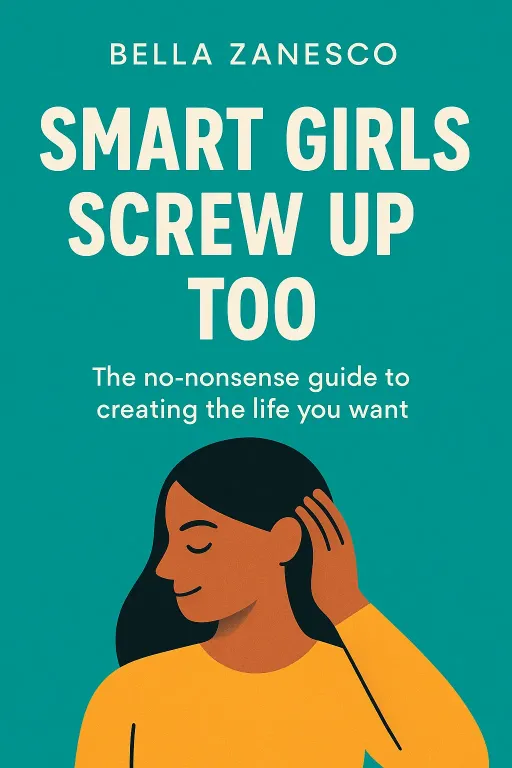
Nova: Exactly. Today, we are looking at how to bridge that gap. We are blending the insights from Bella Zanesco’s book, Smart Girls Screw Up Too, which dives deep into that exact type of value-based burnout, with the very different, very practical, and frankly, very muscular approach of Arnold Schwarzenegger in his book, Be Useful.
Atlas: That is an odd pairing. On one side, you have the introspective, value-driven work of Zanesco, and on the other, you have the Terminator talking about life tools. I am curious how those two worlds fit together for someone who wants to build a career that actually lasts.
Nova: That is the goal. We are going to build what I like to call a Resilience Blueprint. Because if you do not have a structure for your professional life, you are just reacting to the chaos of the day.
The Values Gap and the Burnout Trap
SECTION
Atlas: Let’s start with the friction then. You mentioned Zanesco’s work. Her background is fascinating because she spent years in the corporate grind, hitting all the milestones, only to find herself completely empty. What is the core mechanism of that burnout?
Nova: It is what I call the Values Gap. Bella Zanesco spent years climbing the ladder in corporate environments. She was successful by every metric. But she realized that she was compromising her core values just to keep the machine running. The burnout happened because her internal compass was pointing north, but her daily actions were driving her south.
Atlas: That happens to the best of us. You get into a rhythm, you get a promotion, you get a raise, and suddenly you look up and realize you are five years into a career you never actually wanted. But how do you identify that misalignment when you are in the thick of it? When you have deadlines and meetings, you do not have time to sit and meditate on your life’s purpose.
Nova: That is the trap. You think you need a sabbatical to figure it out. But Zanesco’s argument is that you need to identify the one value you are compromising right now. Just one. It could be transparency, it could be creativity, it could be family time. Whatever it is, write it down.
Atlas: I can imagine a lot of our listeners nodding along. They are thinking about that one integrity-based decision they let slide last Tuesday just to get a report finished. But what happens when you identify that value? Does the whole career collapse?
Nova: The career does not collapse, but the perspective shifts. Once you name the value you are compromising, you stop being a victim of your schedule and you start being an architect of your choices. You realize that the exhaustion you feel is not from the work itself, but from the cognitive dissonance of doing something that feels wrong.
Atlas: That is a sharp distinction. It is the difference between heavy lifting and carrying a heavy burden that does not belong to you.
Nova: Precisely. And that leads us to the next piece of the puzzle. Once you acknowledge that you are misaligned, you cannot just sit there and feel bad about it. You need a mechanism for change. That is where the second half of our conversation comes in.
The Pivot Engine and Structural Vision
SECTION
Atlas: And that is where Arnold Schwarzenegger comes in, right? I have to admit, when I first heard he wrote a book called Be Useful, I thought it would just be a collection of gym tips or movie set stories.
Nova: It is actually a very methodical, almost architectural guide to life. Schwarzenegger has lived through three distinct, massive careers: bodybuilding, acting, and politics. He does not talk about luck. He talks about tools.
Atlas: The idea of the pivot is something that really resonates with the pragmatic visionary mindset. Most people think their career is a straight line. If you pivot, you are failing. If you change direction, you are lost.
Nova: That is a massive misconception. Schwarzenegger argues that vision is not about knowing where you will be in twenty years. It is about knowing what you want to achieve in the next chapter. He emphasizes that you need to be able to communicate that vision clearly. If you cannot explain your goal in a way that someone else can understand, you do not have a vision. You have a vague wish.
Atlas: That is brutal, but it makes sense. I see so many people who say they want to change their career, but they cannot articulate what that change looks like. They just say, I want to do something different. That is not a plan.
Nova: Exactly. And that is why he emphasizes direct communication. He talks about how, when he was in politics, he had to take complex ideas and strip them down so that everyone from a construction worker to a CEO understood the goal. If you are trying to pivot your professional life, you need to be able to pitch your new direction with that same level of clarity.
Atlas: So, let’s tie these two together. We have Zanesco telling us to find our values to stop the burnout, and we have Schwarzenegger telling us to have a clear vision to drive the pivot. How do these two things interact?
Nova: Think of it like building a house. Zanesco is helping you find the foundation—the bedrock of your values. If you build on sand, the house collapses, no matter how beautiful the architecture is. Schwarzenegger is the engineer who gives you the tools to actually build the structure.
Atlas: I like that analogy. So, if I am feeling burnt out, I check my foundation. Am I compromising my values? If I am, I need to pivot. And to pivot, I need a clear vision, not just a vague desire to escape.
Nova: You nailed it. And here is the thing that most people miss. They think a pivot is a dramatic, cinematic moment where you quit your job and move to a farm.
Atlas: Which is usually a terrible idea for most people.
Nova: Right. Schwarzenegger’s approach is much more pragmatic. He talks about the concept of the reps. Just like in the gym, you do not get big muscles by doing one massive lift. You get them by doing consistent, repetitive, difficult work. A pivot is just a new set of reps.
The Resilience Blueprint
SECTION
Atlas: This is the part where the rubber meets the road. We have talked about the theory. We have talked about the foundation and the tools. But how does an ambitious, busy person actually implement this? What does the Resilience Blueprint look like on a Tuesday morning?
Nova: It starts with one tiny, almost invisible step. That is the core of the Resilience Blueprint. You don’t need to overhaul your life by Friday. You need to align one daily action with that value you identified earlier.
Atlas: Give me an example. Let’s say my value is autonomy. I feel like I am being micromanaged to death, and that is why I am burning out. What is the tiny step?
Nova: The tiny step is not quitting. The tiny step is communicating a boundary that defends your autonomy. Maybe it is suggesting a specific way to report your progress that gives you more control over the process, rather than just reacting to constant check-ins.
Atlas: That feels doable. It is not an act of rebellion; it is an act of design.
Nova: Exactly. And then you apply the Schwarzenegger mindset to it. You treat that conversation like a rep. You prepare for it, you execute it with clarity, and you evaluate the result. You are training yourself to be the kind of person who defends their values.
Atlas: I can see how this builds momentum. It is not about the grand gesture. It is about the cumulative effect of small, intentional choices.
Nova: And that is the secret to professional longevity. Resilience is not about how much pain you can endure. It is about how well you can align your daily reality with your internal truth.
Atlas: It feels like we are talking about two different types of intelligence here. Zanesco provides the emotional intelligence to know what matters, and Schwarzenegger provides the mechanical intelligence to get it done.
Nova: That is a perfect synthesis. You need both. Without the emotional intelligence, you are just a high-functioning machine that will eventually break down. Without the mechanical intelligence, you are a dreamer who never builds anything substantial.
Atlas: I have to ask, because I know our listeners are thinking about this. What about the fear? What about the risk of making these changes? Is there a tool in this blueprint for the fear of the unknown?
Nova: That is a great question. Fear usually comes from a lack of clarity. When you don't know what you are doing, the unknown is terrifying. But when you have a vision—that Schwarzenegger-style clear vision—the unknown becomes a challenge to solve. You are not jumping into the dark; you are walking toward a target you have defined.
Atlas: So, the vision is the flashlight.
Nova: Precisely. It doesn't illuminate the whole forest, but it shows you the path for the next few steps. And that is all you need to keep moving.
Synthesis & Takeaways
SECTION
Atlas: This has been a really helpful breakdown. We started with the idea that burnout isn't just about overwork, but about a value misalignment, and we ended with the idea that resilience is built through the daily, repetitive work of aligning your actions with your vision.
Nova: It is a powerful shift in perspective. You are not a victim of your career. You are the architect of it.
Atlas: So, for everyone listening, here is the challenge. Don't try to fix everything at once. Identify the one value you are compromising right now. Just one. Then, write down one tiny, actionable step you can take tomorrow to bring your daily work back into alignment with that value.
Nova: And do not underestimate the power of that tiny step. As Schwarzenegger would say, you are just building the next set of reps. It is not about the result today; it is about the consistency of the effort.
Atlas: I think that is the most important takeaway. It is the consistency of the alignment. Thank you for walking us through this, Nova. It feels like we have a much clearer structure for how to approach professional growth now.
Nova: It was a pleasure, Atlas. I think the key is to remember that your career is a long game. You have the time to build it right.
Atlas: Absolutely. And with that, we are going to wrap things up. If you found this helpful, take that one step, apply it, and see what happens. This is Aibrary. Congratulations on your growth!









