

Personalized Podcast
Golden Hook & Introduction
SECTION
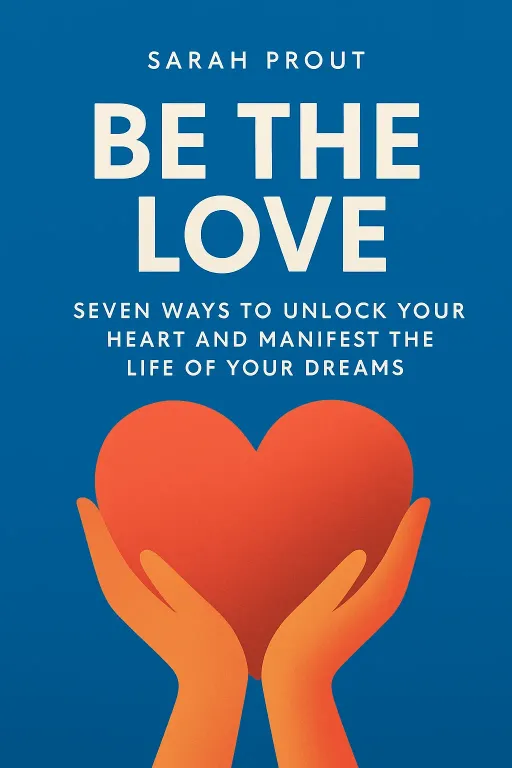
Nova: Imagine waking up one morning with less than forty cents in your pocket, a single parent responsible for two hungry children, and a heavy cloud of depression hanging over your head. You are scraping green mold off the end pieces of a loaf of bread just so your kids can eat the clean parts. This isn't a hypothetical scenario; it was the actual reality of author Sarah Prout in 2009. Yet, through a radical shift in her emotional energy, she transformed her life from welfare to running a million-dollar company. Today, we are diving deep into her book,. We’re going to tackle this book from three different angles. First, we’ll explore how to treat our emotions as system feedback loops rather than errors to be ignored. Second, we’ll discuss how to activate our intuition as an internal oracle to guide our decisions. And finally, we’ll look at the law of letting go as a form of essential system optimization. Joining me today is Asoiso, a full-stack software engineer who brings a fascinating, analytical perspective to these spiritual concepts. Welcome, Asoiso!
Asoiso: Thanks, Nova. It is great to be here. You know, when I first looked at the title, my initial instinct as an engineer was to treat it as a bit too abstract or soft. But as I read through Sarah’s framework, I realized she is actually describing a highly logical system of input, processing, and output. In software, if you ignore error logs or run outdated legacy code, your application crashes. Sarah is essentially arguing that human beings do the exact same thing when we suppress our emotions or ignore our internal guidance systems.
Nova: Oh, I love that connection! It’s like we are walking around with bloated software and wondering why our lives are lagging. Sarah’s core philosophy is built on three simple words: Feel, Heal, and Reveal. She calls this the "Be the Love" philosophy. We have to feel our emotions, heal the underlying wounds, and then reveal our empowered path forward.
Asoiso: Exactly. From a technical standpoint, "Feel" is about data collection. You can't debug a system if you refuse to look at the error logs. "Heal" is the actual debugging process—finding the root cause of the issue rather than just patching the symptoms. And "Reveal" is the deployment of the optimized code. It’s a very clean, iterative cycle.
Deep Dive into Core Topic 1
SECTION
Nova: It really is! And Sarah’s own life is the ultimate test case for this cycle. She shares some incredibly vulnerable stories in the book, like her experience surviving ten years of domestic violence in her first marriage. For a long time, she carried that trauma silently. But in 2019, she partnered with Goalcast to release a video sharing her story. It went viral, reaching over sixty million people! The response was overwhelming, with thousands of people asking her how she managed to heal and move on. That viral moment was a huge catalyst for writing this book. She realized people didn't just need inspiration; they needed a practical manual on how to process deep emotional pain.
Asoiso: That story really struck me because it highlights the danger of what we might call "silent failures" in engineering. A system can look like it's running fine on the surface, but underneath, there is a massive memory leak draining all the resources. Sarah was surviving, but she was carrying a heavy emotional load. When she finally spoke up, she was essentially running a system-wide diagnostic. But what’s interesting is how she addresses the concept of responsibility. She doesn't just play the victim; she talks about taking ownership of her emotional reactions. In chapter one, she shares a really raw story about a violent verbal outburst she had with her second husband, Sean, during a stressful time in their business. She was screaming, pushing him, and blaming him for all her anxiety. When he packed his bags to leave, it was a massive wake-up call for her.
Nova: Yes, that was such a pivotal moment! She realized she was projecting her past trauma onto her current relationship. She writes, "People that are hurting also hurt others." She had to stop the blame game. It’s so easy to say, "It’s your fault I feel this way!" But Sarah argues that shifting blame is like handing over your remote control to someone else and complaining that they’re changing the channels.
Asoiso: That is a perfect metaphor. In software architecture, we talk about "tight coupling," where one component is completely dependent on another. If component A fails, component B crashes instantly. When we blame others for our emotions, we are tightly coupling our internal state to external variables we cannot control. Taking responsibility is like decoupling the system. It’s saying, "I cannot control the external input, but I am entirely responsible for how my system processes it."
Nova: That is incredibly empowering, Asoiso! Decoupling our emotional state. And the data actually backs this up. Sarah points to a fascinating 2013 study on the physical benefits of emotional processing. Researchers found that patients who spent just twenty minutes journaling about their deepest thoughts and feelings for three days before a medical biopsy healed significantly faster. In fact, seventy-six percent of the journaling group were fully healed just eleven days after the procedure, compared to only fifty-eight percent of the control group!
Asoiso: That is a remarkable statistic. It shows that emotional data processing isn't just a psychological exercise; it has a direct, measurable impact on our physical hardware—our bodies. If we don't process the data, it gets stored as physical stress. In my work with AI agents, we design them to constantly monitor their environment and adjust their behavior based on feedback loops. If an agent encounters an obstacle, it doesn't ignore it; it logs the data, analyzes the friction, and recalculates its path. Journaling is essentially a manual run of that feedback loop for humans.
Nova: Absolutely! It’s about telling the truth to yourself faster. The quicker we acknowledge the "bug" of fear, anger, or unworthiness, the faster we can patch it. But so many of us are afraid to look at those bugs because of shame. Sarah talks about how childhood memories can etch deep patterns of unworthiness into our operating systems. She tells this heartbreaking story from when she was seven years old in Melbourne. She was the new girl from New Zealand, feeling very out of place. One day, a wealthy classmate named Emily was handing out birthday invitations. Sarah was so anxious to be chosen, to belong, that when the teacher called out a name that sounded similar to hers, she jumped up excitedly, only for the whole class to laugh because it wasn't her invitation. Even though she did eventually get one, that moment of public embarrassment created a deep-seated belief that she wasn't "good enough."
Asoiso: It’s fascinating how a single, early event can write a line of code that runs in the background for decades. That childhood incident created a default "search-and-rescue" algorithm in her adult life, where she was constantly seeking external validation to prove her worth. She even admits that this desire to feel "chosen" influenced her decision to marry young, which ultimately led to her toxic first marriage. It’s a classic example of a legacy system. You write a quick patch as a child to survive a emotional glitch, but then you keep running that same outdated patch as an adult, and it starts causing massive system conflicts.
Nova: Yes! And the only way to update that legacy code is through radical self-acceptance. We have to look at those old files, feel the shame or pain associated with them, and rewrite them with compassion. Sarah says, "Shame is an invitation to be better." It’s not a permanent state; it’s just a signal that we need to realign with our true worth.
Deep Dive into Core Topic 2
SECTION
Nova: Now, this brings us to our second core topic: activating our intuition, or what Sarah calls being "The Oracle." She believes that everyone has an innate intuitive guidance system, but the noise and distractions of the modern world constantly jam our signals.
Asoiso: This concept of intuition is really interesting when you think about heuristic algorithms in computer science. A heuristic is a practical method of problem-solving that isn't guaranteed to be perfect, but is sufficient for immediate, rapid goals. It’s like a shortcut. Our brains do this naturally. Intuition is essentially our subconscious processing thousands of data points based on past experiences, patterns, and environmental cues, and delivering a rapid output—a "gut feeling."
Nova: Exactly! It’s a lightning-fast calculation. Sarah shares a terrifying but perfect example of this. She was in a car with her husband, Sean, who was looking for a parking spot near a busy school. Sean pulled over, and Sarah was just about to open her passenger door to get out. Suddenly, a loud, clear voice in her head screamed, "NO!" She paused, freezing in place. In that exact split second, a school bus sped past, missing her door by inches. If she had ignored that inner whisper, the consequences would have been fatal.
Asoiso: That is a high-stakes heuristic! In that moment, her subconscious mind likely registered the reflection of the bus, the sound of the engine, or the timing of the school rush before her conscious mind could process it. It bypassed the slow, analytical CPU of her brain and sent an immediate interrupt signal directly to her motor functions. In engineering, we design fail-safes exactly like this—interrupt handlers that stop all operations when a critical hazard is detected. The key is that Sarah trusted the signal instantly. She didn't pause to analyze it or ask, "Why did I think that?" She just acted.
Nova: Yes, she trusted the "vibe." As she writes, "Vibes don't lie." But to hear those whispers, we have to clear out the digital clutter. Sarah is a big advocate for taking social media breaks and spending time in nature to quiet the mind. And there is actually solid research supporting this. A 2018 study from the University of Pennsylvania found that participants who limited their social media use to just thirty minutes a day experienced a twenty-seven percent decrease in anxiety and a thirty percent decrease in feelings of depression after just three weeks!
Asoiso: That makes complete sense from a bandwidth perspective. If your network is constantly flooded with high-volume, low-value data packets—like social media notifications and curated feeds—your system's processing power is entirely consumed by background noise. You don't have the bandwidth left to process subtle, internal signals. By limiting social media, you are essentially freeing up CPU cycles and network bandwidth for your internal oracle.
Nova: I love that! Freeing up CPU cycles for our soul. And once we clear that space, we start noticing signs and synchronicities from the Universe. Sarah shares some wild stories about this, like when she and Sean were feeling completely burnt out in Las Vegas and decided to go to brunch. They started reminiscing about a couple, Joe and Bessy, whom they had met years ago in Bali. On the drive home, Sean spontaneously ignored his GPS and made a wrong turn down a random street. Right there, waiting at a traffic light, were Joe and Bessy! They had just arrived in Las Vegas that day.
Asoiso: As an engineer, my default setting is to look at probability. With billions of people and events, highly improbable coincidences are statistically guaranteed to happen eventually. But what’s fascinating is how we those events. In system design, we look for "alignment indicators" to confirm that a deployment is successful. Synchronicities act as psychological alignment indicators. Whether you believe the Universe is actively orchestrating it, or your brain's reticular activating system is simply filtering for what you are focusing on, the result is the same: it builds confidence and confirms you are on the right path.
Nova: It really does. It’s like a little wink from the Universe saying, "I see you, keep going." But to move forward, we also have to master the "Law of Letting Go." This is chapter five, and it’s all about surrendering control. Sarah talks about how holding onto old patterns, toxic relationships, or even physical clutter keeps us stuck in a low-vibration loop.
Asoiso: This is pure system optimization. In software, we have a process called "garbage collection." It’s an automatic memory management feature that finds data objects that are no longer needed by the program and reclaims their storage space. If you don't run garbage collection, your system eventually runs out of memory and crashes. Letting go of old emotional baggage, or even physical items that carry negative associations, is human garbage collection.
Nova: Yes! She tells a great story about a client who was struggling to attract a new soulmate after her divorce. Sarah asked her, "Do you still have your ex-husband's things in your house?" The client admitted she still had his old coffee mugs in her cupboard. Sarah told her to get rid of them immediately and buy a new, matching set of mugs for herself and her future partner, and to visualize sharing coffee with him every morning. The client did it, and within three weeks, she met someone new!
Asoiso: That is a beautiful example of clearing physical memory to make room for new data. Those old mugs were holding "pointer references" in her mind to her past relationship. Every time she opened the cupboard, her brain was running a micro-routine about her ex-husband. By deleting those physical pointers and replacing them with a new "placeholder" variable—the new mugs—she primed her system to receive new input. It’s highly logical.
Nova: It really is. You have to create the space first. Sarah had to do this on a massive scale when she and Sean decided to move from Australia to Las Vegas in 2015. They had no visas, financial hurdles, and legal obstacles. But they took a leap of "active faith." They held a massive garage sale and sold literally all of their belongings before they even had official approval to move! They acted "as if" it was already done. And, of course, their visas were approved, and they landed in the US with just their suitcases, ready for a new chapter.
Asoiso: That is a bold move. In software development, we call that "test-driven development." You write the test case for the desired outcome you even write the code to make it work. By selling their stuff, they were writing a test case that forced their reality to pass. It’s a high-risk, high-reward strategy, but it shows the power of aligning your actions with your intentions.
Synthesis & Takeaways
SECTION
Nova: It really does. We’ve covered so much ground today, Asoiso. From treating our emotions as diagnostic data, to trusting our intuitive heuristics, to optimizing our lives through emotional garbage collection. If you had to summarize the ultimate "system upgrade" from Sarah’s book for our listeners, what would it be?
Asoiso: I think the ultimate takeaway is that we are not broken systems. As Sarah writes, "You are not broken." In engineering, a system isn't "broken" just because it's throwing errors; it’s simply responding to its current inputs and code. If we want to change the output of our lives, we have to update our internal algorithms. We do that by feeling our emotions without judgment, healing the legacy code of our past, and trusting our internal oracle to guide our next deployment.
Nova: That is beautiful, Asoiso. "We are not broken, we just need an upgrade." I want to leave our listeners with a powerful question to ponder today: What legacy code or "old coffee mugs" are you holding onto in your life right now, and what space could you create if you finally chose to let them go? If you want to continue this journey of self-discovery, we highly recommend subscribing to Sarah Prout's podcast for your daily dose of inspiration and intuitive downloads. Thank you so much for joining us, Asoiso, and sharing your incredible analytical insights!
Asoiso: Thank you, Nova. It was a pleasure debugging the heart with you today.
Nova: And to all our listeners, remember: pause, breathe, and be the love you wish to feel. Until next time!









