Unlocking Your Inner Potential for Daily Excellence
Golden Hook & Introduction
SECTION
Nova: Most self-help promises sound great on paper, but often miss the mark because they tell you what to do, not how your brain is fundamentally wired to resist or embrace change. We're diving into the hidden operating system of your potential.
Atlas: Oh man, that's a feeling I think everyone can relate to. We read the books, we get inspired, but then the rubber hits the road and it feels like there's an invisible force pulling us back to old patterns. It’s like we know the destination, but the internal GPS keeps rerouting us.
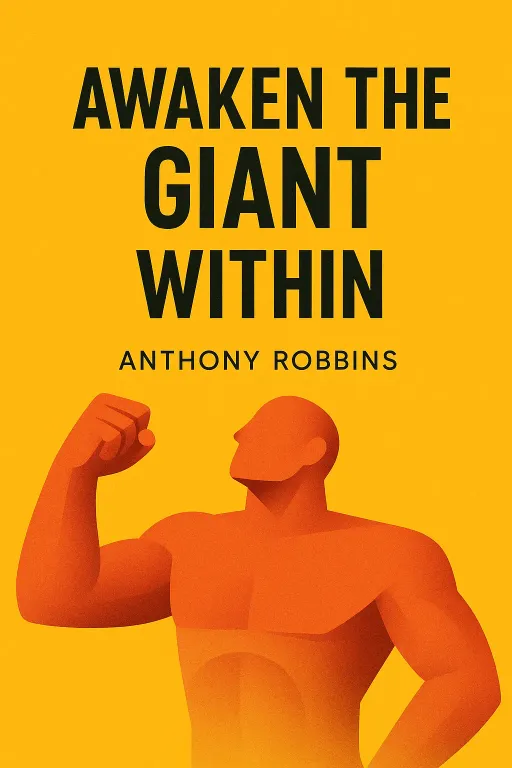
Nova: Exactly! And that's why today, we're unlocking the secrets to daily excellence by looking at two master architects of human potential: Anthony Robbins, with his monumental "Awaken the Giant Within," and Robin Sharma, with his incredibly practical "The Everyday Hero Manifesto."
Atlas: Two giants in their own right. Robbins, of course, is known for his electrifying, high-energy seminars, coaching everyone from world leaders to Olympic athletes. His approach is often seen as intense, almost theatrical by some, but his impact on millions is undeniable.
Nova: Absolutely. He's not just a motivator; he's a deep dive into the psychology of human needs and belief systems. And then you have Robin Sharma, who famously transitioned from a disillusioned litigation lawyer to a globally recognized leadership guru. His "Everyday Hero Manifesto" distills his philosophy into actionable, daily practices, building on the global phenomenon of his "5 AM Club." It’s fascinating how different their paths and styles are, yet they both converge on this idea of unlocking potential.
Atlas: It truly is. But for our listeners who are navigating complex, demanding careers and striving for strategic impact, the idea of "massive personal transformation" can feel daunting, almost like another overwhelming project. How do these big, bold ideas from Robbins actually translate into something tangible for someone who needs clarity amidst the daily grind?
The Inner Architecture of Transformation (Robbins)
SECTION
Nova: That’s a brilliant question, Atlas, because it gets to the heart of what Robbins reveals. He argues that it's not primarily about willpower, but about understanding and reprogramming our fundamental psychological architecture. We all have six core human needs: certainty, uncertainty, significance, love/connection, growth, and contribution. And our beliefs, whether limiting or empowering, are essentially rules we create to meet those needs.
Atlas: So, it’s not just about we believe, but we believe it, and how that belief serves a deeper, often unconscious, need.
Nova: Precisely. And when a belief or a pattern of behavior stops serving us, it's because we've linked more pain to changing it than to staying the same, or more pleasure to the old pattern. Robbins' signature tool for this is what he calls Neuro-Associative Conditioning, or NAC. It’s about breaking those old patterns by linking intense pain to the limiting belief and intense pleasure to the new, empowering one.
Atlas: Whoa, so this isn't just positive thinking. That sounds like a powerful, almost visceral rewiring of the brain. I mean, for someone in a high-pressure environment, where there's little room for what feels like 'failure,' how do you even begin to identify these deep-seated beliefs, let alone re-wire them without feeling like you're just... faking it?
Nova: That’s a common and valid concern. It’s not about faking it. Think of it like this: there was a high-achieving executive, let's call her Sarah, who was incredibly successful externally, but internally, she was paralyzed by a profound fear of making mistakes. Every new project brought immense anxiety. She believed, deep down, "If I'm not perfect, I'm a failure." This belief was meeting her need for significance, but it was also causing immense pain and stagnation.
Atlas: So the belief itself was a coping mechanism, but a destructive one.
Nova: Exactly. Through NAC, Robbins would guide her to intensely associate the pain of that limiting belief – the anxiety, the missed opportunities, the constant self-doubt – with the belief itself. He'd have her vividly imagine the long-term consequences of holding onto "I must be perfect." Then, he’d help her forge a new, empowering belief: "Mistakes are essential feedback for growth." She'd then associate intense pleasure, excitement, and freedom with this new belief – visualizing the innovation, the learning, the impact she could have by embracing imperfect action. This often involves physical actions, sounds, and intense emotional states to create a new neural pathway.
Atlas: That’s actually really inspiring. It’s about changing the associated with the belief, not just trying to intellectually override it. It sounds like a lot of what holds people back, especially those striving for excellence, is not a lack of capability, but an internal conflict where an old belief is still serving some unconscious need.
Nova: That's spot on. The process of pattern interruption, which is a key part of NAC, involves doing something completely unexpected when you feel the old pattern emerge. It literally breaks the mental loop. It could be a loud noise, a sudden physical movement, anything to disrupt the old association, allowing you to then install a new, empowering one. It’s a very active, almost aggressive approach to psychological transformation, designed to create massive shifts quickly.
Atlas: That makes sense. It’s about creating an internal leverage point. But once you've tackled that inner game, once you've upgraded that internal operating system, how do you sustain that transformation? How do you make sure those new beliefs don't just fade, especially in the relentless pace of daily life?
The Power of Micro-Habits and Daily Rituals (Sharma)
SECTION
Nova: And that naturally leads us to the second key idea we need to talk about, which often acts as the perfect complement to Robbins' big shifts: Robin Sharma's focus on micro-habits and daily rituals. If Robbins gives you the internal leverage to to change and break free, Sharma gives you the daily structure to and sustain that change.
Atlas: I see. So Robbins is the internal revolution, and Sharma is the consistent daily practice.
Nova: Precisely. Sharma emphasizes that becoming an "everyday hero" isn't about grand, one-off gestures, but about the consistent, incremental actions that compound over time. He's famous for concepts like the "5 AM Club," which is less about the exact time and more about protecting your "heroic hour" for personal growth before the world's demands encroach. He also introduces the "4 Focuses of the Hero": Capitalization, Health, Family, and Craft.
Atlas: I can definitely see the appeal of a structured start to the day for productivity, but for a lot of our listeners, especially those managing teams or demanding schedules, adding early morning commitment can feel overwhelming. It sounds great on paper, but how do you make these "heroic" habits accessible without burning out, especially when you're already striving for efficiency and impact?
Nova: That’s a critical point, and it’s where Sharma’s nuance truly shines. He's not advocating for rigidity, but for intentionality. Take the example of a busy project manager, let's call him Mark. Mark used to jump straight into emails, feeling reactive and drained by noon. He felt he "didn't have time" for personal growth. Inspired by Sharma, he didn't immediately join the 5 AM Club. Instead, he started with just 15 minutes of focused learning, reading an industry article or listening to an educational podcast, checking his phone.
Atlas: Okay, so a micro-habit, not a massive overhaul.
Nova: Exactly. That 15 minutes, consistently applied, became his "heroic block." Over months, it compounded. He started noticing patterns, connecting ideas, and his confidence grew. He then gradually extended it to include a short meditation or a quick workout. This wasn't about adding to his plate, but strategically his most valuable, undisturbed morning time to activities that fueled his "4 Focuses"—capitalizing on his craft, investing in his health. It's about consistency over intensity, and recognizing that tiny steps build massive momentum.
Atlas: That’s a perfect example. It shows that it’s not just about the specific time on the clock, but about creating an inviolable ritual that safeguards your mental and physical energy for what truly matters. It’s about building resilience and clarity, which is something our audience deeply values. It’s about being proactive rather than reactive.
Nova: And it directly addresses the criticism sometimes leveled at Sharma's work, that it can be overly prescriptive. The core message is the power of intentional, consistent micro-actions. It's about making small, deliberate choices daily that align with your highest values and long-term vision, ensuring that you're always progressing, even if it feels tiny in the moment. These small wins build self-efficacy and reinforce those new, empowering beliefs that Robbins helps you establish.
Synthesis & Takeaways
SECTION
Atlas: So it really does feel like Robbins provides the internal operating system upgrade – the deep psychological shift to break free from limiting patterns – and Sharma gives you the daily software updates and applications to run on that new system, ensuring consistent performance. One without the other feels incomplete.
Nova: You've articulated that beautifully, Atlas. Robbins helps you uncover you're stuck and gives you the tools for a breakthrough. Sharma then provides the daily architecture to ensure that breakthrough isn't a one-off event, but becomes integrated into a life of sustained excellence. It’s not just about knowing what to do, but understanding you're doing it and to consistently show up.
Atlas: And for our listeners who are constantly seeking clarity, efficiency, and ways to make a deeper impact, this blend of profound mindset work and practical micro-action feels like a truly powerful strategy. It bridges the big, sometimes intimidating idea of "massive transformation" with the achievable steps of "daily excellence." It’s about finding that leverage point.
Nova: Absolutely. So, if we bring it back to our core takeaway for today: identify one limiting belief that holds you back. It could be "I'm not good enough," "I don't have time," or "I'm not creative." Then, choose a small, consistent daily action you can take for the next 7 days to challenge and reframe that belief. For example, if you believe "I'm not creative enough," your small action could be spending 10 minutes sketching daily, or writing three new ideas in a journal.
Atlas: That’s incredibly practical. It transforms the abstract into the actionable. It’s about taking that first tiny step, reinforced by a deeper understanding of your own psychology.
Nova: Exactly. It's about recognizing that profound, lasting change isn't just a sudden lightning bolt; it's the result of deeply understanding your inner world and then consistently applying small, powerful actions. It's about making progress, not just chasing perfection. What's that one limiting belief you're ready to challenge, and what small action will you take this week to begin reframing it? The journey of unlocking your potential starts with that single, intentional step.
Nova: This is Aibrary. Congratulations on your growth!