

Unleashing Your Innate Power for Transformative Action
Golden Hook & Introduction
SECTION
Nova: We often chase power externally – titles, money, influence. We think it's something to acquire. But what if true, transformative power isn't something you, but something you inherently possess and simply need to from within?
Atlas: Oh, I like that. It flips the script on what most people are striving for. For our listeners who are busy analyzing business models and driving growth, the idea of "internal power" might sound a bit… esoteric. Like, how does that translate to the bottom line?
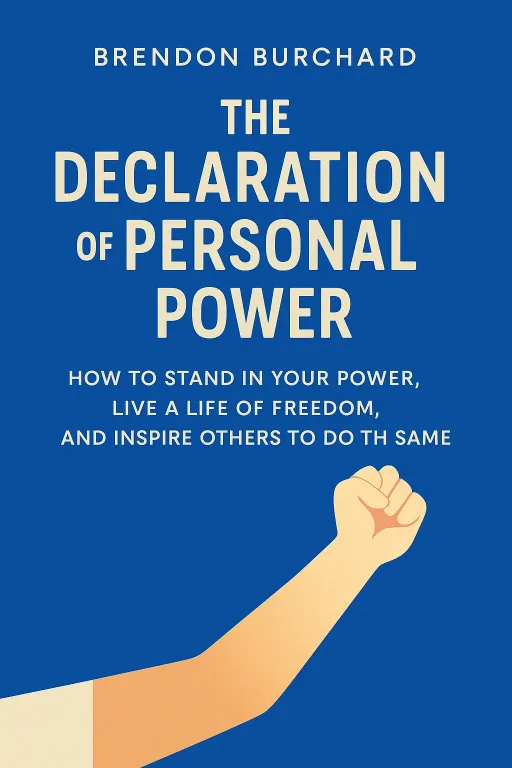
Nova: Exactly! And that's precisely what we're diving into today. We're looking at two foundational works that challenge this external focus: Brendon Burchard's "The Declaration of Personal Power" and Anthony Robbins's classic, "Awaken the Giant Within."
Atlas: Ah, the giants in the field. Robbins, with his legendary, high-energy seminars that have impacted millions globally, and Burchard, known for his high-performance coaching frameworks that empower entrepreneurs and leaders. Both have such distinct, yet complementary, approaches to personal mastery.
Nova: They do. And what's fascinating is that both, despite their different styles and audiences, converge on this core truth: true transformation, whether personal or professional, begins with an internal shift. It's a conscious decision to harness your own psychological and emotional resources, rather than waiting for external circumstances to align.
Atlas: So, it's less about finding a new strategy, and more about finding a new to implement the strategy? That's a significant reframe for anyone building efficient systems or innovating business models. It suggests the bottleneck isn't always the market, but sometimes the mindset. Is this internal shift something we can actually measure in terms of growth?
The Inner Crucible: Unlocking Your Innate Power
SECTION
Nova: Precisely. Let's start with what I call "The Inner Crucible: Unlocking Your Innate Power." Burchard talks about clarity, courage, and consistent action. Robbins delves into mastering emotions, beliefs, and values. It’s all about taking ownership of your inner world. Think of a startup founder, let's call her Elena. She's brilliant, she has an innovative product, but she's constantly second-guessing herself, getting swayed by every market trend, every investor's opinion. She feels disempowered, even though she's technically in charge of her company.
Atlas: Oh, I've been there. Or seen it happen to many. It’s easy to get caught in that feedback loop, especially when you’re driven by scalable success and constantly seeking validation for your next big move. But how do you that internal clarity when you're in the weeds of a complex business model, with deadlines and investor pressures looming? Is it just positive thinking, or is there a to this internal shift for those of us who are analytical by nature?
Nova: That’s a crucial distinction, Atlas. It's not just positive thinking. It's about a conscious, deliberate process. For Elena, her breakthrough came when she stopped asking, "What does the market want?" or "What do investors expect?" and started asking, "What is my purpose with this product? What values I uphold, regardless of external pressure?" She went into her own "inner crucible," so to speak, to distill her core.
Atlas: So, she wasn't just optimizing her operations; she was optimizing her.
Nova: Exactly! She clarified her values, her non-negotiables. That gave her the courage to say no to certain features, to pivot her marketing message to something more authentic, even if it was unconventional. This wasn't some mystical revelation; it was an active process of self-inquiry, a conscious decision to anchor her actions in her core beliefs. Robbins emphasizes this with his concept of "values hierarchy" – understanding what truly drives you, and aligning everything else to that. It’s about being congruent.
Atlas: That makes sense. For someone building resilient organizations, understanding the core values isn't just a mission statement on a wall; it's the internal compass for every decision. But that takes courage. It takes courage to stand by those values when the market is pulling you in a different direction, or when a competitor seems to be doing things differently.
Nova: It absolutely does. And that courage comes from internal clarity. When you know you're doing something, and it aligns with your deepest self, the fear of external judgment or failure diminishes. You reclaim that innate power because you're operating from a place of authenticity, not reaction. It’s a profound shift from being a passenger in your own life or business to being the pilot, consciously steering your course.
From Intention to Impact: The Anatomy of Courageous Action
SECTION
Atlas: Okay, so once you have this clarity, this internal power, how do you actually something with it? It's easy to powerful, but harder to powerfully, especially when you're talking about scaling a vision or innovating a business model. What's the anatomy of that courageous action, the bridge from intention to impact?
Nova: That’s the critical next step, "From Intention to Impact: The Anatomy of Courageous Action." Both Burchard and Robbins underscore that this internal shift is useless without consistent, deliberate action. Think of our founder, Elena, again. She had her clarity. Now, she needed to translate it into momentum. Instead of trying to overhaul her entire company overnight, she started with "tiny steps."
Atlas: What's the difference between a "tiny step" and just... procrastination? How do you ensure these small steps lead to, not just busywork? For someone focused on efficient systems, a "tiny step" needs to be a step, not just any step.
Nova: Excellent question. The difference lies in the and behind it. A tiny step isn't about doing less; it's about doing the you can do, despite fear or resistance. For Elena, it might have been scheduling that one difficult, honest conversation with a key team member whose values weren't aligned. Or, launching a small, focused pilot project that truly embodied her clarified product vision, rather than trying to please everyone with a diluted offering. It was about choosing the brave, small action.
Atlas: So, it's about breaking down a daunting challenge into its smallest, most courageous component, and then executing with conviction. I can see how that ties into iterative learning. Every small, courageous action is a step forward, a data point for growth and refinement. It makes the impossible feel achievable.
Nova: Precisely. Robbins talks about changing your "strategy" – how you approach challenges. If the big goal feels overwhelming, you break it down until the first step is so small, it feels almost ridiculous to do it. But that "ridiculous" step must still require courage. It's not about being fearless, but about acting the fear. It’s the difference between thinking about creating a new market entry strategy and scheduling the first meeting to brainstorm the truly disruptive ideas, knowing they might be rejected. That first step, however small, shifts your state.
Atlas: That resonates deeply with the "Builder" mindset. You can't build a skyscraper all at once; you lay one brick, then another, but each brick needs to be placed with precision and purpose. It's about consistent action, not just sporadic bursts of inspiration. It’s about building momentum through a series of deliberate, courageous choices.
Nova: And that consistent action, that iterative learning, is how you truly shape your destiny. It's not about one grand heroic act, but a series of small, courageous decisions that compound over time. It’s how you design the future of commerce, fuel sustainable growth, and build resilient organizations – one intentional, brave step at a time. It’s the practical application of that reclaimed power.
Synthesis & Takeaways
SECTION
Nova: So, what we're really talking about here is a profound shift in perspective. It's recognizing that the power to transform your life, your business, your team dynamics – it doesn't come from external validation or a lucky break. It comes from within, through conscious choice and courageous action.
Atlas: It's about owning your internal narrative, clarifying your values, and then translating that clarity into courageous, consistent actions. It's a powerful framework for anyone driven by growth and looking for scalable success, not just fleeting wins. It’s about building from the inside out.
Nova: Absolutely. And the takeaway for our listeners today is simple, but potent: Identify area where you feel disempowered right now. Maybe it's a project at work, a challenging relationship, or even a personal habit. Then, articulate a clear, courageous action you can take this week to reclaim control. Draw on your inherent strengths, that inner wellspring of power we've been discussing.
Atlas: Just one, small, courageous action. Not a massive overhaul. That feels incredibly actionable, especially for those of us who schedule 30 minutes weekly for deep work on strategic challenges. For me, it might be having that one difficult conversation I've been putting off, knowing it aligns with the kind of transparent team dynamics I want to build.
Nova: That's it. That's the "tiny step" that unleashes your innate power. It’s the conscious decision to act, despite the discomfort, because you’re anchored in your own clarity and courage.
Atlas: That’s actually really inspiring. It makes it feel less like a mountain to climb and more like a path to walk, one deliberate, brave step at a time. It's about building a better future, starting with yourself.
Nova: Indeed. And for anyone looking to truly design the future, whether in business or in life, that internal alignment is the most powerful tool you possess.
Atlas: This is Aibrary. Congratulations on your growth!









