

Reclaiming Agency in a High-Stakes Career
Golden Hook & Introduction
SECTION
Nova: If this episode found you, you probably feel like your calendar owns you, not the other way around. You’re constantly reacting, putting out fires, and your own agenda feels like a distant dream.
Atlas: Oh man, that's going to hit home for so many of our listeners. That feeling of being perpetually pulled in a million directions, always responding to external demands. It's exhausting.
Nova: Absolutely. But what if I told you the solution isn't just better time management, but a radical act of psychological self-defense? We’re talking about reclaiming your agency, your personal power, from the relentless tide of modern work.
Atlas: Psychological self-defense? That sounds intriguing. I’m curious. How do we even begin to mount such a defense when the demands are so high-stakes?
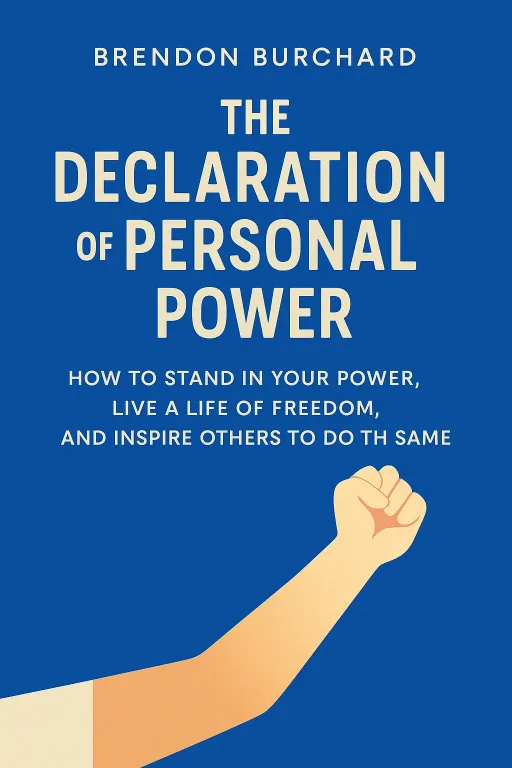
Nova: Well, today, we’re drawing wisdom from two titans of personal development. First,, with his powerful call to action in Burchard, a high-performance coach who actually survived a life-threatening car accident in his youth, brings this incredible urgency to living an intentional life, focusing on what truly matters.
Atlas: That context of a near-death experience certainly lends a lot of weight to his message about intentionality.
Nova: It really does. He’s all about helping people find their clarity, energy, and productivity, but from a place of genuine personal power. And then, we'll layer in the practical, almost immediate techniques from, particularly his concept of Neuro-Associative Conditioning, or NAC, from Robbins, as many know, is a global phenomenon, having coached everyone from world leaders to Olympic athletes, and his direct, often intense methods are designed for rapid, profound change.
Atlas: So, we're talking about the 'why' of reclaiming power from Burchard, and the 'how' from Robbins. It sounds like a perfect one-two punch for anyone feeling overwhelmed by their career.
Nova: Exactly. It's about moving from that reactive state, where your environment dictates your day, to an intentional, proactive state where you are the architect of your focus and your future.
The Erosion of Agency and the Call to Reclaim Power
SECTION
Nova: Let's start with Burchard's core challenge. He essentially says we are constantly, often unconsciously, surrendering our personal power to external corporate expectations. Think about it: the endless emails, the "urgent" Slack messages, the unscheduled meetings that hijack your meticulously planned day.
Atlas: Okay, but for our listeners in demanding roles, that just sounds like… work. How does responding to a client emergency or a team request become "surrendering personal power"? Isn't that just being a responsible professional?
Nova: That’s the brilliant nuance Burchard highlights. It's not about ignoring responsibilities, but about the and of your response. Are you choosing to engage, or are you out of a perceived obligation that you haven't consciously agreed to? It's the difference between being a ship's captain who to alter course for a distress signal, versus being a ship's captain whose course is being dictated by every passing dinghy's whim.
Atlas: That’s a powerful analogy. I can see how that distinction matters. It's about intentionality versus default. Because, honestly, in a high-stakes environment, it often like every dinghy is a five-alarm fire. The pressure to always be "on," to be instantly available, is immense.
Nova: Precisely. And that pressure often leads to what he calls the "tyranny of the urgent." We mistake reactivity for productivity. We feel busy, but are we actually moving our most important projects forward? Are we building that solid future we aspire to, or just treading water?
Atlas: That’s a tough question to ask yourself at the end of a long, "busy" day. You might feel exhausted, but then realize you haven't actually made progress on priorities, the ones that truly matter for your growth or your long-term strategy.
Nova: Exactly. The cost of this surrender is profound. It's not just about wasted time; it's about a loss of focus, a drain on your energy, and ultimately, a diminished sense of personal mastery. You might be brilliant, but if your brilliance is constantly being redirected by others, you're not building legacy.
Atlas: It makes me wonder, how many of our listeners are meticulously scheduling 20 minutes for focused learning, as we recommend, only to have it completely derailed by an "urgent" notification? It’s like setting up a fortress, but leaving the front door wide open.
Nova: That’s a perfect metaphor, Atlas. And Burchard would argue that the first step to reclaiming that power is simply where you're giving it away. Where are you saying "yes" out of habit or fear, instead of conscious choice? Where are your external corporate expectations overriding your internal personal power?
Atlas: So, it starts with awareness. You can't fight a battle you don't even know you're in. But once you've identified that moment, that trigger, then what? It still feels like fighting a strong current. How do you actually push back and regain control in that instant?
The 'Pattern Interrupt' as a Tool for Instant Recalibration
SECTION
Nova: And that naturally leads us to Anthony Robbins’s groundbreaking work. He gives us the psychological artillery for that fight: the 'pattern interrupt' through Neuro-Associative Conditioning. It's not about the trigger, but about to it.
Atlas: Neuro-Associative Conditioning. That sounds a bit like something from a spy movie. What exactly is a 'pattern interrupt' in plain language for those of us who aren't neuro-scientists?
Nova: Think of it like this: our brains are incredible pattern-recognizing machines. When a specific stimulus occurs, we often have a conditioned, automatic response. A pattern interrupt is simply anything that that automatic, often unhelpful, pattern of thought or emotion. It's a circuit breaker for your mental state.
Atlas: So, it's not about ignoring the stress, but physically, mentally, or even emotionally shaking yourself out of the to that stress? Like hitting a reset button before the old programming takes over?
Nova: Exactly! Robbins teaches that to change any deeply ingrained behavior or emotional response, you first have to the pattern that leads to it. If you’re about to dive into that stress spiral, you need to literally do something to break the loop. This can be physical, verbal, or mental.
Atlas: Can you give us an example? Because for someone who's constantly battling high-pressure situations, the idea of just "breaking the loop" sounds a bit abstract.
Nova: Absolutely. Imagine you get that email that instantly triggers anxiety. Instead of immediately feeling that dread and diving into a reactive response, you could: physically stand up abruptly, clap your hands loudly, and shout a nonsense word like "BANANA!" Or, mentally, you could vividly imagine something utterly absurd, like your boss wearing a chicken suit and tap-dancing. The key is the and of the action. It's so out of character for the situation that it literally scrambles your brain's automatic pattern.
Atlas: Wow. That's… certainly unconventional. So, it's about shocking your system out of the default response. For our focused strategists and aspiring builders, this isn't just about feeling better; it's about regaining mental clarity to make better, more strategic decisions, rather than knee-jerk ones.
Nova: Precisely. It's about creating a moment of choice where there previously was only reaction. Let me tell you a story. I once heard Robbins recount working with a CEO who was about to go on stage for a massive presentation, completely overwhelmed by self-doubt and anxiety. He was spiraling. Robbins had him jump up and down, make a loud, funny noise, and then immediately shout, "I am a powerful communicator!" The CEO literally laughed at the absurdity, which broke his anxiety pattern, and he walked onto that stage with renewed confidence.
Atlas: That’s a powerful image. It’s about taking back control of your state, which then allows you to take back control of your external agenda. It’s not just about managing time; it’s about managing your in real-time.
Nova: And that’s where the two ideas perfectly intersect. Burchard tells us we must reclaim our agenda, our personal power. Robbins gives us the instant, on-the-spot to do it when those external demands threaten to overwhelm us. It's about being intentional with your psychology, just as you're intentional with your schedule.
Atlas: So many of us are trying to optimize our external environment, but this suggests the real leverage is internal. It's about creating an internal fortress that can withstand the external chaos.
Synthesis & Takeaways
SECTION
Nova: Exactly, Atlas. The synthesis here is profound. Reclaiming agency isn't a passive act; it requires active self-awareness and a toolkit of psychological strategies. You identify the moments you surrender power, and then you apply a pattern interrupt to immediately shift your state and regain control.
Atlas: So, the core takeaway is: first, get crystal clear on where you're letting external corporate expectations dictate your focus and priorities. Then, have a specific, almost instant technique ready to deploy to break that negative pattern and put back in the driver's seat of your own mind.
Nova: That’s it. It’s about protecting your focus like it's your most valuable resource, because frankly, it is. It ties directly into our listeners' desire for self-growth and building a solid future. You can't build effectively if your attention is constantly fragmented.
Atlas: For anyone who feels like they're constantly reacting, constantly putting out fires, this is an invitation to be proactive with your own psychology. It’s about creating those micro-moments of choice that build into a life of greater intentionality and mastery.
Nova: What’s one small, actionable step our listeners can take this week to start building this muscle?
Atlas: I've been thinking about this. I'd say, identify just specific trigger that consistently makes you surrender your power – perhaps a certain type of email, a notification sound, or a specific person's request. And then, intentionally plan a simple, slightly absurd pattern interrupt for.
Nova: Just one, to start building that muscle of conscious intervention. That’s actionable wisdom right there. Reclaim your focus, reclaim your future.
Atlas: It’s a powerful concept. A small psychological shift can lead to massive gains in agency and progress.
Nova: Absolutely. This is Aibrary. Congratulations on your growth!









