

Reclaiming Agency in a High Pressure Career
Golden Hook & Introduction
SECTION
Nova: If this episode found you, you probably feel like your calendar owns you, instead of the other way around. Ever wish you could hit pause on the chaos and just... decide what happens next?
Atlas: Oh, I know that feeling. It's like I blink, and suddenly the day is gone, and I've spent it reacting to everyone else's priorities. It’s a relentless current.
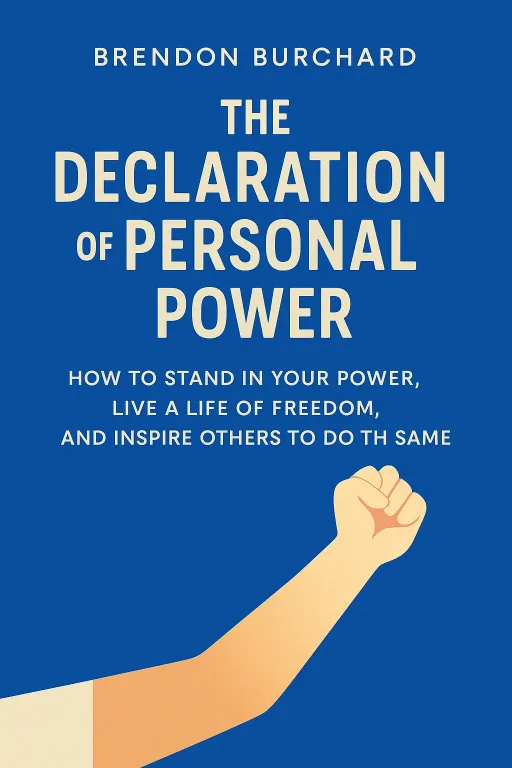
Nova: Exactly! That relentless current, that feeling of being perpetually behind, it's something Brendon Burchard tackles head-on in "The Declaration of Personal Power." He argues that in our high-stress, always-on world, we often fall into what he calls 'reactive living.'
Atlas: Reactive living. That resonates. But for our listeners who are navigating mountains of research or critical clinical demands, it feels less like a choice and more like survival. How do you declare intentions when the chaos is a constant, demanding presence?
Nova: That's the crux of it, isn't it? Burchard, a high-performance coach who himself overcame a life-threatening car accident that profoundly shaped his perspective on life's urgency, really pushes this idea that agency isn't found in a quiet retreat, but of the storm. He says we must consciously declare our intentions daily, even hourly, to avoid that trap.
Atlas: So, it's not about waiting for the calm, but creating it within the storm? It sounds almost… counter-intuitive when you're overwhelmed.
Nova: Precisely. And if Burchard gives us the and the —the need for declaration—then Anthony Robbins, with his monumental work like "Awaken the Giant Within," gives us the. Robbins, whose seminars have impacted millions globally, from world leaders to everyday individuals, offers a powerful framework called Neuro-Associative Conditioning, or NAC, to actually our brains to act on those intentions.
Atlas: Okay, so we're talking about combining purposeful thought with actual brain-level behavior change. This sounds like it could be a game-changer for anyone feeling stuck in that reactive cycle. Let's dive in.
The Trap of Reactive Living & The Power of Declaration
SECTION
Nova: Let's picture Dr. Elena, a brilliant research scientist. Her days are a blur. New grant proposals looming, lab results needing meticulous analysis, a team of graduate students constantly needing guidance, and an inbox that seems to multiply faster than she can clear it. She starts each day with a vague hope of "getting a lot done," but by 5 PM, she feels drained, like a human ping-pong ball, batted between urgent requests.
Atlas: That sounds rough. I imagine a lot of our listeners can relate to that feeling of exhaustion without accomplishment. It's not just busyness, it's a profound lack of control.
Nova: Exactly. Burchard would say Dr. Elena is deep in 'reactive living.' She's responding to external stimuli rather than initiating action from her own internal compass. Her days are being dictated her, not her. The insidious creep here is that she's always, so she feels productive, but she's not necessarily advancing her work.
Atlas: But how do you break that cycle? When the demands are genuine and urgent, how do you just… stop reacting?
Nova: It starts with a simple, yet profound shift: the daily, even hourly, declaration. For Dr. Elena, it meant a radical change. Instead of just hoping to "get a lot done," she started her morning by explicitly stating: "This first hour, from 8 to 9 AM, I will focus solely on synthesizing data for the big grant proposal. No emails, no student interruptions, just deep work on."
Atlas: That sounds almost too simple. I mean, can just saying it out loud really make a difference? What about the actual interruptions?
Nova: That's the magic. The declaration isn't a magic spell that makes interruptions vanish. It's a powerful psychological boundary. When an email notification popped up, or a student poked their head in, Elena could mentally refer back to her declared intention. It gave her the internal permission, and the mental strength, to say "I'm focused on X right now, I'll get to that at 9 AM."
Atlas: So, it's about creating a mental force field. It’s like, instead of just for focus, you’re it for a specific timeframe. That makes sense – it's about making the desired action less of a mental fight because you've already committed to it.
Nova: Precisely. And here’s the crucial part: it’s not about perfect execution from day one. It’s about the consistent practice of reclaiming that agency. Elena didn't suddenly become immune to distractions. She struggled. But each time she re-committed to her hourly declaration, she strengthened that mental muscle. Over weeks, those reclaimed hours started adding up. The grant proposal got the focused attention it needed, and she felt a profound sense of accomplishment, not just busyness. It’s about being proactive, not just busy.
Atlas: That's a great distinction. It's not about doing more, it's about doing what more, by consciously choosing it. It’s a subtle but powerful shift in mindset. But what happens when the old habits are so ingrained, the reactive patterns so deeply wired, that simply declaring an intention isn't enough to override them?
Rewiring Your Brain: The NAC Framework
SECTION
Nova: That’s a brilliant segue, Atlas, because that's exactly where Anthony Robbins' Neuro-Associative Conditioning, or NAC, comes into play. Declaring your intention provides the, but sometimes our internal 'autopilot' is still programmed for the old, reactive route. NAC is about reprogramming that autopilot.
Atlas: Okay, so this isn't just about saying 'I will do X,' it's about making 'not doing X' and 'doing X'? How does that work in a practical, professional setting without, you know, walking on coals or having a giant follow you around?
Nova: That's a common misconception about Robbins' work! While he's famous for high-energy events, the core of NAC is deeply psychological and can be applied very subtly. It’s based on the fundamental principle that humans are driven by the need to avoid pain and gain pleasure. Our brains constantly make associations: 'If I do X, I'll feel Y.' NAC is about consciously taking control of those associations.
Atlas: So, it’s about emotional leverage. Making the of the old, unwanted behavior so strong, and the of the new, desired behavior so compelling, that your brain naturally steers you towards the new.
Nova: Exactly! Let’s think about Mark, a dedicated clinician. He loves his patients, but dreads the mountain of administrative tasks that pile up each week—patient notes, billing, compliance forms. Every time he sits down to tackle them, he feels a wave of heavy resistance, a dull ache of boredom and overwhelm. He usually puts it off, leading to late nights, stress, and a constant feeling of guilt. That’s an old, painful association: admin work = dread/pain.
Atlas: Oh, that's incredibly relatable. For many professionals, those 'necessary evils' of work can feel like a psychological weight.
Nova: So, Mark decided to apply NAC. The first step is to He recognized the cycle of dread -> procrastination -> guilt/stress. The second step is to The moment he felt that familiar dread creeping in when thinking about admin, he’d physically stand up, stretch vigorously, take a deep breath, and shout "NO!" It’s a pattern interrupt, breaking the old neurological pathway.
Atlas: A physical and mental jolt. I like that. It's like hitting a reset button before the old program fully loads.
Nova: Precisely. And the third, most powerful step is to Immediately after the interrupt, Mark would vividly visualize the he’d feel once those tasks were done. He’d imagine the clear desk, the freed-up evening, the satisfaction of being on top of things. He’d associate intense with completing the tasks, rather than the pain of doing them. He'd even put on his favorite upbeat music while doing them to further anchor the positive feeling.
Atlas: Wow. So for someone buried in research, instead of just to the next email, they could use this to themselves to prioritize that deep work? Making the act of focused, uninterrupted work feel like a victory, and the act of constant distraction feel like a defeat?
Nova: Absolutely. It’s about creating a new, compelling emotional reason to do what you know you do. Mark found that over time, the dread surrounding admin work lessened significantly. The new associations started to take hold. He still didn't admin, but the procrastination habit withered, replaced by a more proactive, less painful approach. It's a conscious choice to link intense pleasure to the behaviors that serve you, and intense pain to those that don't.
Atlas: That makes sense. It’s about making the desired action less of a mental fight, not by sheer willpower, but by leveraging our inherent drive for pleasure. So, combining Burchard's intentionality with Robbins' conditioning seems incredibly powerful.
Synthesis & Takeaways
SECTION
Nova: They truly complement each other. Burchard gives us the guiding star – the daily, declared intention – reminding us that we have the power to choose our focus, even in chaos. Robbins then provides the rocket fuel, the practical tools to actually our ingrained patterns so we can consistently move towards those declared intentions.
Atlas: So the core message is, when you feel that overwhelming pull to react, you have to consciously ask yourself: 'Am I reacting to the chaos, or am I acting on my declared intention for this hour?' It's a simple question, but it’s loaded with agency.
Nova: It is. It transforms us from passive recipients of our day into active creators of our experience. It's not about perfect execution, but consistent reclamation of agency, one hour, one decision at a time. For our listeners who are constantly navigating complex demands, this isn't just about productivity, it's about reclaiming sanity, impact, and ultimately, personal power.
Atlas: And it speaks directly to our need for efficiency and making time count. It's not just about learning, it's about strategically applying that learning to create real change.
Nova: The power isn't external, it's in our daily declarations and our ability to rewire our responses. It's about choosing to be the architect of your day, rather than merely its resident.
Atlas: That's actually really inspiring. It feels like a genuine path to reclaiming control in what often feels like an uncontrollable professional landscape.
Nova: This is Aibrary. Congratulations on your growth!









