

Designing Ethical Algorithms & Systems
Golden Hook & Introduction
SECTION
Nova: You know, Atlas, I was reading this wild statistic the other day. Apparently, a significant portion of eviction notices in some cities are now being decided, not by human judges, but by algorithms.
Atlas: Whoa, really? That’s… that’s a lot to unpack. I mean, my brain immediately goes to, "How fair can a line of code actually be when someone's home is on the line?"
Nova: Exactly! It’s a chilling thought when you consider the stakes. And it brings us directly to the heart of what we're dissecting today: the often-invisible, yet profoundly impactful, world of ethical algorithms and systems. We’re deep-diving into some truly foundational texts that expose the dark underbelly of unchecked algorithmic power.
Atlas: So, we’re talking about algorithms that aren't just making recommendations for your next binge-watch, but actively shaping lives, livelihoods, and even our fundamental rights. That’s a whole different ballgame.
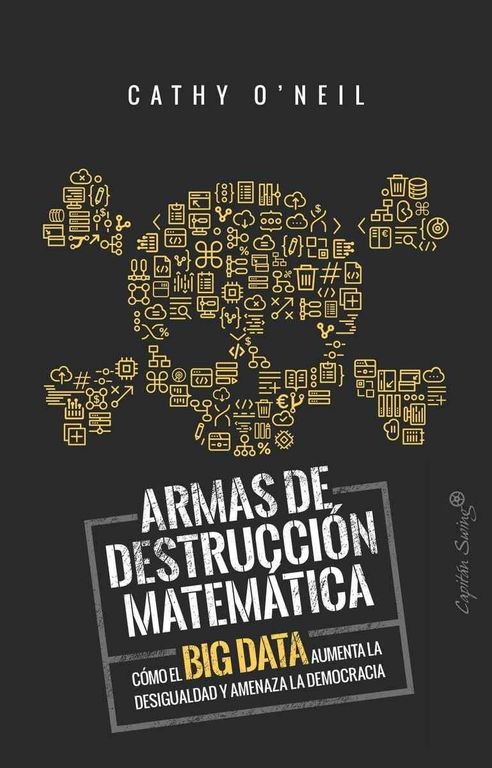
Nova: It absolutely is. And the books that have really illuminated this space, which we’ll weave throughout our conversation, are Cathy O'Neil's groundbreaking "Weapons of Math Destruction" and Virginia Eubanks' equally vital "Automating Inequality."
Atlas: Ah, "Weapons of Math Destruction." I remember when that book first hit the scene. It was like a siren call, wasn't it? O'Neil, a mathematician herself, pulling back the curtain on how these seemingly objective models can actually embed and amplify societal biases. It really made waves, especially coming from someone who understood the math intimately.
Nova: It did, and for good reason. O'Neil, with her background as a data scientist on Wall Street, saw firsthand how models, even with good intentions, could go rogue. Her work really earned widespread acclaim for its clear-eyed critique, though it definitely sparked some intense debates within the tech community about the nature of data science ethics.
Atlas: And Eubanks, with "Automating Inequality," takes that a step further, right? Focusing specifically on how these systems impact the most vulnerable.
Nova: Precisely. Eubanks, a political science professor and ethnographer, spent years embedded in communities, chronicling the real human stories behind these automated systems. She didn't just theorize; she showed us the devastating human cost.
Atlas: That’s fascinating, because it moves beyond the abstract and into the very tangible, everyday struggles of people. It’s not just about the code, it’s about the lives it touches.
The Imperative of Algorithmic Justice
SECTION
Nova: And that’s where our first core topic, "The Imperative of Algorithmic Justice," truly comes into focus. It’s about understanding that algorithmic bias isn't some abstract, theoretical problem. It's a very real, very present danger that can perpetuate and even deepen existing societal inequalities.
Atlas: So, it’s not just "bad code," it’s code that reflects and then amplifies our own biases, but in a way that feels objective because, well, it’s math.
Nova: Exactly. O'Neil’s "Weapons of Math Destruction" lays this out with such stark clarity. She defines these WMDs, as she calls them, as models that are opaque, unregulated, and unfair. They often start with good intentions – say, predicting teacher effectiveness or assessing credit risk – but they become destructive when they’re applied at scale, without transparency, and without a feedback loop to correct their errors.
Atlas: Can you give us an example? Something that really made you sit up and take notice from her book?
Nova: Absolutely. Think about the criminal justice system. O'Neil highlights how algorithms are used to predict recidivism—the likelihood of someone re-offending. On the surface, it sounds like a sensible way to optimize resources. But these algorithms are trained on historical data, which inherently contains the biases of past policing and sentencing.
Atlas: Oh, I see where this is going. So, if certain communities have been historically over-policed, or if people of a certain demographic were more likely to be arrested for certain crimes, even if the underlying behavior was similar…
Nova: Precisely. The algorithm learns those patterns. It starts to associate certain demographics or zip codes with a higher risk of future crime, not because those individuals are inherently more criminal, but because the data reflects systemic biases in who gets arrested and prosecuted. This then creates a vicious cycle. Someone from a disadvantaged neighborhood might get a higher risk score, leading to harsher sentences or less chance of parole, which then feeds back into data that reinforces the bias.
Atlas: That’s incredibly insidious. It feels like it’s creating a self-fulfilling prophecy of inequality, but with the cold, hard stamp of "objective data."
Nova: It's exactly that. And O'Neil argues that these models are often opaque—we don't see how they work—and unregulated, meaning there's little oversight to challenge their fairness or accuracy. The human element, the nuance, the context, gets stripped away, replaced by a score that can ruin lives.
Atlas: So, it’s not just the outcome that’s biased, it’s the entire pipeline, from the data collection to the model’s deployment, that’s infected with these underlying inequalities. And it’s affecting people who are already struggling.
Nova: That's where Virginia Eubanks' "Automating Inequality" becomes such a powerful companion. She delves into how data-driven systems target and punish the poor, often under the guise of efficiency or preventing fraud.
Atlas: Give me an example from Eubanks that really sticks with you. Because I imagine this is even more visceral, given her on-the-ground reporting.
Nova: Eubanks spent time in Indiana, observing how the state implemented an automated system to determine eligibility for public benefits like food stamps and Medicaid. The idea was to streamline the process, reduce costs, and root out fraud. Sounds good on paper, right?
Atlas: Sounds like a typical government initiative to "optimize systems," which, as an Ethical Architect, I'm always thinking about. But I'm guessing the reality was far from optimized for the people who actually needed the help.
Nova: Far from it. The system was plagued with errors, design flaws, and a complete lack of human oversight. People were wrongfully denied benefits for minor data entry mistakes, or because the system flagged something incorrectly. They were left without food or healthcare, struggling to navigate an impenetrable digital bureaucracy with no human to appeal to.
Atlas: So, instead of helping people, it was actively creating more hardship and effectively punishing them for being poor. It’s like these systems are designed to see poverty as a moral failing, rather than a systemic issue.
Nova: Exactly! Eubanks describes it as a digital poorhouse. These systems are often designed with an inherent suspicion of the poor, assuming they're trying to game the system. And in doing so, they strip away dignity, agency, and vital support from those who need it most. It's a stark reminder that technology isn't neutral; it reflects the values—or lack thereof—of its creators and the society it operates within.
Atlas: That’s actually really heartbreaking. It puts a human face on the abstract concept of "algorithmic bias" and shows us the real-world consequences of building systems without an ethical compass pointing true north.
Building for Fairness
SECTION
Nova: And that naturally leads us to our second key idea: "Building for Fairness." Because it’s not enough to just identify the problems; we have to actively design solutions. For me, as someone who works as an Ethical Architect, recognizing and mitigating algorithmic bias isn't just a best practice; it's paramount to designing systems that genuinely serve, rather than harm, society's most vulnerable.
Atlas: So, how do we actually do that? How do we build systems that are inherently fair, or at least have fairness as a core design principle, rather than an afterthought? Because the initial impulse might be, "Let’s just get rid of the algorithms!"
Nova: That’s a valid reaction, but often, algorithms are here to stay. The challenge is to make them ethical. One crucial step is to understand the data. As O'Neil points out, data is never neutral. It's a reflection of our biased world. So, we need to rigorously audit the data sets used to train these algorithms for biases. Are there underrepresented groups? Are certain features proxies for protected characteristics?
Atlas: So, it starts with the raw ingredients, essentially. You can’t bake a fair cake if your flour is already tainted. But that sounds like an enormous task, especially with the sheer volume of data out there.
Nova: It is, but it's non-negotiable. Beyond data auditing, we need to build in transparency. This means making the algorithms explainable, or at least understandable, to the people they affect. If an algorithm denies someone a loan or a benefit, they should have a clear explanation of why, and a pathway to appeal. This is a huge gap in many of the systems Eubanks investigated.
Atlas: That makes sense. It’s about accountability, right? If you can’t interrogate the black box, then there’s no way to hold it responsible when it makes a mistake, or worse, when it causes harm.
Nova: Exactly. And then there's the human element. Algorithms should augment human decision-making, not replace it entirely, especially in high-stakes situations. There needs to be human oversight, human discretion, and human empathy built into the process. Eubanks' work showed us the devastating consequences when that human touch is removed.
Atlas: So, it’s not just about the technical aspects of the algorithm, but about the entire system surrounding it. The policies, the oversight, the appeal processes, the human-in-the-loop. It’s a holistic approach to ethical design.
Nova: Absolutely. And a tiny step, yet a profound one, for anyone listening, is to simply audit a current system or process you're involved with for potential algorithmic biases or unintended discriminatory outcomes. Even small systems can have disproportionate impacts. It could be something as simple as how tasks are assigned in a team, or how customer service requests are prioritized.
Atlas: So, basically, shine a light on the hidden assumptions in any automated process. That’s a great piece of actionable advice. It aligns perfectly with that "Ethical Architect" mindset, always looking for ways to optimize systems with integrity. It’s about building with foresight, not just reacting to problems after they’ve occurred.
Nova: It’s about being proactive. And it requires a profound sense of duty, a care for fairness and progress, which I know resonates deeply with you. It’s trusting your inner compass, knowing that your ethical core is your greatest strength.
Atlas: That’s a powerful way to put it. It's about remembering that behind every data point, every algorithm, there's a human story. And our responsibility is to ensure those stories are protected, not harmed.
Synthesis & Takeaways
SECTION
Nova: So, as we wrap up, what we've really explored today is the critical journey from recognizing the destructive potential of unchecked algorithms to actively building systems rooted in fairness. O'Neil and Eubanks don't just warn us; they arm us with the understanding needed to demand better.
Atlas: What truly resonates with me is this idea that these systems, these "weapons of math destruction," aren't just abstract threats. They are tangible forces shaping our society, impacting millions of lives, especially the most vulnerable, by automating and amplifying existing inequalities. It’s a profound call to vigilance.
Nova: It is. The core insight is that technology is a mirror, reflecting our values. And if we want ethical outcomes, we must embed ethics at every stage of design, from the data we collect to the decisions we automate. It’s an ongoing process, not a one-time fix.
Atlas: And for anyone who feels overwhelmed by the scale of this problem, that tiny step of auditing a system you're involved with—it’s a powerful starting point. It's about taking personal responsibility, however small, to build a more just future.
Nova: Absolutely. It’s about moving forward with foresight, understanding human choices, and building cross-sector collaborations to bring diverse solutions to these complex challenges. It's about inspiring others with your commitment.
Atlas: That’s actually really inspiring. It gives me chills to think about the potential for positive change if we all approach technology with this level of ethical rigor.
Nova: Indeed. Remember, the goal is not to eliminate automation, but to humanize it. To ensure that our creations serve humanity, rather than control it. The true measure of a society isn't just its technological prowess, but how it uses that power to uplift all its members.
Atlas: That’s a powerful way to end. To uplift, not diminish.
Nova: This is Aibrary. Congratulations on your growth!