

The Decoded Message: Understanding Your Audience for Maximum Impact
Golden Hook & Introduction
SECTION
Nova: Atlas, quick game. I'll give you a common communication scenario, and you tell me the first thing that usually goes wrong. Ready?
Atlas: Oh, I love games. Hit me. My internal 'communication disaster' bingo card is ready.
Nova: Alright, you're presenting a brilliant new strategy to your team, one you've poured weeks into, and halfway through, you see glazed eyes. What's the immediate failure point?
Atlas: Huh. My gut says it's usually either a slide deck that looks like a tax form, or, more likely, a complete misjudgment of what that team actually cares about in that moment. Like, I’m talking grand vision, and they’re thinking, “How does this affect my Tuesday morning?”
Nova: Exactly! That "how does this affect my Tuesday morning" is the golden nugget, isn't it? It's the silent question, the unvoiced motivation. And that’s precisely what we’re dissecting today, through the lens of a powerful concept: understanding your audience for maximum impact.
Atlas: So, we're talking about really getting into someone's head, not just hearing their words. That sounds less like communication and more like... mind-reading, which, for our listeners managing complex teams, probably sounds like a superpower they desperately need.
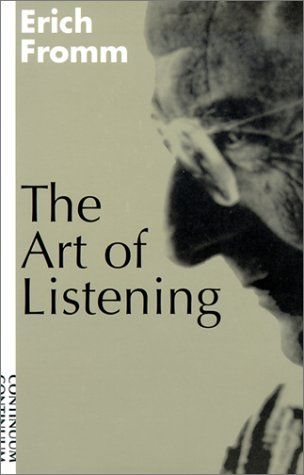
Nova: Well, it’s not quite mind-reading, but it’s close. And it’s a skill that can be cultivated. We’re drawing insights primarily from two thought-provoking works: "The Art of Listening" by the renowned psychoanalyst Erich Fromm, and "Audience: Marketing in the Age of Subscribers, Fans, and Followers" by Jeffrey Rohrs. What's fascinating about Fromm is his unique background; he was a social psychologist, psychoanalyst, and humanistic philosopher who blended Freudian and Marxist ideas. He wasn't just talking about therapy; he was talking about how we connect, or fail to connect, at a fundamental human level. His work, though decades old, feels incredibly timely for anyone struggling to be truly heard or to truly hear.
The Art of Profound Listening
SECTION
Nova: Fromm argues that true listening isn't a passive act. It's not just about waiting for your turn to speak, or formulating your rebuttal. It’s an active, almost spiritual endeavor. He says you need to listen "with one's whole being."
Atlas: Like, physically leaning in? Or is he getting existential on us? Because for many of us, especially those in high-stakes environments, simply finding the time to 'listen' is a challenge, let alone 'with one's whole being.' That sounds a bit out there.
Nova: It sounds profound because it profound. Fromm suggests that to truly listen, you must empty yourself of preconceptions, desires, and even your own thoughts for that moment. It's about being fully present, offering your complete attention, and trying to understand the other person's frame of reference, their emotional state, their unarticulated needs.
Atlas: So you're saying, if I'm in a conversation, and I'm already mentally drafting my response, I'm not truly listening. I'm just waiting for a pause. That’s actually a pretty common trap, especially when you’re trying to lead or persuade. You feel the pressure to have the 'right' answer.
Nova: Exactly. Think of it like this: Imagine you're watching a play. If you're constantly checking your phone, anticipating the next scene based on what you should happen, or critiquing the acting in your head, you're not experiencing the play. You're observing it from a distance. True listening is about being fully immersed in the other person's 'play.'
Atlas: That makes me wonder, how does this play out in a real-world scenario? Like, for someone trying to align their team, or navigate a difficult conversation. It’s easy to say 'listen with your whole being,' but how do you actually that when the stakes are high, and you feel like you have to be 'on'?
Nova: That’s where the 'art' comes in. Fromm implies it's a practice, not a switch. Consider a situation where a team member comes to you with a problem. On the surface, they might be saying, "I can't meet this deadline." A superficial listen hears the words and thinks, "Okay, deadline problem, I need to extend it or reassign."
Atlas: Right, problem-solution mode activated. Very efficient.
Nova: But if you listen with your 'whole being,' you might start to pick up on the subtext. Their tone might be strained, their posture defeated. You might hear unspoken frustration, burnout, or a deeper insecurity about their capabilities. The 'deadline problem' becomes a symptom, not the root cause.
Atlas: So, the 'cause' might be a lack of resources, or a feeling of being overwhelmed, or even a personal issue affecting their focus. And if you jump to solution for the 'symptom,' you've missed the opportunity to address the actual challenge. That's a huge difference in impact. It’s the difference between putting a band-aid on a broken leg and actually setting the bone.
Nova: Precisely. And in doing so, you don't just solve a problem; you build trust, you foster empathy, and you understand your team member on a much deeper level. That’s how communication lands with precision and emotional resonance, as Fromm suggests. It’s about adapting your approach based on truly understanding their inner world, not just their uttered words. This profound listening is the bedrock.
Decoding Audience Motivations and Behaviors
SECTION
Nova: Now, building on that bedrock of deep listening, we shift to Jeffrey Rohrs' "Audience." While Fromm is about the philosophical depth of listening, Rohrs brings a practical, almost forensic approach to understanding your audience is and makes them tick. He's coming from a marketing perspective, talking about subscribers and followers, but his principles are gold for anyone wanting to influence, lead, or simply connect.
Atlas: I’m curious, how does a book about marketing apply to, say, someone trying to convince their board of a new strategic direction, or a leader unifying a diverse team? The language of 'subscribers' and 'followers' feels very different from 'colleagues' or 'stakeholders.'
Nova: That’s the beauty of it. Rohrs essentially provides a framework for decoding human behavior patterns. Whether you're selling a product or selling an idea, you need to understand motivations, needs, and behaviors. He talks about understanding the 'why' behind people's actions. Why do they 'subscribe' to certain ideas? Why do they 'follow' certain leaders?
Atlas: So you're saying, in a professional context, my team 'subscribes' to my leadership if they believe I understand their challenges and provide solutions that genuinely benefit them. And they 'follow' if my vision aligns with their personal or professional growth. That’s a powerful reframing.
Nova: Exactly! Rohrs would argue that every interaction is, in a sense, a form of 'marketing' your message. And just like a good marketer wouldn't try to sell ice to an Eskimo, a good communicator wouldn't present a solution to a problem their audience doesn't perceive they have, or present it in a way that doesn't speak to their core motivations.
Atlas: Like my earlier example with the glazed eyes in the presentation. I might have been 'marketing' a solution to a problem they weren't prioritizing, or using jargon that didn't resonate, completely missing their 'why.'
Nova: Precisely. Rohrs emphasizes that you need to go beyond demographics. You need psychographics: what are their values, attitudes, interests, and lifestyles? In a team context, that means understanding their professional aspirations, their pain points, their preferred communication styles, their past experiences with similar initiatives.
Atlas: So, it’s not just about what they need to, but what they they need, and how they prefer to that information. It's about tailoring the message, not just the content. For someone who values precision and strategic communication, this is incredibly practical.
Nova: It is. Think about it: if you're trying to align a team around a new project, some members might be motivated by innovation and growth, others by stability and risk mitigation, and still others by efficiency and process improvement. If you use a one-size-fits-all message, you'll only truly connect with a fraction of your audience. Rohrs' principles help you segment your 'audience' within your team and tailor your communication to each segment's unique 'why.'
Atlas: That’s a significant shift from just broadcasting information. It implies a much more strategic, almost empathetic, approach to every interaction. It's about asking, "What do they to hear, in the way need to hear it, to be motivated to act?"
Nova: And that’s where Fromm and Rohrs intersect beautifully. Fromm gives us the deep empathetic listening, the ability to uncover those unspoken motivations. Rohrs then gives us the framework to analyze those motivations and craft messages that specifically address them. It’s not about manipulation; it’s about respect and effectiveness. It's about ensuring your message isn't just heard, but truly.
Synthesis & Takeaways
SECTION
Nova: So, whether we're talking about Erich Fromm's profound 'listening with one's whole being' or Jeffrey Rohrs' analytical 'decoding of audience motivations,' the core message is strikingly similar: effective communication begins not with what you want to say, but with deeply understanding who you're speaking to.
Atlas: That's actually really inspiring. It means that the biggest lever we have for impact isn't necessarily more clever words or slicker presentations, but a more profound connection with the people we're trying to reach. It’s about empathy as a strategic tool.
Nova: Absolutely. It’s about moving from broadcasting to truly connecting, from assuming to understanding. And for anyone who strives for precision, practical application, and real impact in their communication, this duo offers a powerful toolkit. The next time a message doesn't land, instead of blaming the audience, look inward: what assumptions did you make, and how could deeper listening have changed your approach?
Atlas: That’s a challenging but essential question for growth. It suggests our communication failures are often an invitation to listen more deeply. This gives me chills, honestly, thinking about the ripple effect of truly mastering this.
Nova: Indeed. It's about fostering understanding and progress, one truly heard message at a time. It's about embracing the power that comes from truly connecting.
Atlas: This is Aibrary. Congratulations on your growth!