The Empathy Gap: Why Connection Fails in the Digital Age
Golden Hook & Introduction
SECTION
Nova: Everyone says technology connects us, right? We've got more ways to talk, share, and see each other than ever before. But what if your smartphone, that little device right in your pocket, is actually making you connected, not more? What if it's quietly creating a chasm between you and the people you care about most?
Atlas: Oh man, that's a gut punch. I imagine a lot of our listeners, especially those always striving for new ideas and deeper understanding, are thinking, "Wait, my tech is supposed to bridge gaps, not create them!" That sounds a bit out there.
Nova: I know, it feels counterintuitive, doesn't it? But today, we're diving into a crucial concept from a powerful piece called "The Empathy Gap: Why Connection Fails in the Digital Age." It builds on the groundbreaking work of two brilliant minds: Sherry Turkle, a psychologist and researcher who has spent decades studying how technology reshapes human relationships, and Amir Levine, whose work redefined our understanding of adult attachment.
Atlas: So it's not just a hunch or a passing observation; it's rooted in deep psychological insight and years of research. That makes me wonder, if digital tools are supposed to be about connection, what exactly is this "empathy gap" and how does it sneak up on us?
Nova: Exactly. The core of our podcast today is really an exploration of how our increasing reliance on digital tools might be inadvertently creating a profound empathy gap, often hindering the very connections we seek to build. We often fall into this "blind spot" where we assume that more communication tools naturally lead to better understanding and stronger relationships. We swipe, we like, we comment, and we feel connected. But Nova: What if that feeling is largely superficial?
The Blind Spot & Turkle's "Reclaiming Conversation"
SECTION
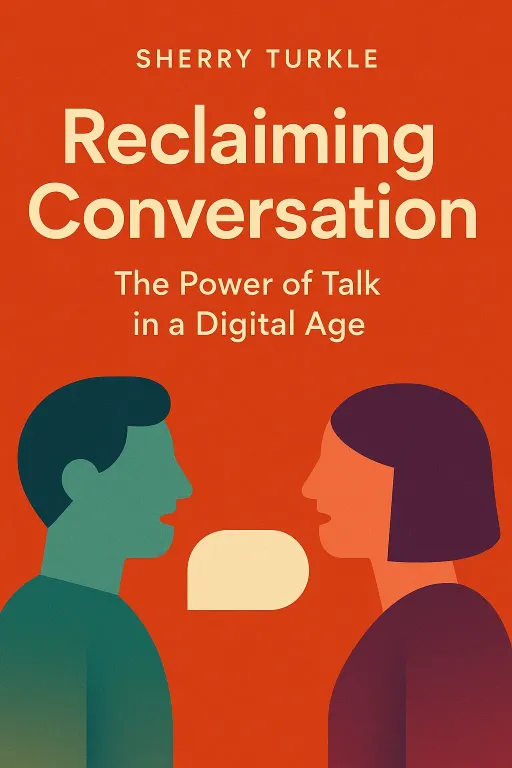
Nova: The truth is, the digital world can sometimes create an 'empathy gap,' making genuine connection harder, not easier. Sherry Turkle, in her seminal work "Reclaiming Conversation," lays this out with such clarity. She argues that our constant digital connection actually erodes our capacity for empathy and deep conversation.
Atlas: Hold on, so you're saying my phone, which lets me talk to my family across the globe, or collaborate instantly with my team, is actually making me empathetic? That sounds like a paradox for anyone trying to innovate and build strong relationships.
Nova: It is a paradox, and it's a subtle one. Turkle shows us how our devices distract us from what she calls the 'slow work' of understanding others and ourselves. Think about it: when you're having a face-to-face conversation, you're picking up on subtle cues – micro-expressions, shifts in tone, pauses. These are the ingredients of empathy. But when your phone is constantly buzzing, or you're half-listening while scrolling, you're not fully present.
Atlas: I totally know that feeling. I've been there, trying to have a deep conversation with someone, and their eyes keep darting to their screen. Or worse, my own eyes are doing it! It's like our attention spans are being reprogrammed.
Nova: Precisely. Turkle's research, which involved ethnographic studies in homes, schools, and workplaces, painted a stark picture. She observed a significant decline in the quality of deep, empathetic conversations. People were physically together, but mentally, they were often elsewhere, tethered to their digital worlds. This isn't about being disciplined in the traditional sense; it's about the very nature of digital interaction prioritizing speed and breadth over depth. It's about a performative self that is always "on" for an imagined audience, rather than truly present for the person in front of you.
Atlas: So for someone who thrives on innovation, who needs to be constantly 'on' and connected for their work, how do they navigate this? Is it even possible to cultivate deep empathy when the very tools of their trade are pulling them away from that 'slow work' of understanding?
Nova: That's the challenge. Turkle isn't saying technology is inherently bad; she's highlighting the of constant, unexamined connection. It's like we've traded depth for breadth. We have hundreds of online connections, but how many of them truly see us, or allow us to truly see them? This impacts our capacity for profound self-awareness as well, because introspection often requires the same kind of uninterrupted presence that empathy demands.
Atlas: Wow, that’s kind of heartbreaking when you put it like that. It’s like we're building a world of digital mirrors, reflecting back at us, rather than windows into each other's souls.
Prioritizing Attentiveness & Levine's "Attached"
SECTION
Nova: That’s a perfect analogy, Atlas. And if Turkle shows us the problem, then Amir Levine, with his work "Attached," offers a powerful framework for understanding what we're missing and what we need. Levine's work is rooted in attachment theory, which reveals how our innate need for secure connection plays out in our relationships.
Atlas: I've been thinking about attachment theory a lot lately, especially in the context of building healthier, more secure relationships. But how does that tie into the digital empathy gap?
Nova: It's the critical missing piece. Levine highlights that true security in relationships comes from responsive, present interactions. Think about a child and a parent: the child feels secure when the parent is attuned, responsive, and consistently. That same fundamental human need doesn't disappear when we become adults. We still crave that responsiveness, that feeling of being seen and heard.
Atlas: So, for someone trying to build healthier, more secure relationships, is it less about the grand gestures and more about just... showing up fully? Being truly present, even if it feels mundane?
Nova: Absolutely. Digital distractions can profoundly undermine this. When we're constantly checking our phones, even subconsciously, we're sending a signal: "Something else might be more important than you right now." That erodes the very foundation of responsiveness that secure attachment is built upon. True security isn't just about physical proximity; it's about. It's knowing that when you're with someone, you have their full, undivided attention.
Atlas: That makes me wonder how this plays out in a practical sense. For someone who's an emotional alchemist, who deeply values profound self-awareness and nurturing self-love, how do they cultivate this presence when the digital world is constantly vying for their attention? How do you balance the demands of innovation and connection with the deep human need for attentiveness?
Nova: It requires conscious choice. Levine's insights urge us to consciously choose presence over digital distraction. It's about creating boundaries, not just for our devices, but for ourselves. It's about understanding that our emotional well-being, and the health of our relationships, hinges on our capacity for genuine, uninterrupted connection. It means recognizing that the quality of our connections isn't measured by how many people we interact with online, but by the depth and responsiveness of our real-world interactions.
Atlas: So the deep question from the book content really comes into focus here: "How might dedicating specific, uninterrupted time for conversation impact your most important relationships?" That's going to resonate with anyone who struggles with feeling truly seen or heard, or who wants to build stronger bonds.
Synthesis & Takeaways
SECTION
Nova: It really does. What emerges from both Turkle and Levine's work is this profound understanding: empathy and secure attachment aren't passive outcomes of having more communication options. They are active choices, demanding our intentional presence and responsiveness. The profound impact is on our personal well-being, our capacity for self-awareness, and the very quality of our most essential human bonds. If we don't actively fight for that presence, we risk living in a world of constant connection, yet profound loneliness.
Atlas: That's a powerful thought. It means the solution isn't to ditch technology entirely, but to be incredibly intentional about how and when we engage with it. For our listeners who are innovative seekers, emotional alchemists, and relationship weavers, this is a call to action. It’s about consciously choosing to put down the device and pick up the thread of genuine human connection.
Nova: Exactly. So, we encourage you to experiment: try a "digital sabbath" for an hour, or even an evening. Designate "presence zones" in your day where devices are off-limits during conversations or meals. Notice the difference it makes. The shift is subtle, but the impact on your relationships and your own inner peace can be transformative.
Atlas: It's about remembering that the deepest connections are forged in the quiet spaces of undivided attention, not the noisy rush of digital updates.
Nova: This is Aibrary. Congratulations on your growth!