

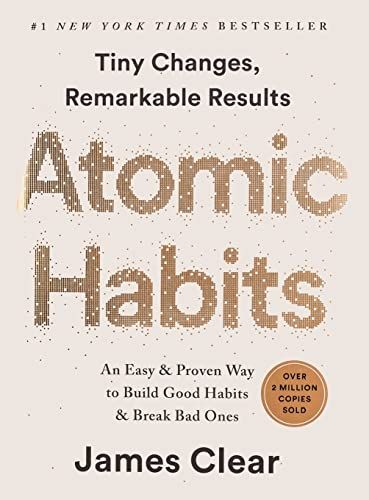
Atomic Habits
Introduction
Nova: Have you ever wondered why some people seem to transform their lives effortlessly while others struggle to even make it to the gym for a single week? It is not about a massive burst of willpower or some secret reserve of discipline. It is actually about something much smaller. We are talking about the book Atomic Habits by James Clear, and specifically, the idea that small, one percent improvements can lead to massive results over time.
Nova: That is the big trap we all fall into. We think big success requires big action. But Clear tells this incredible story about the British Cycling team. For over a hundred years, they were basically the laughingstock of the cycling world. They had only won a single gold medal since 1908. They were so bad that one top bike manufacturer actually refused to sell them bikes because they were afraid it would hurt their brand reputation.
Nova: They hired Dave Brailsford, and he used a strategy he called the aggregation of marginal gains. He looked for every tiny thing they could improve by just one percent. They redesigned the bike seats to be more comfortable, rubbed alcohol on the tires for better grip, and even had the riders wear electrically heated over-shorts to keep their muscles warm. But they did not stop there. They tested different massage gels to see which led to the fastest recovery. They even hired a surgeon to teach the riders the best way to wash their hands so they would not catch a cold.
Nova: Within five years, they dominated the 2008 Beijing Olympics, winning sixty percent of the gold medals available. Four years later in London, they set nine Olympic records and seven world records. In a ten-year span, British cyclists won 178 world championships and sixty-six Olympic or Paralympic gold medals. All because they stopped looking for one giant breakthrough and started looking for hundreds of tiny ones. That is the power of an atomic habit.
Key Insight 1
The Plateau of Latent Potential
Nova: One of the hardest things about starting a new habit is that for a long time, it feels like nothing is happening. James Clear calls this the Plateau of Latent Potential. He uses this great analogy of an ice cube sitting in a cold room. If the room is twenty-six degrees, the ice stays frozen. Twenty-seven, twenty-eight, twenty-nine, thirty, thirty-one degrees. Still, nothing has happened. Then you hit thirty-two degrees and the ice begins to melt.
Nova: Exactly. Most people give up at thirty-one degrees. They have been working hard, they have been consistent, but because they do not see a puddle yet, they think they are failing. Clear calls this the Valley of Disappointment. You expect progress to be a straight line, but in reality, the results of our habits are delayed.
Nova: We all do that. But those two weeks were not wasted. You were storing up potential. It is like a bamboo tree. For the first five years, you see nothing. It is building an extensive root system underground. Then, in the fifth year, it suddenly shoots up eighty feet in six weeks. If you stop watering it in year three because you do not see a sprout, the tree dies, even though it was only two years away from a massive breakthrough.
Nova: You have to shift your focus from the goal to the system. Clear says that winners and losers often have the same goals. Every Olympic athlete wants the gold medal. Every job candidate wants the job. So the goal itself cannot be what differentiates the winners. The difference is the system they follow. If you focus on the system, which is your collection of daily habits, you can find satisfaction in just doing the work rather than waiting for the end result.
Nova: In a way, yes. Goals are about the results you want to achieve. Systems are about the processes that lead to those results. If you are a coach, your goal might be to win a championship. Your system is the way you recruit players, manage your assistant coaches, and conduct practice. If you completely ignored your goal and focused only on your system, would you still get the result? Clear argues that you would. In fact, goals can actually create a yo-yo effect. Once you reach the goal, people often stop doing the very things that got them there. But if you love the system, you keep going long after the goal is reached.
Key Insight 2
Identity-Based Habits
Nova: This brings us to what I think is the most profound part of the book: identity-based habits. Most of us try to change our behavior by focusing on what we want to achieve. That is an outcome-based habit. For example, I want to lose twenty pounds. Or, I want to write a book.
Nova: The problem is that your old identity is still pulling you back. Clear uses the example of two people who are trying to quit smoking. When offered a cigarette, the first person says, no thanks, I am trying to quit. It sounds like a good response, but they still believe they are a smoker who is trying to be something else. They are hoping their behavior will change while their identity stays the same.
Nova: The second person says, no thanks, I am not a smoker. It is a tiny shift in language, but it represents a massive shift in identity. Smoking was part of their old life, not their current self. They no longer identify as someone who smokes.
Nova: You do not have to be an elite marathoner. You just have to prove it to yourself with small wins. Clear says that every action you take is a vote for the type of person you want to become. If you go to the gym for five minutes, you might not change your body, but you have cast a vote for being a person who does not miss a workout. If you write one paragraph, you are casting a vote for being a writer.
Nova: Exactly. Your identity is not set in stone. It emerges out of your habits. You do not need a landslide victory to win an election; you just need the majority of the votes. You do not need to be perfect. You just need to cast more votes for the new identity than the old one. Over time, as the evidence builds up, your self-image starts to change.
Nova: That is where the science of habit formation comes in. Clear breaks down every habit into a four-step loop: cue, craving, response, and reward. If you want to build a habit, you have to master those four stages. The cue is the trigger that tells your brain to start a behavior. The craving is the motivational force behind it. The response is the actual habit you perform. And the reward is the end goal of every habit, which satisfies the craving and teaches your brain which actions are worth remembering.
Key Insight 3
The Four Laws of Behavior Change
Nova: To make a habit stick, Clear gives us four laws based on that loop. The first law is to make the cue obvious. Most of our habits are so automatic we do not even notice the cues. Like how you might walk into a dark room and flip the light switch without thinking. To start a new habit, you have to design your environment so the cues are staring you in the face.
Nova: Exactly. Or if you want to remember to take your vitamins, put them right next to the coffee maker. But it works the other way too. If you want to break a bad habit, you have to make the cue invisible. If you spend too much time on your phone, put it in another room for an hour. If you eat too much junk food, put it on a high shelf where you cannot see it.
Nova: The second law is to make it attractive. This is where cravings come in. Clear talks about dopamine, which is a chemical our brain releases not just when we experience pleasure, but when we anticipate it. In fact, the spike in dopamine is often higher when we are expecting the reward than when we actually get it. You can use this by using something called temptation bundling. You pair an action you need to do with an action you want to do.
Nova: Perfect example. You are using the craving for the show to pull you through the workout. Then there is the third law: make it easy. We often think we need to get motivated, but what we really need is less friction. If a habit is difficult, we will find an excuse. If it is easy, we will just do it. This is why the environment is so important. You want to reduce the number of steps between you and the good behavior.
Nova: That is the Two-Minute Rule. When you start a new habit, it should take less than two minutes to do. A new habit should not feel like a challenge. It should just be the gateway to a bigger behavior. You read one page. You do one pushup. You meditate for sixty seconds. The point is not the one page or the one pushup. The point is mastering the art of showing up. You have to standardize before you can optimize.
Nova: The fourth law is to make it satisfying. The first three laws increase the odds that you will perform the behavior this time. The fourth law increases the odds that you will repeat it next time. Our brains evolved to prioritize immediate rewards over delayed ones. This is a problem because most good habits have a delayed reward. You do not get six-pack abs after one workout. But bad habits often have an immediate reward. The cigarette relaxes you right now, even if it kills you later.
Nova: You have to add a little bit of immediate pleasure to the habits that pay off in the long run. Use a habit tracker and cross off the day. There is something strangely satisfying about seeing a visual streak of your progress. It provides an immediate bit of evidence that you are becoming the person you want to be.
Key Insight 4
Staying on Track
Nova: Even with the best systems, everyone eventually falls off the wagon. Clear has a rule for this: never miss twice. Missing once is an accident. Missing twice is the start of a new habit. It is a powerful way to keep a bad day from turning into a bad month.
Nova: That is where the Goldilocks Rule comes in. Humans experience peak motivation when working on tasks that are right on the edge of their current abilities. Not too hard, not too easy. Just right. If a task is too easy, we get bored. If it is too hard, we get discouraged. To keep a habit interesting, you have to keep finding ways to challenge yourself just enough to stay engaged.
Nova: Exactly. You need to keep yourself in that flow state. But Clear also makes a really important point about the downside of habits. Once a behavior becomes automatic, we stop paying attention to the details. We can get stuck in a rut of being just okay at something. To reach an elite level, you need a combination of automatic habits and deliberate practice. You use habits to build the foundation, and then you use deliberate practice to refine the specifics.
Nova: That is exactly right. He says the purpose of setting goals is to win the game, but the purpose of building systems is to continue playing the game. True long-term thinking is goal-less thinking. It is not about any single accomplishment. It is about the cycle of endless refinement and continuous improvement. Ultimately, it is your commitment to the process that will determine your progress.
Nova: It really is. When you start, the changes seem invisible. But as you cross that Plateau of Latent Potential, those tiny habits begin to compound. They are like compound interest for self-improvement. The same way money multiplies through compound interest, the effects of your habits multiply as you repeat them. You might not see the results today, or tomorrow, but over the course of a year or a decade, the difference between who you are with good habits and who you are without them is staggering.
Conclusion
Nova: We have covered a lot of ground today, from the British Cycling team to the science of dopamine and the power of identity. If there is one thing to take away from James Clear's work, it is that you do not rise to the level of your goals; you fall to the level of your systems. Your life today is essentially the sum of your habits.
Nova: That is the perfect place to start. Remember to make it obvious, make it attractive, make it easy, and make it satisfying. Focus on the person you want to become, and let your habits provide the evidence. If you do that consistently, you will eventually look back and be amazed at how far those atomic changes have taken you.
Nova: My pleasure. Just remember, the biggest threat to success is not failure; it is boredom. Keep working at the edge of your abilities, never miss twice, and trust the compounding process. This is Aibrary. Congratulations on your growth!