

The Scientist's Guide to Self-Improvement: Deconstructing Atomic Habits
Golden Hook & Introduction
SECTION
Nova: Priscilla, as a researcher, you spend your days in a world of processes, data, and controlled experiments. But what if I told you the most important experiment you'll ever run is on yourself? And that the secret to massive personal growth isn't about willpower or motivation, but about designing a better system?
Priscilla: That's a powerful opening question, Nova. It immediately makes me think about my work. We're so focused on optimizing external systems, but we rarely apply that same rigor to our own internal ones. The idea of treating personal development like an experiment is... well, it's very appealing.
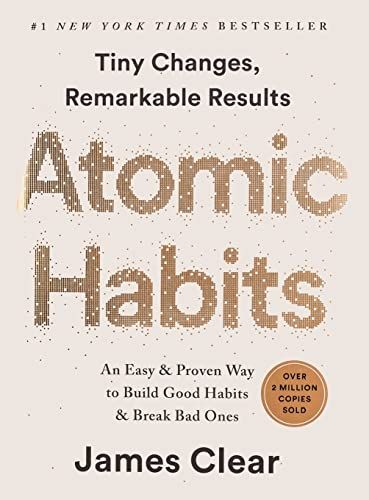
Nova: I thought it would be! And it’s why I’m so excited to have you here. Your analytical mind is the perfect lens to look at today’s book, "Atomic Habits" by James Clear. Because that's the revolutionary idea at the heart of it. That's what we’re exploring today.
Priscilla: I'm ready. I'm always looking for ways to learn and improve, and this sounds like a very structured approach.
Nova: It is! Today we'll dive deep into this from two perspectives. First, we'll challenge the very idea of goal-setting and explore why focusing on your 'systems' is the real key to progress. Then, we'll get super practical and break down how to become the architect of your own habits using a simple, four-step framework from the book. Sound good?
Priscilla: Sounds perfect. Let's get into it.
Deep Dive into Core Topic 1: The Power of Systems Over Goals
SECTION
Nova: Alright. So, Priscilla, we're all taught to set big, ambitious goals, right? "I want to get a promotion," "I want to publish a paper," "I want to run a marathon." But James Clear argues this is exactly where we go wrong. He says goals are good for setting a direction, but systems are best for making progress.
Priscilla: Okay, I'm intrigued. What's the distinction he makes between goals and systems?
Nova: A goal is the result you want to achieve. The system is the process that leads to those results. So, if you're a coach, your goal is to win a championship. Your system is what your team does at practice each day. And he tells this incredible story about the British Cycling team to illustrate it. For a hundred years, they were mediocre. Just... completely unremarkable. They'd never won a Tour de France.
Priscilla: I can imagine. In sports, like in science, there are dynasties and then there's everyone else.
Nova: Exactly. Then, in 2003, they hired a new performance director, a man named Dave Brailsford. And his strategy was something he called "the aggregation of marginal gains." The idea was to just improve every single tiny thing you could think of by just 1 percent.
Priscilla: One percent. That sounds so small. Almost insignificant.
Nova: That's the point! It feels manageable. They started with the obvious things, like redesigning the bike seats to be more comfortable and testing different fabrics in a wind tunnel. But then they went further. They tested which massage gel led to the fastest muscle recovery. They taught the riders the best way to wash their hands to avoid getting sick. They even, and I love this detail, painted the inside of the team truck white.
Priscilla: Why white?
Nova: To make it easier to spot any little speck of dust that could get into the finely tuned bike mechanics and degrade performance. They weren't focused on the goal of "winning the Tour de France." They were obsessed with the of being an organization that pursues tiny improvements relentlessly.
Priscilla: Wow. So they weren't aiming for a single, heroic leap. They were building a foundation of excellence, brick by tiny brick.
Nova: You got it. And the results were staggering. Within five years, they dominated the 2008 Olympic Games. A few years later, a British cyclist won the Tour de France. Then another did. It was a complete transformation, all because they stopped obsessing about the goal and fell in love with the process.
Priscilla: That makes so much sense from a research perspective. It completely mirrors the scientific method. A breakthrough paper—that's the 'goal'—is the final result of hundreds, maybe thousands, of tiny, meticulous steps. It's about refining your methodology, controlling for variables, documenting everything. The quality of your is what determines the quality of your outcome. You can't just 'will' a discovery into existence.
Nova: That's such a great parallel. So you're saying the 'system' in a lab is the experimental protocol?
Priscilla: Precisely. A good protocol is robust, it's repeatable, and it minimizes error. If you follow the system, the results—good or bad—will be reliable. Clear's argument is that we need to create personal protocols for ourselves. It shifts the focus from "I hope I achieve this" to "I know if I follow my system, the results will come." It takes the pressure off.
Nova: It really does. It makes success feel less like a lottery ticket and more like an inevitability. You just have to trust the system.
Priscilla: And you have to build a good one. Which, I assume, is where the next part of our conversation is going.
Deep Dive into Core Topic 2: Designing Your Habit Architecture
SECTION
Nova: Exactly! It's all about the process. And that brings us to the 'how.' If our life is a system, how do we design it? Clear gives us this brilliant and simple four-step toolkit he calls the Four Laws of Behavior Change: Make it Obvious, Make it Attractive, Make it Easy, and Make it Satisfying.
Priscilla: A four-law framework. Very scientific. I like it.
Nova: Right? It's a recipe. And for our conversation, let's focus on two of the most powerful ones for a busy researcher, or really anyone trying to build good habits: Making it Obvious and Making it Easy. Let's start with 'Make it Obvious.' One of his best techniques here is called 'Habit Stacking.'
Priscilla: Habit Stacking. Tell me more.
Nova: The formula is beautifully simple: "After I, I will." You're essentially anchoring a new, desired behavior to one that's already deeply ingrained in your brain. So, instead of vaguely saying "I want to meditate more," you'd say, "After I pour my morning cup of coffee, I will meditate for one minute."
Priscilla: So you're using the completion of one task as the trigger, or the cue, for the next one.
Nova: Precisely. It removes the guesswork. You don't have to find the time or the motivation. The cue is built right into your existing routine. You finish brushing your teeth, you immediately floss one tooth. You take off your work shoes, you immediately change into your workout clothes. It makes the start of the habit obvious and automatic.
Priscilla: Okay, I see the power in that. It's like creating a logical sequence in a lab protocol. 'Step 1, add reagent A. Step 2, incubate for 5 minutes.' You're just writing a protocol for your life. You're not relying on memory or willpower; you're just following the next step in the sequence. That's incredibly practical.
Nova: Isn't it? And it pairs perfectly with the next law: 'Make it Easy.' This is where Clear introduces the 'Two-Minute Rule.'
Priscilla: The Two-Minute Rule. Let me guess: the habit has to take less than two minutes?
Nova: You're a quick study! Yes. When you start a new habit, it should take less than two minutes to do. The idea is that any habit can be scaled down into a two-minute version. "Read before bed each night" becomes "Read one page." "Do thirty minutes of yoga" becomes "Take out my yoga mat."
Priscilla: Ah, so it's not about achieving the full goal on day one. It's about mastering the art of just starting.
Nova: Exactly! The point is to make it so easy to start that you can't say no. You're not trying to build the habit of running five miles. You're building the habit of putting on your running shoes and stepping out the door. That's the real gateway. Once you've started, it's much easier to continue. But the victory is in just showing up.
Priscilla: That's... that's a game-changer. In science, we talk about 'activation energy'—the minimum amount of energy needed to get a chemical reaction started. Sometimes you need a catalyst to lower that energy barrier. The Two-Minute Rule is like a behavioral catalyst.
Nova: I love that analogy! A behavioral catalyst. It's perfect.
Priscilla: It just makes so much sense. The resistance we feel isn't to the activity itself, usually. It's to the activity. If I think, "Ugh, I have to write my research summary," the task feels huge and I'll procrastinate. But if I apply the Two-Minute Rule, the task becomes, "I will open the document and write one sentence."
Nova: And how does that feel?
Priscilla: It feels... doable. It's so small it's almost ridiculous not to do it. And once I've written one sentence, the inertia is broken. I might write another, and another. It completely bypasses that initial wall of procrastination.
Nova: And that's the whole secret. You combine them. "After I finish my morning data entry, I will open my research paper and read for two minutes." You've just designed a system that makes it obvious and easy to stay on top of the latest literature.
Priscilla: It's engineering. You're engineering your own behavior by carefully designing the environment and the entry points. This is so much more empowering than just telling yourself to 'try harder.'
Synthesis & Takeaways
SECTION
Nova: It really is. And that's the beautiful synthesis of these ideas from 'Atomic Habits.' It's not about heroic effort or some magical burst of motivation. It's about being a smart architect of our lives.
Priscilla: I agree. It's a two-step process we've talked about today. First, you have to fundamentally shift your focus from the finish line—the goal—to the daily process—your system. Fall in love with the practice, not the prize.
Nova: And second, you use simple, practical design principles, like Habit Stacking and the Two-Minute Rule, to make that process as obvious and frictionless as possible. You set yourself up to win.
Priscilla: Right. It's about treating your personal growth like a research project. Be curious, be systematic, and focus on the data. The data, in this case, is your own behavior. Don't judge it, just observe it and tweak the system.
Nova: That's the perfect way to put it. So, as we wrap up, what's the one thing you hope our listeners take away from this conversation?
Priscilla: I think it comes down to a simple, actionable question. The question for everyone listening is this: What is the one, two-minute habit you can stack onto your existing routine tomorrow morning?
Nova: Mmm, I like that.
Priscilla: Don't think about the massive goal it might lead to in a year. Don't worry about being perfect. Just focus on mastering the art of showing up for those two minutes. Open the book. Write the one sentence. Put on your running shoes. Because as we've learned today, that's where the real transformation begins. In that one, tiny, atomic step.