

The Scalpel & The System: Forging a Medical Leader with Atomic Habits
Golden Hook & Introduction
SECTION
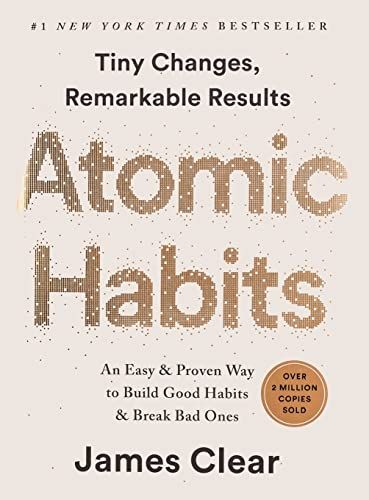
Nova: What's the difference between a good surgeon and a great one? Is it a single moment of brilliance under pressure? Or is it something smaller, something repeated a thousand times until it's second nature? The truth is, excellence in the operating room, the research lab, or in any leadership role, isn't born from grand gestures. It's forged in tiny, almost invisible daily actions. That's the revolutionary idea behind James Clear's 'Atomic Habits,' and it's what we're dissecting today.
Mohamed Atef: That’s a powerful way to put it, Nova. In medicine, we’re surrounded by the idea of massive effort for massive results. Grueling shifts, marathon study sessions... But the most successful clinicians and researchers I admire, they seem to operate on a different principle. It’s about their systems, their consistency. It feels less like a sprint and more like a perfectly calibrated machine.
Nova: Exactly! And that's why I'm so excited to have you here, Mohamed. As a medical student with a passion for surgery, neuroscience, and AI, you live in this world of high-stakes performance and complex systems. Today we'll dive deep into this from two perspectives. First, we'll explore the profound psychological shift from focusing on goals to building an identity—what it means to a great clinician, not just the work.
Mohamed Atef: The 'being' versus the 'doing'. I'm already intrigued.
Nova: Right? Then, we'll get intensely practical and break down the four-step toolkit you can use to engineer any habit into your life, whether you're in a library, a lab, or a future operating room. So, let's get started.
Deep Dive into Core Topic 1: The Identity Shift
SECTION
Nova: Let's start with what I think is the most powerful idea in the whole book: this shift from outcome-based goals to identity-based habits. Mohamed, we're all taught to set goals, right? 'I want to ace my exams.' 'I want to get into a surgical residency.' But Clear argues that's backwards. Why?
Mohamed Atef: Well, my initial thought is that goals are finite. You achieve the goal, and then what? The motivation can evaporate. If your goal is to run a marathon, you might stop training the day after the race. It doesn't create a sustainable lifestyle.
Nova: You've hit it exactly. Clear says the problem with a goals-first approach is that it puts happiness off until you hit the milestone. The real key, he argues, is to focus on your identity. He gives this brilliant example of two people trying to quit smoking. Imagine someone offers you a cigarette. Person A says, 'No thanks, I'm.'
Mohamed Atef: Okay, I see. Their language implies the struggle is ongoing. The identity is still that of a smoker who is currently resisting an urge.
Nova: Precisely. But Person B says, 'No thanks,.' It's a statement of fact. The identity has already shifted. Their actions, in this case, refusing the cigarette, are just a natural confirmation of who they believe they are. It’s not a battle of willpower; it’s just acting in alignment with their identity.
Mohamed Atef: That's a profound distinction. It reframes the entire process from one of resistance to one of affirmation. In my world, it's not about the willpower to study for one more hour; it's about asking, 'What would a top-tier medical student do right now?' The action just naturally follows the identity.
Nova: Yes! So for you, it's not 'I need to publish a research paper.' It's 'I am a clinical researcher.' And then you ask, as you said, what does a clinical researcher do every day?
Mohamed Atef: A researcher reads papers, they formulate hypotheses, they analyze data, they write. Even if it's just for 15 minutes a day, that small action reinforces the identity. From a neuroscience perspective, this makes perfect sense. You're literally strengthening the neural pathways associated with that identity through repetition. You're making 'being a researcher' the brain's default, most efficient setting. It's like paving a road in your mind.
Nova: I love that analogy, 'paving a road in your mind.' And you mentioned in your goals that this applies to your spiritual life, too. It's the same logic, right? The goal isn't 'I have to pray five times a day.'
Mohamed Atef: Exactly. The identity is, 'I am a person of faith.' A person of faith connects with God. Therefore, the act of prayer becomes a natural expression of that identity, not a chore to be checked off a list. It changes the entire feeling behind the action, from obligation to expression.
Nova: It’s so powerful. Every action you take becomes a vote for the type of person you wish to become. A single vote won't change the election, but as you cast more and more votes, the evidence piles up and your self-image begins to change.
Mohamed Atef: And that new self-image then makes the next vote, the next habit, even easier. It’s a positive feedback loop. It's a system.
Deep Dive into Core Topic 2: The Clinician's Toolkit
SECTION
Nova: And that is the perfect transition. Because once we've decided on the identity we want to build—'I am a disciplined student,' 'I am a future surgeon,' 'I am a consistent researcher'—Clear gives us this brilliant, practical toolkit to engineer the habits that support it. He calls them the Four Laws of Behavior Change. It's like a diagnostic checklist for success. Let's walk through them from a medical student's perspective. The first law is: Make it Obvious.
Mohamed Atef: Environment design.
Nova: You got it. The idea is that many of our habits are triggered by visual cues. You see cookies on the counter, you eat a cookie. You see your phone on your desk, you check your phone. So, to build a good habit, you need to make the cues unmissable.
Mohamed Atef: This is huge, and something I can apply immediately. If I want to practice suturing every night, I can't have the suture kit buried in a closet. It needs to be sitting on my desk, right next to my laptop, visible every single time I sit down. The cue has to be in my direct line of sight. Conversely, if I want to stop wasting time on my phone, the cue—the phone itself—needs to be in another room. Out of sight, out of mind.
Nova: Perfect application. Okay, Law Two: Make it Attractive. This is where we get into the brain's reward system. Clear talks about a strategy called 'temptation bundling.' You pair an action you to do with an action you to do.
Mohamed Atef: Ah, so you're linking a dopamine hit to a less desirable task. I can see how this works. For example, I need to review hundreds of anatomy flashcards. It can be tedious. But I also love listening to certain podcasts or specific kinds of music.
Nova: So you could...
Mohamed Atef: I could make a rule for myself: I get to listen to my favorite neuroscience podcast while I'm going through my anatomy flashcards. My brain would start to associate the difficult task with the pleasure of the podcast. It's classic conditioning, really. You're making the habit more attractive by tying it to an anticipated reward.
Nova: Exactly! It's hacking your own motivation. Now for Law Three, which might be the most important for getting started: Make it Easy. Clear’s big idea here is the Two-Minute Rule.
Mohamed Atef: I think I know this one. Any new habit should take less than two minutes to do.
Nova: That's it. Want to read more? Don't commit to a chapter a night. The habit is 'read one page.' Want to study for your boards? The habit is 'open my notes.' The point isn't to get results in those two minutes. The point is to master the art of showing up.
Mohamed Atef: The inertia to start a big task, like writing a literature review for a paper, is immense. It feels like a mountain. But the habit 'Open the document and write the title and one sentence'... that's so simple it's almost impossible to do. It dramatically lowers the activation energy required to start. That's a key principle in both chemistry and psychology. Once you've started, momentum often takes over.
Nova: It's the gateway habit. And finally, Law Four: Make it Satisfying. The human brain evolved to prioritize immediate rewards over long-term ones. Studying today will help you become a great doctor in ten years, but that reward is too far away. The habit needs to pay off.
Mohamed Atef: This is where tracking comes in. As analytical people, we love data. A simple habit tracker—a physical calendar where you put a big 'X' on every day you complete your two-minute habit—is incredibly satisfying. It provides immediate visual proof that you are casting a vote for your new identity. It's a feedback loop. You do the habit, you get the little hit of satisfaction from marking it off, which makes you want to do it again tomorrow.
Nova: You get to see the chain of X's grow, and you don't want to break the chain! It's a visual representation of your progress and your new identity taking shape.
Synthesis & Takeaways
SECTION
Nova: So, when we put it all together, it's this beautiful, elegant two-part formula. First, you stop chasing goals and instead decide who you want to be—you choose your identity. Second, you use the four laws as a checklist to build a system of tiny, atomic habits that prove that identity to yourself, every single day.
Mohamed Atef: Exactly. It's about moving from a mindset of 'effort and willpower' to one of 'systems and identity.' You're not just trying harder; you're designing a better, more intelligent system for yourself to operate within. It's proactive, not reactive. You're an architect of your habits, not a victim of them. For anyone in a field that requires long-term discipline, like medicine, this is a game-changer.
Nova: It really is. It feels so much more sustainable and, honestly, more compassionate to yourself. So for everyone listening, especially those in demanding fields like Mohamed, here's the challenge for this week. What is one identity you want to step into? A 'consistent learner,' a 'patient communicator,' a 'focused researcher'?
Mohamed Atef: And once you have that identity, what is the one, two-minute habit that casts a vote for it? Don't overthink it. Just pick one small thing.
Nova: And then, run it through the checklist. How can you make the cue for that habit obvious? How can you make it attractive? How can you make it so easy you can't say no? And how can you give yourself a little moment of satisfaction right after? That's where the real transformation begins. Not in a giant leap, but in one, tiny, atomic step.