

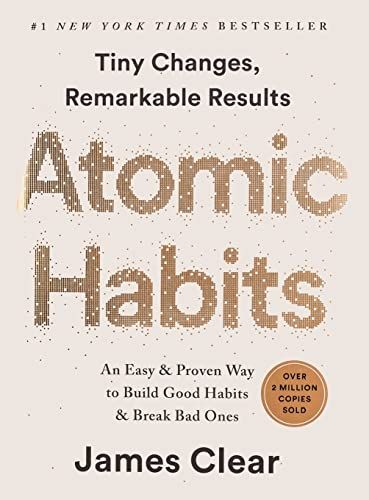
The Neuroplasticity of Excellence: Building Systems-Driven Leadership with Atomic Habits
Golden Hook & Introduction
SECTION
Nova: Imagine you are standing in a sterile, brightly lit operating room. A surgeon doesn't suddenly decide to be precise and focused in the middle of a critical, high-stakes procedure. That level of calm, razor-sharp precision is actually the result of thousands of micro-habits, wired into their nervous system over years of deliberate practice. Today, we are looking at how those tiny, atomic changes build world-class leaders. Welcome to the show! I am Nova, and joining me today is Mohamed Atef, a brilliant medical student at Saint Petersburg State University with a deep passion for surgery, neuroscience, and artificial intelligence in healthcare. Mohamed, it is so wonderful to have you here with us!
Mohamed Atef: Thank you, Nova! It is an absolute pleasure to be here. You know, when we look at the human brain, we are looking at the ultimate adaptive machine. And when I read James Clear's, I don't just see a self-help book; I see a practical manual for neuroplasticity. I am incredibly excited to dive into how we can use these principles to build better systems, not just for our careers, but for our spiritual lives and personal growth as well.
Nova: Oh, I love that perspective! The ultimate manual for neuroplasticity—that is a fantastic way to frame it. Today, we are going to tackle this groundbreaking book from three distinct angles. First, we will explore the neuroscience of identity-based habits and how shifting our self-image actually changes our neural pathways. Second, we will break down why systems always beat goals, especially in high-pressure fields like medicine and clinical research. And finally, we will look at practical, hands-on strategies like environment design and habit stacking to help us automate discipline and step into consistent, systems-driven leadership. Ready to dive in, Mohamed?
Mohamed Atef: Let's do it, Nova. I'm ready.
Deep Dive into Core Topic 1
SECTION
Nova: Excellent! Let's start with what James Clear calls the holy grail of behavior change: identity-based habits. Clear explains that most of us try to change our habits from the outside in. We start with the —what we want to achieve, like passing an exam or losing weight. Then we focus on the —the actions we take. But Clear says the real magic happens when we start from the deep center: our. He uses this great example of two people refusing a cigarette. One says, "No thanks, I'm trying to quit." The other says, "No thanks, I'm not a smoker." It is a tiny linguistic shift, but it represents a massive cognitive difference. Mohamed, as someone who studies the brain, how does this identity shift look from a neuroscientific perspective?
Mohamed Atef: It is actually incredibly profound, Nova. When you say "I am trying to quit," your brain still holds onto the identity of a smoker who is currently forced to behave against their nature. This creates a state of cognitive dissonance, which is highly stressful for the prefrontal cortex. The brain hates conflict between its beliefs and its actions. But when you shift your identity to "I am not a smoker," or in my case, "I am a clinical researcher and a future surgeon," your brain begins to seek cognitive consonance. It starts to align your automatic behaviors with that self-image.
Nova: Wow, so your brain is actively trying to keep your actions consistent with who you believe you are!
Mohamed Atef: Exactly! Every action you take is a vote for the type of person you wish to become. In neuroscience, we talk about synaptic pruning and myelination. When you repeatedly perform an action because it aligns with your identity, you are firing those specific neural pathways. Over time, those pathways get wrapped in myelin—which is like insulating an electrical wire. It makes the signal travel faster and more efficiently. So, when I sit down to read a complex scientific paper, I don't tell myself, "I have to study this boring text to pass a test." I tell myself, "I am a curious researcher who seeks to understand the brain to help future patients." That identity shift completely changes my intrinsic motivation and reduces the cognitive friction of getting started.
Nova: That is beautiful. It takes the dread out of the work because you aren't just checking off a chore; you are actively building your future self. And you know, this applies so beautifully to our spiritual lives as well, doesn't it? Instead of thinking, "I have to force myself to meditate or pray today because it is on my to-do list," the identity-based approach would be, "I am a person who values spiritual alignment and inner peace."
Mohamed Atef: Absolutely, Nova. In my own spiritual practice, shifting the narrative from a chore to an identity is incredibly grounding. If my identity is "I am a disciplined, spiritually connected leader," then daily reflection and prayer aren't optional tasks that I try to squeeze into a busy medical school schedule. They become non-negotiable anchors of my day. They are the expressions of who I am. It is about moving from "doing" to "being." When you establish that core identity, the discipline flows naturally because acting otherwise would feel like betraying yourself.
Nova: It is like building an internal compass. But of course, even with a strong compass, we still need a map and a reliable vehicle to get where we are going. And that brings us to our second core topic: why systems are vastly superior to goals.
Deep Dive into Core Topic 2
SECTION
Nova: Clear writes something in the book that honestly blew my mind the first time I read it. He says, "We do not rise to the level of our goals. We fall to the level of our systems." We often put so much pressure on setting these massive, glittering goals, but Clear argues that winners and losers often have the exact same goals. The difference lies entirely in their systems. To illustrate this, he talks about the "Plateau of Latent Potential." Think of an ice cube sitting on a table in a cold room. If the room is twenty-six degrees, and you heat it up to thirty-one degrees, nothing happens. It looks like you've made no progress. But then, you hit thirty-two degrees—the freezing point—and suddenly, the ice begins to melt. A one-degree shift, seemingly no different from the others, unlocks a massive breakthrough. Mohamed, how does this "systems over goals" philosophy resonate with your work in medicine and AI?
Mohamed Atef: Oh, it resonates on so many levels! Let's look at clinical research or learning surgery. If my goal is simply "to become a world-class surgeon," that is a massive, intimidating goal. It is far in the future, and on any given day, I might feel like I am making zero progress. That is the Plateau of Latent Potential. You spend months studying anatomy, practicing basic suturing on a silicone pad, and it feels like you aren't getting any better. But you have to trust the system. The system is the daily practice of suturing for fifteen minutes, the daily review of surgical cases, the consistent engagement with clinical literature. You are storing up potential energy. And then, one day in the operating room, your hand moves with intuitive precision. The breakthrough wasn't caused by that single moment; it was unlocked by the system of daily, compounding 1% improvements.
Nova: Yes! The aggregation of marginal gains! Clear tells this incredible story about the British Cycling team. For nearly a hundred years, they were completely mediocre. They had only won a single gold medal since 1908. But then they hired a performance director named Dave Brailsford. He believed in this concept of searching for a tiny margin of improvement in everything you do. They redesigned the bike seats to make them more comfortable, rubbed alcohol on the tires for better grip, had the riders wear electrically heated overshorts to maintain muscle temperature, and even hired a surgeon to teach them the best way to wash their hands to avoid catching a cold! They even painted the inside of their team truck white so they could spot tiny specks of dust that might degrade the performance of their finely tuned bikes.
Mohamed Atef: That is an incredible level of detail!
Nova: Right? And the result? Just five years later, at the 2008 Beijing Olympics, the British Cycling team absolutely dominated, winning sixty percent of the gold medals available. It is mind-blowing! It shows that when you optimize every tiny part of your system, the goals take care of themselves.
Mohamed Atef: Exactly! And if you think about it, Nova, this is exactly how we design artificial intelligence systems in healthcare. An AI model doesn't become highly accurate overnight. It is trained through thousands of iterations, adjusting its neural network weights by tiny fractions of a percent with each data point. If the training system is flawed, the model will fail, no matter how ambitious our goal for its accuracy is. In medicine, we rely heavily on systems to prevent human error. Think of the surgical checklist. It is a simple, systematic tool, but when implemented globally, it reduced surgical complications and deaths by more than a third! That is the power of a system. It removes reliance on memory, willpower, or luck. It automates safety and excellence.
Nova: That is a perfect connection! A surgical checklist is literally a system designed to protect against human cognitive limitations. It makes me think about how we can design our own personal "checklists" and environments to make good habits inevitable. Clear's First Law of Behavior Change is to "Make it Obvious." He emphasizes that our environment plays a massive role in shaping our behavior. He shares a study by a primary care physician named Anne Thorndike at Massachusetts General Hospital. She wanted to improve the eating habits of hospital staff and visitors without using willpower or persuasion. So, she changed the physical layout of the hospital cafeteria. She added bottled water next to all the food stations and cash registers, whereas previously, soda was the only option easily within reach. Over the next three months, soda sales dropped by over eleven percent, and water sales shot up by over twenty-five percent! Nobody was told to drink water; the environment simply made the healthier choice the more obvious one.
Mohamed Atef: That study is a classic, and it is so powerful because it proves that we are often victims of our environment, not our lack of willpower. As a medical student, I have to be very deliberate about my environment. If my phone is sitting on my desk while I am trying to analyze clinical data, the visual cue is constantly draining my cognitive energy because my brain is actively working to resist the temptation to check it. So, I design my environment to make distraction invisible. I put my phone in another room, and I keep my research papers and coding software open on my screen. I make the good cue obvious and the bad cue invisible.
Nova: It is like setting up your own personal "sterile field" for productivity! You are protecting your focus the same way a surgical team protects a patient from infection.
Mohamed Atef: Absolutely! And we can apply this to our spiritual lives too. If I want to make sure I engage in daily spiritual reflection, I leave my journal or my spiritual texts open on my desk right next to my bed. When I wake up, it is the very first thing I see. The cue is obvious, and the friction to start is incredibly low.
Synthesis & Takeaways
SECTION
Nova: This is so practical, Mohamed. We have covered the deep neuroscience of identity, the incredible power of systems over goals, and how environment design can automate our success. But before we wrap up, I want to make sure we give our listeners a highly actionable tool they can start using today. Clear talks about "Habit Stacking," which is a variation of behavior chaining. The formula is simple: "After, I will." It takes advantage of the established neural pathways already in your brain and hitches a new habit onto them. How can a busy, driven leader like yourself use habit stacking to integrate professional growth, spiritual practice, and personal wellness?
Mohamed Atef: Habit stacking is a game-changer, Nova, because it respects the cognitive load we already carry. We don't have to build a new habit from scratch; we just piggyback on an existing, automated routine. For example, for my professional and academic growth, I created a stack: "After I pour my morning cup of coffee, I will open my laptop and read one clinical research abstract." Pouring the coffee is already an automated habit. By stacking the research reading onto it, I don't have to decide when or where to do it. It just happens.
Nova: That is perfect! It is so simple, yet so effective. What about for your spiritual life or leadership development?
Mohamed Atef: For my spiritual life, I stack it with my daily commute or transition times. "After I close my laptop at the end of my study session, I will close my eyes and practice three minutes of mindful breathing and gratitude." It acts as a cognitive reset, transitioning me from high-stress academic work to a state of peace and presence. And for leadership, I stack it with my weekly planning: "After I review my calendar on Sunday evening, I will write down one specific way I can support or mentor a peer in my student organization this week." These tiny, stacked habits require very little willpower, but over a year, they compound into massive personal and professional growth.
Nova: Mohamed, that is incredibly inspiring. You are living proof of how these atomic habits can build a disciplined, consistent, and systems-driven leader. We have journeyed from the microscopic level of synaptic connections in the brain all the way to the global impact of surgical checklists and AI systems. It all comes back to that 1% rule: small, consistent changes, compounded over time, yield truly extraordinary results.
Mohamed Atef: It really does, Nova. If you improve by just one percent every day for a year, you will end up thirty-seven times better by the time you are done. That is the power of compounding. For anyone listening who wants to step into their own leadership potential, I would say: stop obsessing over the massive, distant goals. Focus on your identity, design your environment, and trust your daily systems. Your brain will take care of the rest.
Nova: What a powerful note to end on! Thank you so much, Mohamed, for sharing your brilliant insights, your medical expertise, and your personal journey with us today. You have given us so much to think about and, more importantly, practical steps we can actually take.
Mohamed Atef: Thank you, Nova. It was an honor to be here and to connect these dots together.
Nova: And to our wonderful listeners, we leave you with this question to ponder today: What is the one tiny, 1% shift you can make in your environment right now to make your highest identity-driven habit absolutely inevitable? Think about it, design it, and stack it. Until next time, keep building those systems, keep growing, and we will talk to you soon!